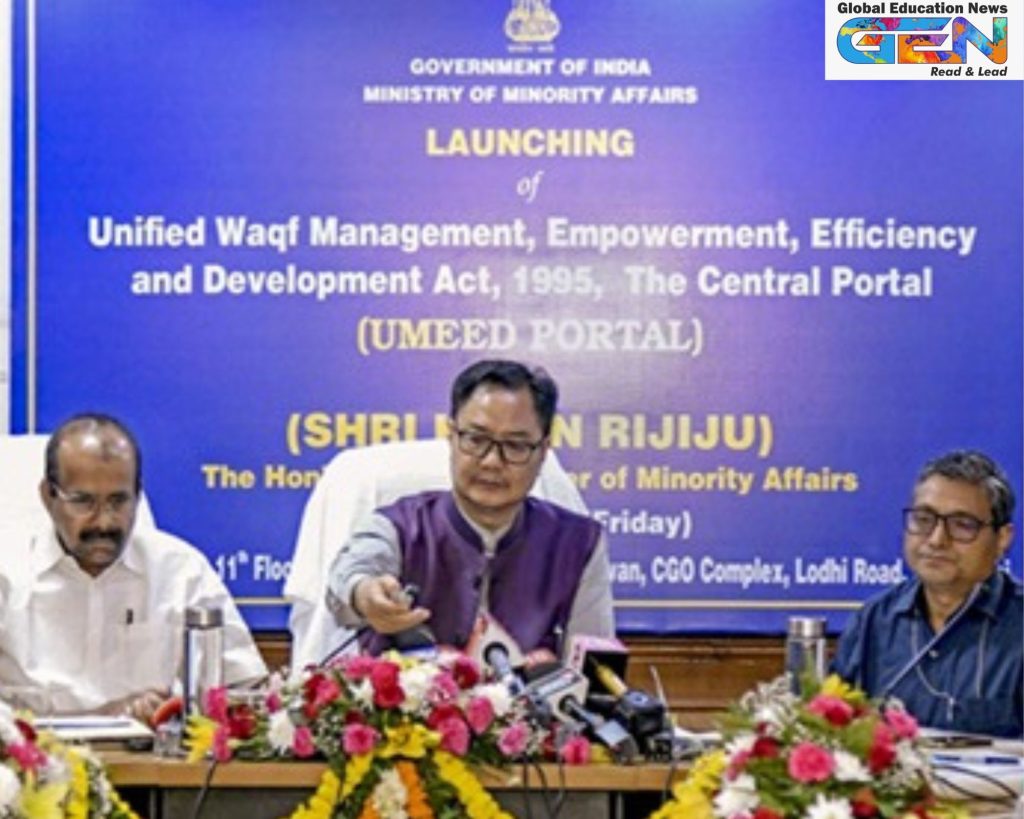
On August 29, 2025, the Ministry of Minority Affairs launched a transformative module on the UMEED Portal, designed to provide financial assistance to widows, divorced women, and orphans from minority communities. Part of the Unified Waqf Management, Empowerment, Efficiency, and Development (UMEED) Rules, 2025, this initiative leverages Waqf-alal-aulad properties to deliver timely, transparent support through a fully digital platform. By targeting vulnerable groups, the module reinforces India’s commitment to social equity and inclusion, aligning with broader educational and social welfare efforts like Tamil Nadu’s semester abroad program and Karnataka’s moral education curriculum. Here’s an in-depth look at the UMEED module, its features, and its potential to uplift minority communities.
A Digital Leap for Waqf Welfare
The UMEED module introduces a groundbreaking digital approach to Waqf governance, streamlining access to financial aid for minority communities. By moving away from manual processes, it ensures efficiency and accessibility for those in need.
Key Points:
- Online Platform: Beneficiaries apply through the UMEED Portal, making the process user-friendly and accessible.
- Aadhaar Verification: Ensures authenticity of applicants, reducing fraud and errors.
- Direct Benefit Transfer (DBT): Funds are disbursed directly to bank accounts, minimizing delays and intermediaries.
- Nationwide Reach: Implemented through State and Union Territory Waqf Boards for widespread coverage.
Empowering Vulnerable Groups
The module specifically targets widows, divorced women, and orphans from minority communities, addressing their economic and social vulnerabilities. This focus aligns with the historical purpose of Waqf properties—to support community welfare.
Key Points:
- Targeted Beneficiaries: Prioritizes groups facing economic insecurity and social exclusion.
- Social Justice: Reinforces inclusive development by ensuring minority communities access their entitled support.
- Waqf-alal-aulad: Utilizes family Waqf properties to fund maintenance, preserving their intended charitable purpose.
Role of Waqf Boards and Mutawallis
State and Union Territory Waqf Boards, along with Mutawallis (custodians of Waqf properties), play a pivotal role in the module’s success.
Key Points:
- Implementation: Waqf Boards are tasked with rolling out the module and processing applications efficiently.
- Awareness Campaigns: Mutawallis and Boards must educate communities about the program to maximize reach.
- Swift Disbursement: Ensuring funds reach beneficiaries without administrative delays is critical.
Synergies with India’s Educational and Social Initiatives
The UMEED module complements India’s broader efforts to promote equity and empowerment, as seen in initiatives like Tamil Nadu’s semester abroad program for rural students and Karnataka’s moral education curriculum, which emphasizes values like empathy and inclusion.
Key Points:
- Educational Equity: Like Tamil Nadu’s program, UMEED targets underserved groups, ensuring access to resources for a better future.
- Value-Based Development: Aligns with Karnataka’s curriculum, fostering compassion and civic responsibility in minority communities.
- Digital Empowerment: Mirrors the digital focus of initiatives like the One Nation One Subscription (ONOS) scheme, enhancing access through technology.
Challenges and Opportunities
While the UMEED module is a significant step forward, its success depends on overcoming implementation challenges and maximizing outreach.
Key Points:
- Awareness Gaps: Rural and marginalized communities may lack knowledge of the portal, requiring robust outreach.
- Digital Access: Ensuring internet and Aadhaar access for all beneficiaries is crucial, especially in remote areas.
- Scalability: Expanding the module to cover more beneficiaries and Waqf properties could amplify impact.
Broader Impact on India’s Social Fabric
By addressing the needs of vulnerable minority groups, the UMEED module contributes to India’s vision of inclusive development. It aligns with programs like the Adi Dravida Welfare Department’s scholarships for SC/ST students and Khelo India, which promote equity in education and sports.
Key Points:
- Economic Empowerment: Financial aid reduces dependency and fosters self-reliance among beneficiaries.
- Social Inclusion: Supports minority communities in overcoming social exclusion, strengthening community cohesion.
- Policy Precedent: Sets a model for other states to digitize and streamline welfare programs.
Conclusion
The UMEED module, launched on August 29, 2025, is a landmark initiative by the Ministry of Minority Affairs, empowering widows, divorced women, and orphans from minority communities through digital access to Waqf-based financial aid. By leveraging Aadhaar verification and Direct Benefit Transfer, it ensures transparency and efficiency, aligning with India’s broader push for equity in education and social welfare. As the module rolls out, it has the potential to transform lives, complementing initiatives like Tamil Nadu’s semester abroad program and Karnataka’s moral education curriculum. With effective implementation, UMEED could become a blueprint for inclusive, tech-driven welfare across India.