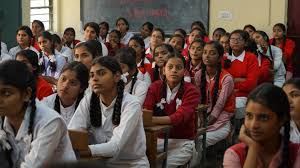
India may have succeeded in bringing children into classrooms at the primary level, but retaining them through secondary education remains a serious challenge. A recent report released by NITI Aayog has revealed that nearly one in every 10 students drops out at the secondary level, exposing deep structural gaps in the country’s education system.
The report, titled School Education System in India: Temporal Analysis and Policy Roadmap for Quality Enhancement, paints a mixed picture of progress and persistent inequality in Indian schooling. While enrolment at the foundational stages has improved significantly over the last decade, dropout rates rise sharply once students reach Classes 9 and 10.
According to the report, the national secondary-level dropout rate stood at 11.5% in 2024-25, indicating that millions of students continue to leave school before completing their education.
Why Secondary Education Remains the Weakest Link
Experts say the secondary stage is where economic, social, and institutional challenges converge most intensely.
The report identifies several major reasons behind student attrition, including:
- Financial pressures on families
- Early entry into the labour market
- Poor school infrastructure
- Teacher shortages
- Long travel distances to higher classes
- Weak transition support after elementary education
- Lack of digital access and academic counselling
NITI Aayog observed that while India has largely solved the “school access” problem at the primary level, the country still struggles with “continuity” in education.
The findings are particularly concerning because secondary education plays a critical role in employability, higher education access, and long-term economic mobility.
States With the Highest Secondary School Dropout Rates
The report highlights major state-wise disparities in student retention.
Highest Secondary Dropout Rates in India (2024-25)
| State/UT | Dropout Rate |
|---|---|
| West Bengal | 20% |
| Arunachal Pradesh | 18.3% |
| Karnataka | 18.3% |
| Assam | 17.5% |
| Mizoram | 17.4% |
| Meghalaya | 17.4% |
| Gujarat | 16.9% |
| Madhya Pradesh | 16.8% |
| Ladakh | 16.2% |
| Andhra Pradesh | 15.5% |
| Chhattisgarh | 15.3% |
| Odisha | 15% |
West Bengal emerged as the state with the highest dropout rate at the secondary level, with nearly one in five students leaving school before completion.
States Showing Better Student Retention
Some states and union territories have shown relatively strong performance in retaining students through secondary education.
Lowest Secondary Dropout Rates
| State/UT | Dropout Rate |
|---|---|
| Chandigarh | 2% |
| Jharkhand | 3.5% |
| Lakshadweep | 4.1% |
| Uttarakhand | 4.6% |
| Kerala | 4.8% |
Kerala and Chandigarh continue to perform strongly due to better school infrastructure, improved literacy levels, and stronger public education systems.
Some States Have Improved Significantly
Despite the concerning national numbers, the report also notes major improvements in several states over the past decade.
States Showing Major Improvement in Dropout Reduction
- Odisha: from 49.5% to 15%
- Jharkhand: from 23.2% to 3.5%
- Nagaland: from 35.1% to 12.1%
- Bihar: from 25.3% to 6.9%
- Rajasthan: from 18.8% to 7.7%
- Kerala: from 14.5% to 4.8%
Education analysts say targeted interventions, scholarships, improved transport connectivity, and school consolidation models have contributed to better retention in some regions.
Infrastructure Gaps Continue to Hurt Students
One of the report’s most alarming findings concerns the condition of school infrastructure across India.
According to the study:
- More than 1 lakh schools operate with a single teacher
- Nearly 98,592 schools lack functional girls’ toilets
- Over 1 lakh schools do not have electricity
- Thousands of schools still lack water supply and digital connectivity
Experts say these gaps disproportionately affect girls, rural students, and economically weaker communities.
The absence of proper sanitation facilities, especially for adolescent girls, is considered one of the key factors contributing to secondary-level dropout rates.
Government School Enrolment Falls Below 50%
Another major concern highlighted in the NITI Aayog report is the declining trust in government schools.
For the first time, enrolment in government schools has reportedly fallen below the 50% mark nationally, dropping from 71% in 2005 to 49.24% in 2024-25.
Experts believe parents are increasingly shifting children toward private institutions due to concerns over infrastructure, teacher absenteeism, and learning quality in public schools.
Teacher Shortages Adding to the Crisis
Teacher shortages continue to affect learning outcomes and student engagement, especially in rural and remote regions.
For example, Karnataka alone reportedly faces a 22% teacher shortage in government schools, with more than 38,000 teaching positions lying vacant.
The report also noted that teachers lose nearly 14% of instructional days on non-academic duties such as election work, surveys, and administrative assignments.
Transition Stages Are the Biggest Problem
Education experts say the highest dropout rates are observed during transition years — particularly Classes 6, 9, and 11 — where students often need to shift schools due to limited availability of higher-level institutions.
Only 5.4% of schools in India currently offer continuous education from Class 1 to 12, creating repeated barriers during academic progression.
Several states, including Gujarat, are now exploring integrated school models to reduce student attrition at transition stages.
Why the Report Matters
The NITI Aayog findings highlight that India’s education challenge is no longer just about enrolment — it is increasingly about retention, quality, and continuity.
Experts warn that high secondary dropout rates could have long-term consequences for:
- Employment and skill development
- Female workforce participation
- Higher education access
- Poverty reduction
- Social mobility
- India’s demographic dividend
With India aiming to become a global knowledge economy, ensuring that students remain in school through secondary and higher secondary education has become a critical national priority.
The Road Ahead
The report recommends stronger policy interventions including:
- Better infrastructure investment
- Teacher recruitment and training
- Financial support for vulnerable students
- Digital inclusion initiatives
- Integrated school systems
- Career counselling and transition support
- Improved girls’ education facilities
NITI Aayog also emphasised the need for greater coordination between states, schools, and local communities to reduce dropout rates sustainably.
For millions of students across India, the challenge is no longer entering school — it is staying there long enough to build a better future.