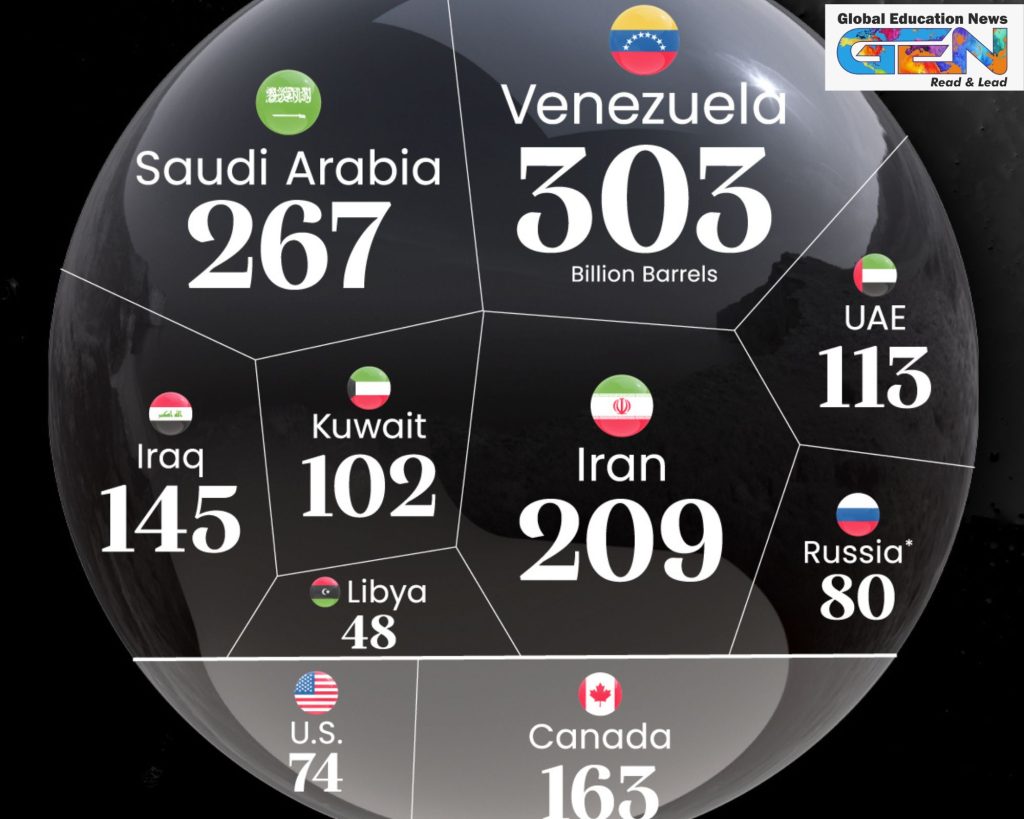
Oil remains the lifeblood of the global economy, and in 2025, a handful of nations hold the keys to the world’s energy supply. The top 5 countries with the largest proven oil reserves—Venezuela, Saudi Arabia, Iran, Canada, and Iraq—control a staggering portion of the world’s 1.5 trillion barrels of recoverable crude oil. These energy giants shape everything from global markets to geopolitical strategies. Ready to dive into the world of black gold? Let’s uncover the top players, their massive reserves, and what makes them tick
Key Points:
- Global Context: 1.5 trillion barrels of proven oil reserves worldwide in 2025.
- Top 5 Dominance: Venezuela, Saudi Arabia, Iran, Canada, and Iraq lead the pack.
- Strategic Impact: These nations influence energy prices, trade, and global politics.
- Data Source: Based on US EIA, Oil & Gas Journal, and TRAI insights.
1. Venezuela: The Oil Titan Struggling to Shine
Venezuela tops the list with a colossal 303.8 billion barrels of proven oil reserves, the largest in the world. The Orinoco Belt, rich in extra-heavy crude, is the heart of this wealth. But here’s the catch: despite its vast reserves, Venezuela’s oil industry is hobbled by economic instability, US sanctions, and crumbling infrastructure. In 2024, oil exports funded 58% of the government’s budget, yet production has plummeted, with GDP per capita down 68% since 2013. Can Venezuela turn its oil wealth into real power?
Key Points:
- Reserves: 303.8 billion barrels (~17.5% of global total).
- Key Region: Orinoco Belt, known for heavy crude oil.
- Challenges: Sanctions, hyperinflation, and infrastructure decay limit output.
- Potential: Needs foreign investment to revive production.
2. Saudi Arabia: The King of Oil Production
Saudi Arabia holds the second spot with 258.6–297.5 billion barrels, depending on estimates. Home to the world’s largest oilfield, Ghawar, the Kingdom is a powerhouse in both reserves and production, pumping 11 million barrels per day (bpd) in 2023. As OPEC’s largest producer, Saudi Arabia wields immense influence, balancing output cuts (e.g., 1 million bpd in 2023) with plans to expand capacity to 13 million bpd by 2027. Its stability and infrastructure make it a global energy linchpin.
Key Points:
- Reserves: 258.6–297.5 billion barrels (~17% of global total).
- Key Field: Ghawar, the largest conventional oilfield globally.
- Production: 11 million bpd, second only to the US.
- OPEC Leader: Drives global oil prices through strategic output decisions.
3. Iran: A Giant Under Pressure
Iran ranks third with 157.8–210 billion barrels of proven oil reserves, bolstered by the massive South Pars/North Dome field, shared with Qatar. Despite producing 2.5 million bpd in 2021, US sanctions have slashed exports to 760,000 bpd, limiting Iran’s global reach. Still, its vast reserves and regional alliances keep it a key player, with ambitions to boost domestic production despite economic constraints.
Key Points:
- Reserves: 157.8–210 billion barrels (~16% of global total).
- Key Asset: South Pars, the world’s largest natural gas field.
- Challenges: Sanctions restrict exports and foreign investment.
- Strength: Top 5 fields hold over 80 billion barrels.
4. Canada: The Oil Sands Champion
Canada secures fourth place with 163–170.5 billion barrels, largely thanks to Alberta’s oil sands (166.3 billion barrels). Producing nearly 5 million bpd in 2023, Canada is a top exporter, especially to the US. Despite environmental concerns and government efforts to curb carbon emissions, demand keeps production high. The oil sands revolution transformed Canada’s reserves, jumping from 5 billion to 180 billion barrels in 2002.
Key Points:
- Reserves: 163–170.5 billion barrels (~10% of global total).
- Key Source: Alberta’s oil sands dominate reserves.
- Production: ~5 million bpd, a record high in 2023.
- Challenge: Environmental pushback against oil sands extraction.
5. Iraq: Rising Star of OPEC
Iraq rounds out the top five with 145 billion barrels, driven by major fields like Rumaila and West Qurna. As OPEC’s second-largest producer, it pumped 4.5 million bpd in 2023, with exports at 3.4 million bpd. Partnerships with China and Russia are boosting output, but underutilized natural gas reserves and infrastructure gaps pose challenges. Iraq aims to rival Saudi Arabia’s production in the coming years.
Key Points:
- Reserves: 145 billion barrels (~8% of global total).
- Key Fields: Rumaila, West Qurna, and Kirkuk.
- Production: 4.5 million bpd, with ambitious growth plans.
- Hurdles: Gas flaring and infrastructure limitations.
Why These Reserves Matter
The top 5 countries—Venezuela, Saudi Arabia, Iran, Canada, and Iraq—hold over 50% of the world’s proven oil reserves, giving them immense sway over global energy markets. Despite the rise of renewables, oil accounted for 82.92 million bpd of global production in 2024, with these nations driving supply dynamics. Their reserves fuel economies, shape geopolitics, and influence everything from oil prices to international sanctions.
Key Points:
- Economic Power: Oil exports drive GDP (e.g., 58% of Venezuela’s budget).
- Geopolitical Clout: OPEC nations like Saudi Arabia and Iraq set global prices.
- Challenges: Sanctions (Iran, Venezuela), environmental concerns (Canada), and infrastructure needs (Iraq).
- Future Trends: Global oil demand grows 1.36% year-over-year, despite green energy shifts.
Challenges Facing These Oil Giants
Each country faces unique hurdles in leveraging its reserves:
- Venezuela: Sanctions and economic collapse limit production.
- Saudi Arabia: Balancing OPEC cuts with expansion plans.
- Iran: Sanctions curb exports and investment.
- Canada: Environmental regulations challenge oil sands growth.
- Iraq: Infrastructure and gas flaring issues hinder potential.
Key Points:
- Sanctions Impact: Venezuela and Iran lose billions in export revenue.
- Infrastructure Needs: Iraq and Venezuela require massive investments.
- Green Push: Canada faces pressure to shift to renewables.
- OPEC Dynamics: Saudi Arabia and Iraq navigate production cuts.
Tips for Understanding the Oil Market
Want to stay ahead in the energy game? Here’s how to keep up with these oil giants:
Key Points:
- Track Prices: Follow Brent and WTI crude prices for market trends.
- Monitor OPEC: Check OPEC+ announcements for production cuts or hikes.
- Research Reserves: Use US EIA or Oil & Gas Journal for updated reserve data.
- Watch Geopolitics: Sanctions and alliances (e.g., Iran-China, Iraq-Russia) shift markets.
- Pro Tip: Follow @stats_feed on X for real-time oil reserve updates.