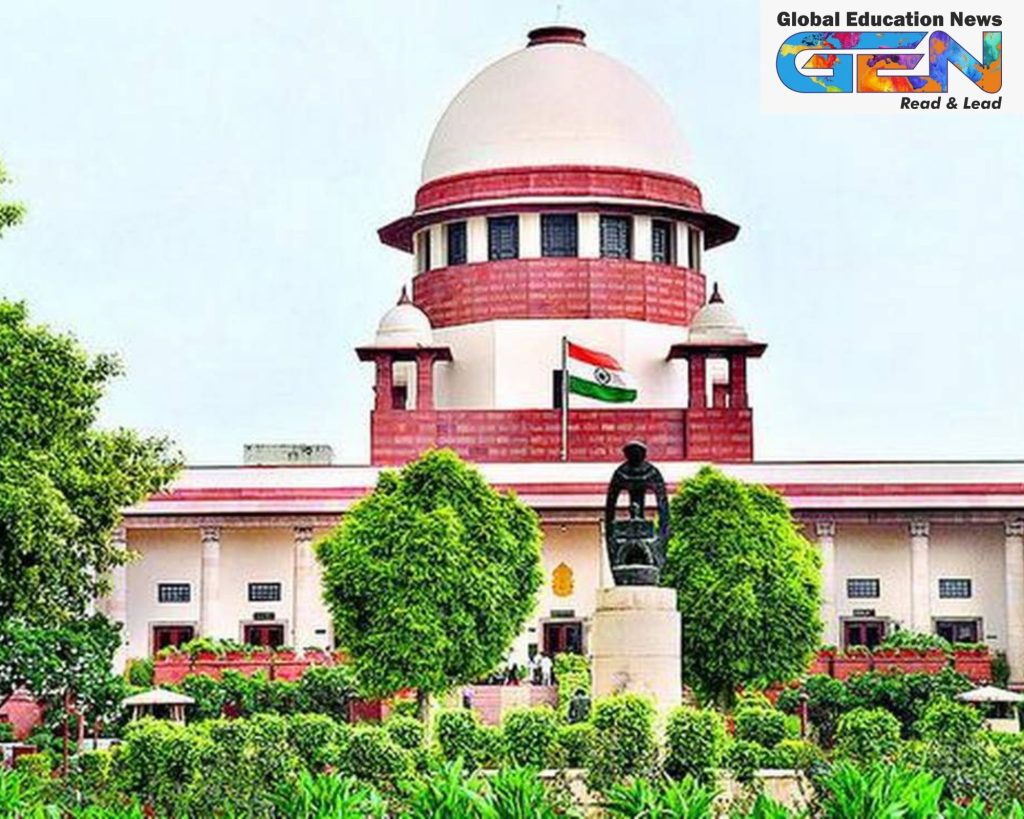
In a landmark decision that strengthens transparency in governance and federalism in India, the Supreme Court of India has ruled that the President of India must provide clear reasons when withholding assent to bills passed by state legislatures and must act within a strict 3-month deadline. Announced on April 8, 2025, this ruling addresses long-standing concerns about delays and lack of accountability in the legislative process, particularly in Centre-State relations. It reinforces democratic accountability, clarifies presidential powers, and ensures that state legislation is not arbitrarily stalled, marking a pivotal moment in India’s constitutional framework.
Background of the Case
The issue emerged when several state governments, notably Tamil Nadu, challenged the President’s refusal to grant assent to bills passed by their legislatures. These bills, often addressing critical regional issues such as education reforms, land policies, and public welfare, were sent to the President for approval under Article 200 and Article 201 of the Indian Constitution (Article 200). In many cases, the President withheld assent without providing any explanation, leading to significant delays and uncertainty. States argued that this practice undermined their legislative autonomy and disrupted the principles of federalism, prompting legal disputes that reached the Supreme Court.
| Key Background Details | Information |
|---|---|
| Issue | President withholding assent to state bills without reasons |
| Affected States | Tamil Nadu, Kerala, and others |
| Constitutional Articles | Article 200 (Governor’s role), Article 201 (President’s role) |
| Core Complaint | Undermining state autonomy and federalism |
Supreme Court’s Ruling
The Supreme Court delivered a comprehensive judgment emphasizing that the President of India cannot act arbitrarily when handling state bills. The ruling introduced clear guidelines to ensure timely and reasoned decisions, reinforcing the judiciary’s role as a guardian of the Constitution. The key points of the ruling are:
- 3-Month Deadline: The President must decide on state bills referred by governors within 3 months from receiving the reference. If unable to act within this period, the President must notify the state and provide reasons for the delay (Oneindia News).
- Reasoned Decisions: Any decision to withhold assent must be accompanied by a detailed explanation, ensuring that actions are grounded in constitutional principles rather than discretion or external influence.
- Judicial Review: The President’s actions under Article 201 are subject to judicial scrutiny, allowing courts to intervene if decisions are deemed arbitrary or unconstitutional.
- No Pocket Veto: The ruling prohibits the President from indefinitely delaying action on bills, effectively eliminating the practice of a “pocket veto” where bills are stalled without decision.
- Legal Recourse for States: States can pursue legal action if the President fails to act within the 3-month timeframe, empowering them to protect their legislative rights.
In a notable instance, the Supreme Court invoked its extraordinary powers under Article 142 to clear 10 bills passed by the Tamil Nadu Assembly. Seven of these bills had been rejected by President Droupadi Murmu, one had been assented to, and two had not been considered. The Court’s action rendered the President’s decisions void and declared the practice of governors using a “pocket veto” by delaying action on bills as illegal (India Today).
| Ruling Details | Information |
|---|---|
| Date | April 8, 2025 |
| Deadline | 3 months for Presidential decision |
| Key Articles | Article 201, Article 142 |
| Tamil Nadu Case | 10 bills cleared, 7 rejected by President |
| Pocket Veto | Declared illegal for both President and governors |
Governors’ Powers and Timelines
The Supreme Court also addressed the role of governors under Article 200, which outlines the procedure for handling state bills. The Court clarified that governors must act expeditiously and set specific timelines to prevent delays. The key points regarding governors’ powers are:
- Timelines for Action:
- If acting on the advice of the Council of Ministers to withhold assent or reserve a bill for the President, the Governor must do so within one month.
- If withholding assent against the Council’s advice, the bill must be returned within three months.
- If reserving a bill for the President against the Council’s advice, it must be done within three months.
- For a bill reconsidered and re-presented by the legislature, the Governor must assent within one month.
- No Veto Power: Governors do not have the authority to indefinitely block bills, and inaction is not an option.
- Judicial Oversight: Governors’ actions under Article 200 are subject to judicial review, ensuring compliance with constitutional mandates (New Indian Express).
In the Tamil Nadu case, the Court ruled that Governor RN Ravi’s move to reserve 10 bills for the President after their reconsideration by the legislature was illegal, and the bills were deemed assented to on the date of reconsideration.
| Governors’ Timelines | Action | Deadline |
|---|---|---|
| Withhold assent (with advice) | Within 1 month | |
| Withhold assent (against advice) | Return within 3 months | |
| Reserve for President (against advice) | Within 3 months | |
| Re-presented bill | Assent within 1 month |
Implications for Indian Democracy
The Supreme Court’s ruling has profound implications for Indian democracy, federalism, and governance, reshaping the dynamics of legislative processes and Centre-State relations. The key implications include:
- Strengthening Federalism: By ensuring timely action on state bills, the ruling empowers states to legislate on matters within their jurisdiction, such as healthcare, education, and agriculture, without undue interference from the central government.
- Enhancing Transparency and Accountability: Mandating reasons for withholding assent promotes transparency and holds both the President and governors accountable for their decisions, aligning with the principles of the rule of law.
- Reinforcing Judicial Oversight: The affirmation of judicial review over the actions of the President and governors under Articles 201 and 200 reinforces the judiciary’s role in maintaining checks and balances within the constitutional framework.
- Preventing Legislative Delays: The strict timelines eliminate procrastination, ensuring that the legislative process remains efficient and responsive to public needs.
- Debate on Judicial Overreach: The use of Article 142 to directly clear Tamil Nadu’s bills has sparked discussions about whether the Supreme Court overstepped its bounds, with some critics arguing it infringes on the separation of powers. Others view it as a necessary intervention to uphold constitutional duties.
Why This Matters to Citizens
For ordinary citizens, this ruling translates into a more responsive and accountable government. State legislatures often pass bills that directly address local challenges, such as improving healthcare access, reforming education systems, or supporting agricultural policies. When these bills are stalled without explanation, it delays critical reforms that could enhance quality of life. By mandating transparency and setting deadlines, the Supreme Court ensures that the voices of state legislatures—and by extension, the people they represent—are heard and acted upon promptly. This decision upholds the principles of democracy and federalism, making governance more inclusive and effective.
Historical Context and Related Cases
The issue of presidential and gubernatorial delays in assenting to state bills is not new. In 2024, Kerala approached the Supreme Court, arguing that President Droupadi Murmu withheld assent to four bills without reasons, violating Articles 14, 200, and 201 (The Hindu). Similarly, Tamil Nadu had raised concerns about Governor RN Ravi’s delays, accusing him of acting as a “political rival” by sitting on bills for months (The Hindu). These cases highlighted a pattern of delays that the Supreme Court’s 2025 ruling seeks to address comprehensively.
The Court’s decision also builds on earlier judgments, such as the Shamsher Singh case, which clarified the limited discretionary powers of constitutional authorities, while overturning aspects of the BK Pavitra case that had allowed greater gubernatorial discretion. This ruling aligns with the constitutional mandate of acting “as soon as possible” under Article 200, ensuring that neither the President nor governors can indefinitely delay legislative processes.
Potential Challenges and Criticisms
While the ruling has been widely praised for strengthening federalism and transparency, it is not without challenges. The use of Article 142 to directly clear Tamil Nadu’s bills has raised concerns about judicial overreach, with critics arguing that the Supreme Court may have encroached on the executive’s domain. This has sparked a broader debate about the separation of powers and the appropriate scope of judicial intervention in legislative matters.
Additionally, implementing the 3-month deadline and ensuring compliance across states may face logistical hurdles, particularly in cases involving complex or politically sensitive bills. The requirement for reasoned decisions could also lead to increased litigation if states or other parties challenge the adequacy of the President’s explanations.
Conclusion
The Supreme Court’s ruling on presidential assent to state bills is a defining moment in India’s constitutional history. By mandating a 3-month deadline, requiring reasoned decisions, and subjecting the President’s and governors’ actions to judicial review, the Court has ensured that the legislative process remains robust, transparent, and accountable. The decision not only clarifies the roles of key constitutional authorities but also strengthens the fabric of federalism and democracy in India. While debates about judicial overreach persist, the ruling’s focus on timely and reasoned governance is likely to have a lasting impact on Centre-State relations and the overall legislative framework.
As India continues to navigate the complexities of its federal structure, this judgment serves as a reminder of the judiciary’s critical role in upholding constitutional values and ensuring that governance serves the needs of all citizens. Whether addressing healthcare, education, or public welfare, the ruling paves the way for a more responsive and inclusive legislative process, benefiting millions across the country.