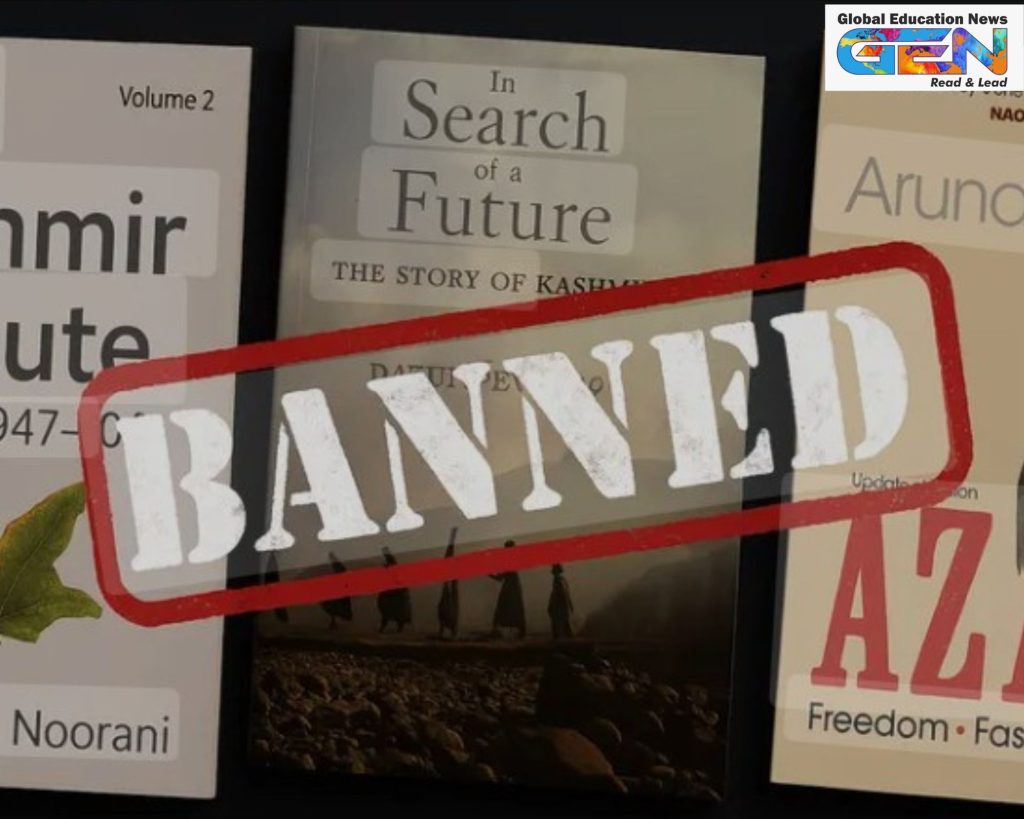
On August 5, 2025, the Jammu and Kashmir government issued a bold order to ban 25 books, accusing them of propagating false narratives and glorifying terrorism. The decision, enacted under Section 98 of the Bharatiya Nagarik Suraksha Sanhita (BNSS) 2023, targets works by prominent authors like Arundhati Roy, A.G. Noorani, Moulana Abul A’la Maududi, Victoria Schofield, and David Devadas. The move, coinciding with the sixth anniversary of Article 370’s abrogation, has ignited a heated debate over freedom of expression, national security, and the role of literature in shaping public discourse.
Key Points:
- 25 books declared “forfeited” for promoting secessionism and terrorism.
- Ban enacted under BNSS 2023, citing threats to India’s sovereignty.
- Timing aligns with the anniversary of Article 370’s abrogation, raising questions about intent.
Why Were These Books Targeted?
The J&K Home Department’s order claims that the banned books contribute to youth radicalization by distorting historical facts, glorifying terrorists, vilifying security forces, and promoting alienation. The government cites credible intelligence and investigations, alleging that these works, often disguised as historical or political commentary, foster a culture of grievance and terrorist heroism. Titles like Arundhati Roy’s Azadi, A.G. Noorani’s The Kashmir Dispute 1947–2012, and Moulana Maududi’s Al Jihad fil Islam are accused of inciting violence and endangering India’s integrity under Sections 152, 196, and 197 of the Bharatiya Nyaya Sanhita (BNS) 2023.
Key Points:
- Books accused of distorting history and promoting secessionist ideologies.
- Specific allegations include glorification of terrorists and vilification of security forces.
- Legal provisions under BNS 2023 target threats to national unity and integrity.
The Banned Books: A Diverse List
The 25 banned titles span a range of genres, from political essays to historical analyses, penned by both Indian and international authors. Notable works include Victoria Schofield’s Kashmir in Conflict, Sumantra Bose’s Contested Lands, and Anuradha Bhasin’s A Dismantled State, which critiques the post-Article 370 scenario. The inclusion of Maududi’s Al Jihad fil Islam and Hasan al-Banna’s Mujahid ki Azan points to concerns over religious radicalization, while others, like Essar Batool’s Do You Remember Kunan Poshpora?, address human rights issues. The government argues these texts collectively pose a threat to public order and national security.
Key Points:
- Diverse titles include political, historical, and human rights-focused works.
- Authors range from Indian intellectuals to international historians.
- Government claims the books promote a culture of grievance and violence.
Voices of Dissent and Defense
The ban has sparked significant backlash, with critics arguing it stifles freedom of speech and academic discourse. Anuradha Bhasin, whose book A Dismantled State is among those banned, defended the works as well-researched and dismissed claims of terrorism glorification, accusing the government of suppressing narratives that challenge its version of events. Posts on X reflect divided sentiments: some users praise the ban as a necessary step to curb radicalization, while others condemn it as an attack on intellectual freedom. The controversy raises questions about balancing national security with civil liberties.
Key Points:
- Critics, including authors, argue the ban restricts free expression.
- Social media sentiments split between support for deradicalization and concerns over censorship.
- Debate centers on the line between security measures and intellectual suppression.
Legal and Political Context
The ban, authorized by Principal Secretary Chandraker Bharti under the orders of Lieutenant-Governor Manoj Sinha, leverages Section 98 of BNSS 2023, which allows the forfeiture of publications deemed harmful to public order. The cited BNS sections address crimes like endangering sovereignty and promoting enmity. The decision follows intelligence reports suggesting terror groups may exploit such literature to fuel secessionist ideologies among youth, particularly after the 2019 revocation of J&K’s special status. This context underscores the government’s heightened focus on controlling narratives in the region.
Key Points:
- Ban enacted under BNSS 2023, with legal backing from BNS provisions.
- Intelligence reports link literature to youth radicalization post-Article 370.
- Move reflects broader efforts to control narratives in J&K.
Implications for Education and Society
The ban directly impacts educational institutions, as many of these books were reportedly used in schools and universities. By seizing these texts, the government aims to curb their influence on young minds, but critics warn this could limit critical thinking and access to diverse perspectives. The inclusion of works by globally respected authors raises concerns about the precedent this sets for academic freedom in India. The ongoing literary festival in J&K, coinciding with the ban, adds irony to the situation, highlighting tensions between cultural expression and state control.
Key Points:
- Ban affects books used in J&K schools, raising concerns about educational content.
- Critics fear restrictions on critical thinking and academic discourse.
- Timing during a literary festival amplifies the controversy.
Looking Ahead: A Polarized Debate
The forfeiture of these 25 books marks a significant escalation in J&K’s efforts to combat secessionism and terrorism through narrative control. However, the move risks alienating intellectuals and fueling accusations of censorship. As the region navigates its post-Article 370 landscape, the ban underscores the delicate balance between security and freedom. The debate is far from over, with potential legal challenges and public discourse likely to shape the future of literary expression in J&K.
Key Points:
- Ban reflects J&K’s focus on narrative control to counter terrorism.
- Risks accusations of censorship and suppression of intellectual freedom.
- Future legal and public responses may redefine literary boundaries in the region.