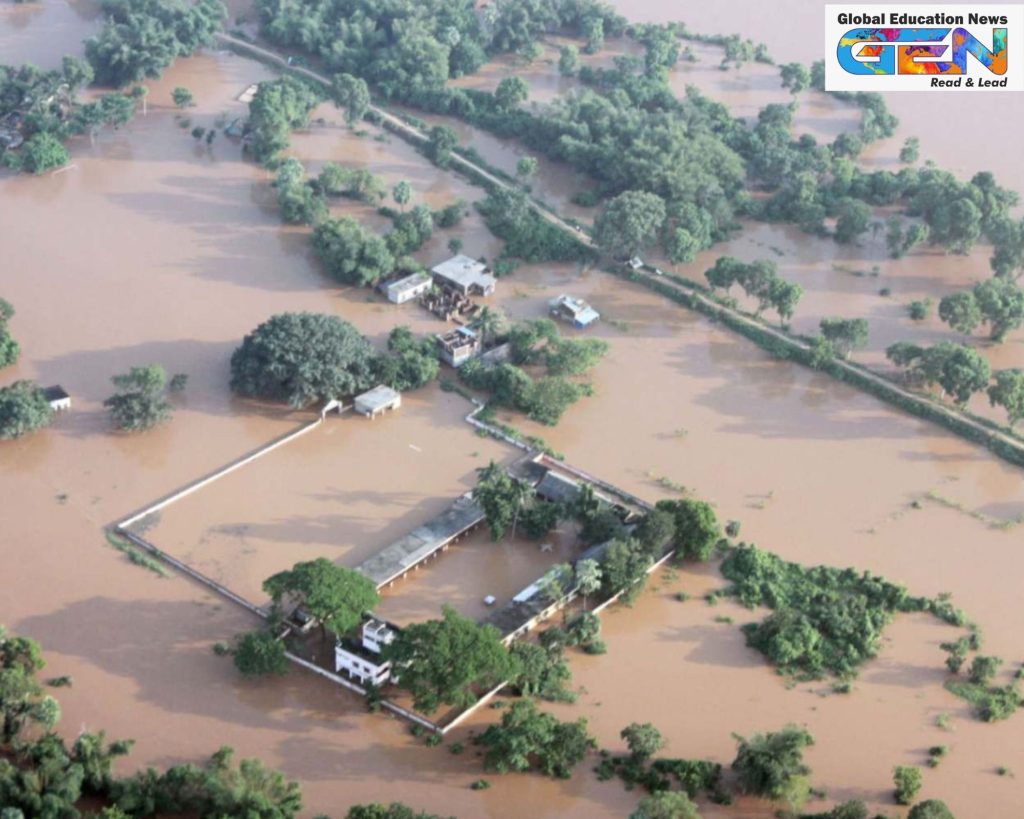
Floods wreak havoc across India, displacing communities and claiming lives yearly. To address this, researchers from IIT Delhi and IIT Gandhinagar have developed the District Flood Severity Index (DFSI), a pioneering tool launched in 2025 to measure flood impacts at the district level. By integrating flood duration, affected area, casualties, and population, the DFSI offers a comprehensive framework to enhance flood management, prioritize disaster relief, and guide infrastructure investment, filling a critical gap in India’s flood response strategy.
Key Points:
- DFSI introduced to assess flood severity at the district level.
- Combines multiple factors for a holistic view of flood impact.
- Aims to improve targeted relief and long-term flood resilience.
Why a District-Level Index Matters
Districts are the backbone of India’s administrative framework, making them ideal units for localized flood response. Yet, until now, no standardized, data-driven index existed to quantify flood severity at this scale. The DFSI addresses this by providing policymakers with a tool to identify high-risk districts, streamline emergency response, and allocate resources effectively. Unlike earlier metrics focused solely on flood frequency, the DFSI captures both physical and human impacts, ensuring a more nuanced approach.
Key Points:
- Districts are key for efficient flood response and resource allocation.
- DFSI fills the gap for a standardized, district-level flood metric.
- Prioritizes human and spatial impacts over mere flood frequency.
How the DFSI Works
The DFSI leverages data from the Indian Meteorological Department (IMD), collected annually since 1967, focusing on riverine floods and large inundations. It evaluates five key parameters: mean flood duration (days), percentage of district area historically flooded, total deaths, total injuries, and district population. By weighing these factors, the DFSI ensures that districts with high casualties or population exposure, like Patna in the Indo-Gangetic Plain, rank higher than those with frequent but less impactful floods.
Key Points:
- Uses IMD data to assess flood duration, area, and human impact.
- Patna ranks highest due to severe flood impacts in populated areas.
- Multi-dimensional approach avoids overemphasizing flood frequency.
Urban Flooding: A Planning Challenge
Urban areas like Thiruvananthapuram face frequent flooding, driven by heavy rainfall and poor urban planning. Blocked natural drainage due to unplanned development exacerbates the issue. While Thiruvananthapuram records the highest number of flood events, its lower DFSI ranking reflects fewer casualties and smaller affected populations. This highlights the need for improved urban water management and sustainable city planning to mitigate urban flooding risks.
Key Points:
- Urban flooding worsened by poor drainage and unplanned development.
- Thiruvananthapuram’s high flood frequency contrasts with lower DFSI rank.
- Better urban planning critical for reducing flood severity.
Limitations and Room for Growth
While groundbreaking, the DFSI has limitations. It currently excludes agricultural flood impacts due to insufficient data and relies heavily on available IMD datasets and population figures. Researchers advocate for incorporating socio-economic factors and detailed land-use data to enhance accuracy. As a first-step tool, the DFSI lays the groundwork for future refinements, encouraging more granular data collection to strengthen flood preparedness.
Key Points:
- DFSI omits agricultural impacts due to data gaps.
- Relies on existing IMD and population data, limiting granularity.
- Future improvements aim to include socio-economic and land-use factors.
Transforming Flood Management
The DFSI empowers policymakers to prioritize districts for urgent flood relief and infrastructure upgrades, such as improved drainage and river management systems. By highlighting the interplay of flood magnitude and human impact, it promotes data-driven resilience planning. For instance, giving rivers “room to move” and enhancing urban drainage can significantly reduce flood severity. The index’s adoption could reshape how India tackles its perennial flooding challenge.
Key Points:
- DFSI guides targeted relief and infrastructure investment.
- Promotes sustainable solutions like river space and urban drainage improvements.
- Supports data-driven, district-focused flood resilience strategies.
A Step Toward Resilience
The DFSI marks a pivotal moment in India’s fight against floods, offering a scientific, scalable tool to mitigate disaster impacts. As posts on X suggest, experts and communities alike see its potential to transform flood management, though some call for broader data inclusion. By prioritizing high-risk districts like Patna and addressing urban planning flaws, the DFSI could save lives, reduce displacement, and build a more resilient India in the face of escalating climate challenges.
Key Points:
- DFSI hailed as a game-changer for flood management on social media.
- Potential to save lives and reduce displacement through targeted action.
- Sets a model for climate-resilient planning in India.