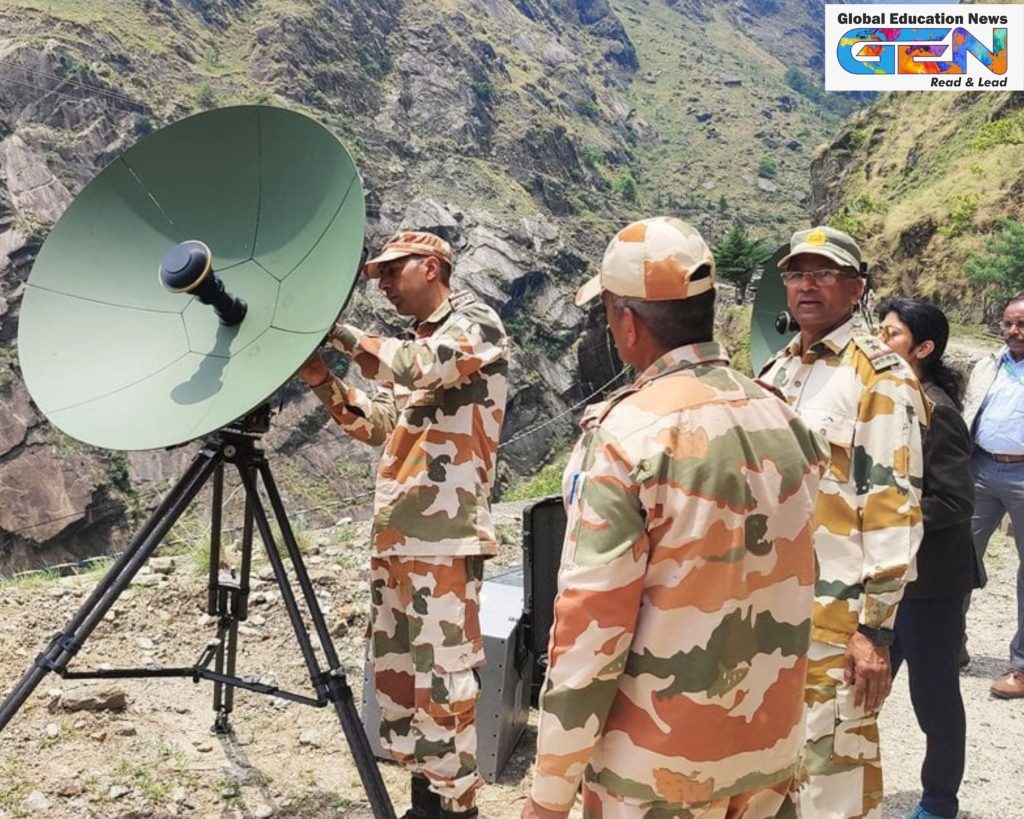
On July 1, 2025, the Defence Research and Development Organisation (DRDO) achieved a major milestone in India’s quest for self-reliance in defense technology. The Defence Electronics Application Laboratory (DEAL) in Dehradun successfully conducted field trials of two indigenous communication systems—the Software Defined Radio (SDR) Manpack and the Compact Transhorizon Communication System (CTCS)—in the rugged terrain of Joshimath, Uttarakhand. These systems, designed for secure, mission-critical communication, performed flawlessly, reinforcing DRDO’s commitment to equipping India’s security forces with cutting-edge, homegrown technology. Ready to dive into this game-changing achievement? Let’s explore
Key Points:
- Trial Location: Joshimath, Uttarakhand, conducted on July 1, 2025.
- Systems Tested: SDR Manpack and CTCS, both developed by DEAL, Dehradun.
- Collaborators: Ministry of Home Affairs (MHA), Central Armed Police Forces (CAPFs), and agencies like ITBP, BSF, and NSG.
- Outcome: Both systems met user-defined benchmarks, proving robust and reliable.
What Are SDR Manpack and CTCS?
The Software Defined Radio (SDR) Manpack and Compact Transhorizon Communication System (CTCS) are advanced communication platforms designed to meet India’s national security needs, especially in challenging environments where civilian networks are absent.
Key Points:
- SDR Manpack:
- A secure, indigenous system supporting legacy and digital voice/data communication.
- Operates in multiple bands: V/UHF (Manpack and handheld roles), HF, and L-band for tactical and naval use.
- Features: Anti-jam capabilities, flexible waveforms, and interoperability for armed forces.
- CTCS:
- A large-hop terrestrial backhaul system for high-data-rate connectivity in remote areas.
- Ideal for locations without civilian communication grids, ensuring seamless data transfer.
- Use Case: Enhances connectivity for security forces in border regions like Joshimath.
- Performance: Both systems excelled in varied terrains, meeting Qualitative Requirements (QR) and Technical Documents (TDs).
Why Joshimath? Testing in Real-World Conditions
The choice of Joshimath, Uttarakhand, was strategic. Its high-altitude, rugged terrain mimics the challenging environments where India’s security forces operate, such as border areas. The trials, conducted in collaboration with the MHA, CAPFs, and agencies like ITBP, BSF, SSB, Assam Rifles, NSG, CRPF, CISF, and IB, tested the systems’ performance under real-world conditions. Both SDR Manpack and CTCS delivered robust, reliable communication, surpassing operational benchmarks.
Key Points:
- Terrain: High-altitude, mountainous Joshimath tested system durability.
- Participants: Paramilitary forces and MHA ensured practical validation.
- Goal: Verify key parameters like range, clarity, and anti-jam capabilities.
- Success: Systems performed exceptionally, ready for deployment.
Why This Matters: A Leap for Aatmanirbhar Bharat
These trials mark a significant step toward self-reliance in defense technology, aligning with India’s Aatmanirbhar Bharat initiative. By developing indigenous communication systems, DRDO reduces reliance on foreign tech, enhances national security, and equips forces with tools tailored to India’s unique operational needs. The success in Joshimath highlights DEAL’s expertise and DRDO’s broader mission to innovate for India’s armed and paramilitary forces.
Key Points:
- Self-Reliance: Indigenous systems cut dependence on imports.
- Security Boost: Secure, anti-jam communication for critical missions.
- Strategic Edge: Tailored for India’s diverse terrains, from borders to coastal areas.
- DRDO’s Legacy: Builds on successes like Tejas, Agni, and Zorawar.
Challenges and How DRDO Overcame Them
Developing and testing advanced communication systems in rugged terrains isn’t easy. Challenges included ensuring reliability in extreme conditions, interoperability across forces, and meeting stringent security standards. DRDO’s DEAL addressed these by:
Key Points:
- Challenge: Harsh Joshimath terrain (high altitude, cold climate).
- Solution: Rigorous testing across varied operational environments.
- Challenge: Interoperability for diverse forces (Navy, CAPFs, etc.).
- Solution: SDR’s flexible waveforms ensure seamless communication.
- Challenge: Security against jamming and cyber threats.
- Solution: Advanced encryption and anti-jam features validated in trials.
- Outcome: Both systems exceeded expectations, ready for mission-critical use.
What’s Next for DRDO’s Communication Systems?
The successful trials pave the way for wider deployment of SDR Manpack and CTCS across India’s armed and paramilitary forces. DRDO is likely to scale production with partners like Bharat Electronics Limited (BEL), a frequent collaborator. Future steps include integrating these systems into naval ships, airborne platforms, and tactical units, enhancing interoperability. Posts on X also suggest DRDO is advancing quantum communication with IIT Delhi, hinting at even more secure systems on the horizon.
Key Points:
- Deployment: Systems ready for CAPFs, Navy, and tactical units.
- Production: Likely collaboration with BEL and private partners.
- Future Tech: Quantum communication trials signal next-gen advancements.
- Timeline: Expect integration into forces by late 2025 or early 2026.
Tips for Aspiring Defense Tech Enthusiasts
Inspired by DRDO’s innovation? Here’s how to stay engaged with India’s defense tech journey:
Key Points:
- Follow DRDO: Check drdo.gov.in and @DRDO_India on X for updates.
- Learn Tech: Study electronics, cybersecurity, or radio systems for a career in defense R&D.
- Engage with Trials: Follow news on platforms like gktoday.in for DRDO milestones.
- Support Aatmanirbhar Bharat: Advocate for indigenous tech in forums and discussions.
- Pro Tip: Explore DRDO’s Technology Development Fund (TDF) for startup opportunities in defense innovation.