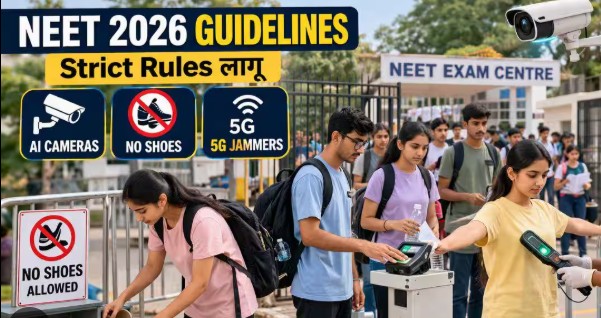
With over 20 lakh aspirants preparing for NEET 2026, the National Testing Agency (NTA) has introduced stringent guidelines and advanced security systems to ensure a completely fair and leak-proof examination process.
The new measures come in response to growing concerns over exam paper leaks and malpractice, which have previously shaken trust in India’s most competitive medical entrance exam.
AI Cameras to Monitor Every Move
One of the biggest upgrades this year is the deployment of AI-enabled surveillance cameras at exam centres.
These smart systems can:
- Detect suspicious movements or gestures
- Track unusual behaviour patterns
- Send instant alerts to control rooms
This “third eye” of AI ensures that even subtle cheating attempts are identified in real time.
Biometric Verification & Digital Frisking
To eliminate impersonation and solver gangs, NTA has introduced multi-layer verification systems:
- Biometric authentication linked with Aadhaar
- Real-time identity matching at entry gates
- Advanced digital frisking instead of basic metal detectors
This ensures that only genuine candidates enter the examination hall.
5G Jammers to Block All Electronic Communication
In a major technological leap, exam centres will be equipped with high-frequency signal jammers, capable of blocking even 5G networks.
This step aims to prevent:
- Use of Bluetooth devices
- Microchips or hidden communication tools
- External assistance during exams
With communication channels completely cut off, the chances of organised cheating drop significantly.
GPS Tracking to Stop Question Paper Leaks
To address one of the most critical concerns—question paper leaks—NTA has implemented GPS-enabled digital tracking systems.
- Question paper boxes are digitally locked
- They can only be opened at designated time and location
- Movement of papers is tracked throughout transit
This system ensures that leaks during transportation or storage are virtually eliminated.
Strict Dress Code: No Shoes, No Full Sleeves
NEET 2026 introduces a stricter dress code policy to prevent hidden devices:
- Only half-sleeve clothing allowed
- Shoes are banned; only slippers or sandals permitted
- Clothes with large buttons, heavy embroidery, or multiple pockets are restricted
These rules aim to reduce the possibility of concealing electronic gadgets or cheat materials.
Special Rules for Religious Attire
Candidates wearing customary attire like hijab or turban must:
- Report at least 1–2 hours early
- Undergo additional security checks
This ensures both respect for cultural practices and strict exam integrity.
New Exam-Day Rules for Students
NTA has also revised what students can carry inside the exam hall:
- Pens will be provided at the centre
- Only transparent water bottles allowed
- No personal items like wallets, gadgets, or stationery
These guidelines minimise external interference and standardise the exam environment.
Why These Measures Matter
India has witnessed multiple instances where paper leaks have undermined competitive exams, often involving organised networks and digital distribution channels.
Given the high stakes—lakhs of students competing for limited medical seats—such reforms are essential to:
- Restore trust in the examination system
- Ensure fair opportunities for all candidates
- Prevent large-scale malpractice