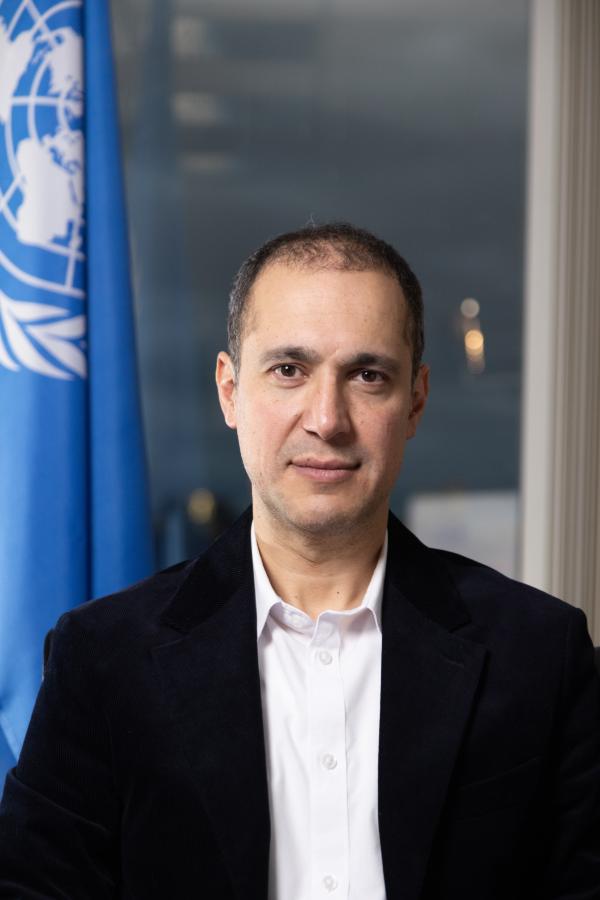
Professor Kaveh Madani is an internationally acclaimed environmental scientist, policy expert, and water resource leader who has been honoured with the 2026 Stockholm Water Prize — widely regarded as the “Nobel Prize of Water” for exceptional contributions to sustainable water use and protection.
Madani’s work transcends traditional academic boundaries: it bridges scientific research, public policy, diplomacy, and global advocacy aimed at solving one of the most pressing challenges of the 21st century — water scarcity and mismanagement.
What Is the Stockholm Water Prize?
The Stockholm Water Prize is a prestigious global award presented annually by the Stockholm Water Foundation in cooperation with the Royal Swedish Academy of Sciences. It recognises individuals and organisations that have made outstanding contributions to the protection and sustainable use of water resources worldwide.
The award is typically announced on UN World Water Day and formally presented during World Water Week in Stockholm, with H.M. King Carl XVI Gustaf of Sweden serving as the official patron and presenter.
Early Life and Academic Foundation
- Birthplace: Tehran, Iran (1981)
- Undergraduate: BSc in Civil Engineering, University of Tabriz (Iran)
- Graduate Studies:
- MSc in Water Resources, Lund University (Sweden)
- PhD in Civil & Environmental Engineering, University of California, Davis (USA)
- Postdoctoral Research: Environmental policy and economics studies in the US after earning his doctoral degree.
Raised in a family connected to the water sector, Madani’s early exposure to water issues laid the foundation for his enduring interest in water science and management.
Professional Journey: Bridging Science and Policy
Madani’s career spans multiple continents and institutions:
- Academic Positions: Research and teaching roles at universities including Stockholm University, Yale University, Cornell University, UC Riverside, UC Irvine, and more.
- Government Role: In 2017, he was appointed Deputy Vice President of Iran and Deputy Head of the Department of Environment, becoming one of the youngest high‑level officials at age 36.
- United Nations Leadership: As of 2026, he serves as Director of the United Nations University Institute for Water, Environment and Health (UNU‑INWEH) — a UN think tank focused on global water issues.
Research and Key Contributions
1. Water Governance and ‘Global Water Bankruptcy’
Madani’s research goes beyond climate factors to highlight mismanagement as a core cause of water scarcity. His influential concept of “Global Water Bankruptcy” argues that many aquifers and river basins have lost their capacity to recover, pushing regions toward long‑term water depletion rather than temporary crises.
This perspective reframes water scarcity from an environmental phenomenon to a policy and governance failure, emphasising the need for better institutional frameworks and resource management strategies.
2. Innovation Through Game Theory
One of Madani’s major scientific contributions is integrating game theory and decision analysis into traditional water resource models. This approach helps explain the behaviour of competing water‑use stakeholders and leads to more effective allocation strategies, especially under conditions of scarcity and conflict.
Personal and Professional Challenges
Despite his achievements, Madani’s path has not been without controversy. His outspoken criticism of Iran’s water policies and environmental governance led to accusations from hard‑line factions, including false allegations of espionage and “bioterrorism.”
After facing political and personal risk in Iran, he eventually left the country and continued his academic and policy work abroad, including roles in the United States and at the United Nations.
Global Impact and Recognition
The 2026 Stockholm Water Prize recognises Madani for combining cutting‑edge research with real‑world policy influence and international engagement under complex circumstances, making him a leading voice in global water governance.
His designation as the 2026 laureate highlights both the scientific importance of his work and its urgent relevance in an era of escalating water scarcity, population growth, and shifting climate patterns.
Legacy and Future Vision
Madani’s journey from academic researcher to global water leader underscores the importance of interdisciplinary approaches to environmental challenges. His work continues to inspire policymakers, researchers, and communities to rethink how water is managed — calling for solutions grounded in science, equity, and long‑term sustainability.