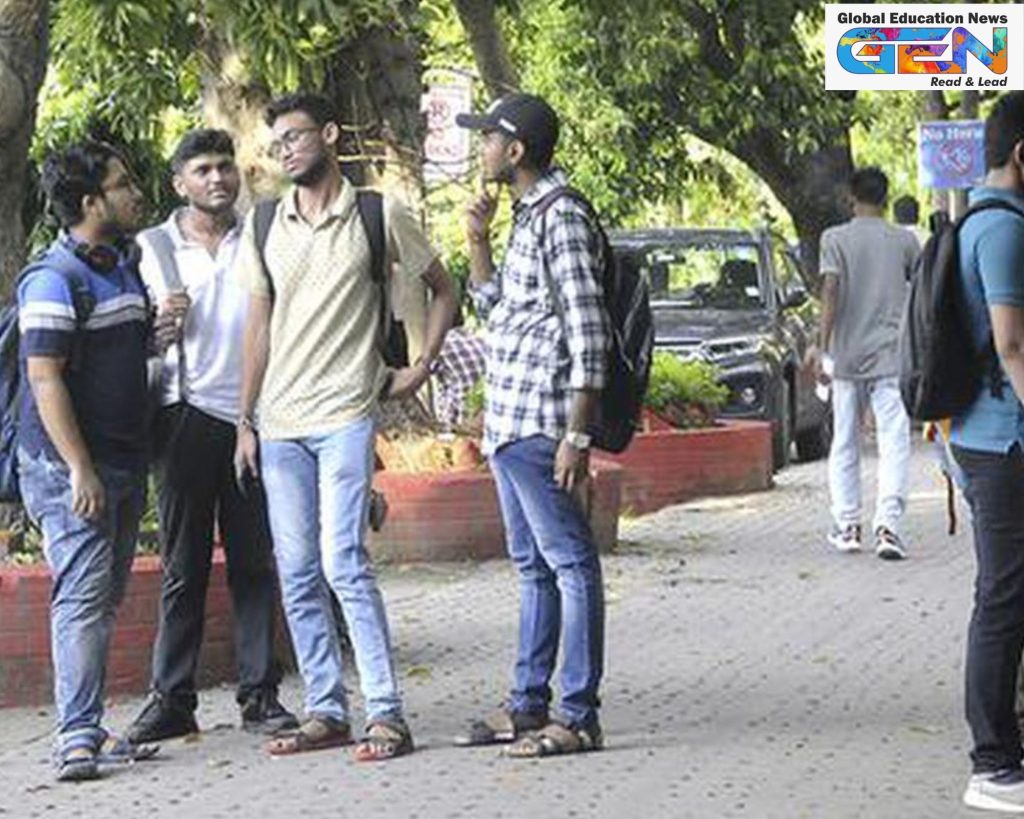
West Bengal’s colleges are grappling with an unprecedented admission crisis in 2025, as undergraduate seat applications plummet and thousands remain vacant. The Centralised Admission Portal (WBCAP), introduced to streamline admissions, has been mired in delays due to legal disputes over the OBC reservation list, pushing students to seek education outside the state. With classes delayed and academic schedules disrupted, the state’s higher education system faces a critical challenge. This article explores the causes, consequences, and potential solutions to this growing issue.
Key Points:
- Significant drop in student applications for undergraduate courses in state-run and aided colleges.
- Delays in the WBCAP due to legal battles over OBC reservations.
- Students increasingly opting for out-of-state colleges or alternative career paths.
What’s Causing the Admission Crisis?
The West Bengal Centralised Admission Portal (WBCAP), launched in 2023, was designed to simplify admissions across 461 government and government-aided colleges under 17 universities. However, the 2025 admission cycle has been plagued by delays and low student turnout, driven by multiple factors.
Key Factors:
- OBC Reservation Legal Tangle: A revised OBC list, increasing the number of subgroups to 140, has been stalled by a legal dispute. The Calcutta High Court overturned OBC status for 77 communities in May 2024, and the Supreme Court’s stay on July 28, 2025, has left the issue unresolved, delaying merit list preparation.
- Delayed Portal Launch: The WBCAP, which opened on June 18, 2025, faced repeated extensions, with the application deadline pushed to July 15 and physical verification scheduled for September 23–25. This delay, over three months since Higher Secondary results were announced on May 7, has frustrated students and parents.
- Student Migration: Many students are opting for colleges in cities like Bengaluru, Delhi, and Mumbai, citing better job prospects, safety concerns, and a lack of faith in West Bengal’s education system.
- Declining Interest in Traditional Degrees: A growing trend toward vocational training and immediate employment has reduced applications for conventional undergraduate programs.
- Adverse Student-Teacher Ratio: The lack of teacher recruitment in colleges has led to overcrowded classrooms, deterring students from applying.
Key Points:
- Legal disputes over OBC reservations have stalled the admission process.
- Extended deadlines and delayed merit lists have pushed students to private or out-of-state institutions.
- Shifting preferences toward vocational training and employment contribute to low enrollment.
The Numbers: A Stark Reality
The scale of the crisis is evident in the numbers. Despite 9,46,921 undergraduate seats available across West Bengal, only 3.6 lakh applications were received in 2025, leaving over 30% of seats vacant in some colleges. For example, at Naba Ballygunge Mahavidyalaya, only 94 of 386 interested students paid fees, and just 55 completed physical verification by August 24. Similarly, New Alipore College reported 1,245 allotments but only 585 admissions and 85 verifications, though its principal remains cautiously optimistic.
Key Points:
- Over 30% of undergraduate seats remain vacant in state-aided colleges.
- Only 3.6 lakh applications for 9.5 lakh seats, indicating a significant drop in interest.
- Low conversion rates from interest to enrollment highlight student disengagement.
Impact on Students and Colleges
The admission delays and low enrollment have far-reaching consequences for both students and institutions.
For Students:
- Uncertainty and Frustration: Students like Koel Goswami, who ranked seventh in the 2025 Higher Secondary exams, are still waiting for admission confirmations, jeopardling fears about their academic futures.
- Migration to Private Colleges: Many students are forced to enroll in expensive private or autonomous colleges, which have already started classes, leaving underprivileged students at a disadvantage.
- Career Delays: With classes set to begin on August 29 amidst fourth-semester exams, students face a compressed academic schedule, potentially affecting syllabus completion and exam eligibility due to the 75% attendance rule.
For Colleges:
- Financial Strain: Admission fees are a major revenue source, and vacant seats threaten institutional budgets.
- Academic Disruption: Overlapping schedules with university exams and the upcoming Durga Puja (starting September 28) complicate class planning.
- Reputation Damage: The ongoing crisis risks tarnishing the reputation of West Bengal’s higher education system, further driving students away.
Key Points:
- Students face uncertainty and are forced into costly private colleges.
- Colleges struggle with financial losses and disrupted academic schedules.
- The crisis threatens the long-term appeal of West Bengal’s higher education.
Voices from the Ground: Stakeholders Speak Out
The crisis has sparked widespread concern among students, educators, and activists. Ayantika Ghosh, principal of Naba Ballygunge Mahavidyalaya, remains hopeful but acknowledges the unclear admission picture, with only four days allocated for first merit list verification. A principal from a prominent college, speaking anonymously, highlighted the systemic disarray, noting the lack of an academic calendar from Calcutta University and the OBC issue’s negative impact.
Student leaders like Bishwajit Roy from the All India Democratic Students’ Organisation (AIDSO) criticized the government for not allowing admissions to proceed without OBC seats, alleging a deliberate attempt to undermine public education. Similarly, Arya Dutta, another student leader, accused the state of prioritizing private colleges’ profits. Posts on X echo this sentiment, with users like @SohamViii claiming that the OBC list issue has ruined students’ futures by limiting access to affordable education.
Key Points:
- College principals express cautious optimism but highlight systemic issues.
- Student organizations accuse the government of neglecting public education.
- Social media reflects frustration over delayed admissions and OBC disputes.
The OBC Reservation Issue: A Legal Quagmire
The core of the crisis lies in the legal battle over West Bengal’s OBC reservation list. In May 2024, the Calcutta High Court struck down OBC status for 77 communities, reducing the reservation quota from 17% to 7%. The state’s revised list, increasing OBC subgroups to 140 (with 57.1% from Muslim communities), is under Supreme Court review, with a hearing scheduled for September 9, 2025. This uncertainty has delayed merit list preparation, as the WBCAP cannot finalize category-wise seat allocations.
Education Minister Bratya Basu has assured that the legal issues won’t derail admissions, but the repeated extensions—first to July 15, then to November 30—suggest otherwise. Some colleges, like Jadavpur University, have bypassed OBC reservations entirely to start classes, while others await clarity.
Key Points:
- Calcutta High Court’s 2024 ruling reduced OBC quota; Supreme Court hearing pending on September 9, 2025.
- Revised OBC list with 140 subgroups has delayed merit list preparation.
- Education Minister insists admissions will proceed, but extensions continue.
Solutions and the Way Forward
To address the crisis, West Bengal’s higher education department must act swiftly to restore confidence and streamline admissions.
Proposed Solutions:
- Resolve OBC Issue: Expedite legal clarity on the OBC list to finalize merit lists and seat allocations.
- Enhance WBCAP Efficiency: Improve the portal’s functionality with clearer timelines and better communication, supported by the AI chatbot Veena for student guidance.
- Increase Transparency: Publish academic calendars and merit lists promptly to rebuild trust.
- Address Student Migration: Offer incentives like updated curricula, better facilities, and improved student-teacher ratios to make state colleges more appealing.
- Engage Stakeholders: Regular consultations with college principals and student organizations to align policies with ground realities.
Key Points:
- Legal resolution of OBC disputes is critical to resume admissions.
- Improving WBCAP and transparency can restore student confidence.
- Addressing systemic issues like teacher shortages and outdated courses is essential.