Published on October 13, 2025
Delhi, India
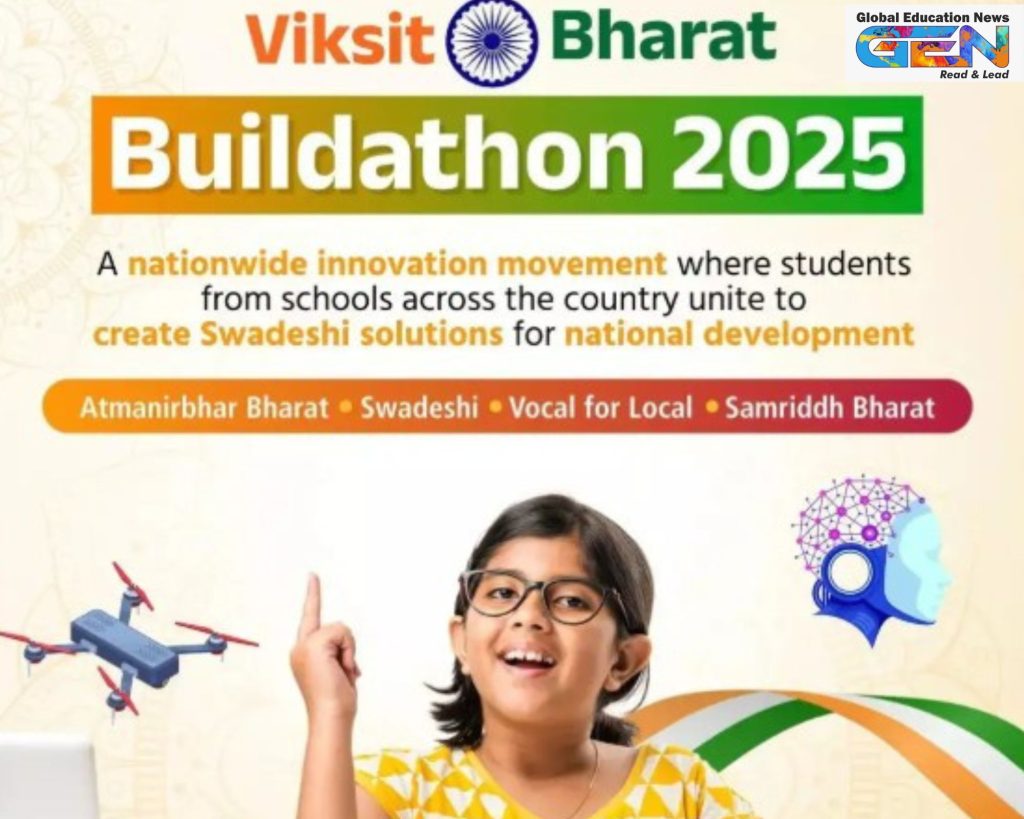
On October 13, 2025, India witnessed a historic milestone as the Viksit Bharat Buildathon 2025 kicked off with synchronized live events in schools across the nation, drawing over 1 crore students from Classes 6 to 12. Inaugurated by Union Education Minister Dharmendra Pradhan, this massive hackathon—organized by the Ministry of Education’s Department of School Education and Literacy (DoSEL) in partnership with Atal Innovation Mission (AIM), NITI Aayog, and All India Council for Technical Education (AICTE)—transforms classrooms into innovation hubs. Aligned with the National Education Policy (NEP) 2020 and the Viksit Bharat @2047 vision, it empowers young innovators to prototype real-world solutions, fostering self-reliance, creativity, and problem-solving for a prosperous India by 2047.
- Scale and Impact: Engaging students from 2.5 lakh schools, including aspirational districts, tribal areas, and remote regions, to promote inclusive growth.
- Core Objective: Shift from rote learning to experiential, hands-on education, turning students into changemakers who address grassroots challenges.
This isn’t just a competition—it’s a movement to build a self-reliant, innovative India, as highlighted by Pradhan: “It’s more than a contest; it’s a mission to engineer an innovation renaissance.”
Background: From Vision to Nationwide Launch
The Viksit Bharat Buildathon 2025 builds on the success of the 2024 School Innovation Marathon, which sparked student-led startups, patents, and programs like the Student Innovator Programme (SIP). Launched on September 23, 2025, by Minister Pradhan—who unveiled the event’s logo and jingle—it responds to the need for grassroots innovation in line with Viksit Bharat @2047 goals.
- Historical Context: Rooted in NEP 2020’s emphasis on experiential learning, it counters traditional exam-centric education by encouraging collaboration and prototyping.
- Inaugural Highlights: The October 13 live Buildathon featured nationwide synchronized activities, livestreamed to inspire participation and potentially set a world record for the largest student innovation event.
- Extension for Accessibility: Registration deadline was extended to October 11, 2025, ensuring broader involvement from diverse regions.
School Education Secretary Sanjay Kumar emphasized: “It unites students, educators, and innovators to craft solutions for a self-reliant India.”
Key Changes and Structure: A Step-by-Step Roadmap
The Buildathon streamlines innovation into actionable stages, allowing teams to ideate, build, and showcase prototypes under national themes. Unlike conventional contests, it prioritizes feasibility, impact, and scalability.
- Team Formation: Groups of 3-5 (or up to 7 in some guidelines) students per school; no limit on teams per school to maximize participation.
- Project Submission: Upload photos, videos, and summaries via vbb.mic.gov.in or schoolinnovationmarathon.org/registration by October 31, 2025.
- Evaluation Criteria: Judged by national experts on creativity, practicality, innovation, and alignment with themes—focusing on solutions for education, healthcare, agriculture, and sustainability.
Timeline Overview:
| Stage | Dates | Description |
|---|---|---|
| Launch & Registration | September 23 – October 11, 2025 | Portal opens; teams register and get unique IDs. |
| Mentoring Camps | October 11-12, 2025 | Idea development sessions for guidance. |
| Live Buildathon | October 13, 2025 | Nationwide school events for hands-on prototyping. |
| Submission Window | October 13-31, 2025 | Finalize and submit projects. |
| Evaluation | November 1 – December 31, 2025 | Expert review of entries. |
| Winners Announcement | January 2026 | Felicitation of top teams at national event. |
This structure ensures a seamless flow from concept to celebration, with resources like Atal Tinkering Labs supporting prototyping.
Themes and Challenges: Tackling Real-World Problems
Participants dive into four core themes that echo India’s developmental priorities, encouraging local yet scalable solutions like apps for rural healthcare or sustainable farming tools.
- Atmanirbhar Bharat: Self-reliance through indigenous tech and manufacturing innovations.
- Swadeshi: Promoting homegrown products and cultural-economic revival.
- Vocal for Local: Boosting community-based enterprises and local economies.
- Samriddh Bharat: Holistic prosperity via inclusive growth in education, health, and environment.
- Challenge Examples: Develop low-cost prototypes for waste management (Samriddh Bharat) or digital platforms for tribal artisans (Vocal for Local).
- Inclusivity Focus: Special encouragement for underrepresented areas, ensuring diverse ideas contribute to national progress.
These themes align with Viksit Bharat @2047, turning abstract goals into tangible student projects.
Benefits: Empowering Future Innovators
Beyond competition, the Buildathon cultivates lifelong skills, bridging school education with real-world impact.
- Skill Development: Enhances design thinking, teamwork, and digital literacy—key to NEP 2020’s experiential learning.
- Inclusivity and Equity: Targets 1 crore+ participants from remote areas, fostering equal opportunities and reducing urban-rural divides.
- Long-Term Support: Winners gain mentorship, incubation, and corporate partnerships to scale ideas into startups or patents.
- National Ripple Effect: Boosts India’s innovation ecosystem, with past events yielding SIP/SEP programs and global recognition.
As one official noted, it prepares “confident, future-ready citizens” for a developed India.
Implementation Roadmap: Participation and Support
Getting involved is simple and supported at every step, with digital tools ensuring accessibility.
- How to Register: Visit vbb.mic.gov.in; form teams, select themes, and submit via school coordinators—no fees required.
- Resources Provided: Free mentoring, lab access, and guidelines; schools host live events with AIM facilitation.
- Monitoring and Inclusivity: Progress tracked via portals; special drives for aspirational districts to hit participation targets.
- Potential Challenges: Logistical hurdles in remote areas addressed through extended deadlines and virtual options.
The Ministry’s ₹1 crore investment underscores commitment, with 1,110 teams (10 national, 100 state, 1,000 district) set for awards.
Prizes and Rewards: Celebrating Excellence
A Rs 1 crore prize pool rewards innovation at every level, plus non-monetary perks for sustained growth.
- Breakdown: Grand national prize for top teams; cash distributed across 1,110 winners.
- Additional Incentives: Mentorship from industry experts, incubation at innovation hubs, and opportunities for project scaling.
- Recognition Levels: District (1,000 teams), state (100), and national (10) felicitations in January 2026.
These rewards motivate excellence while providing pathways to turn prototypes into impactful ventures.