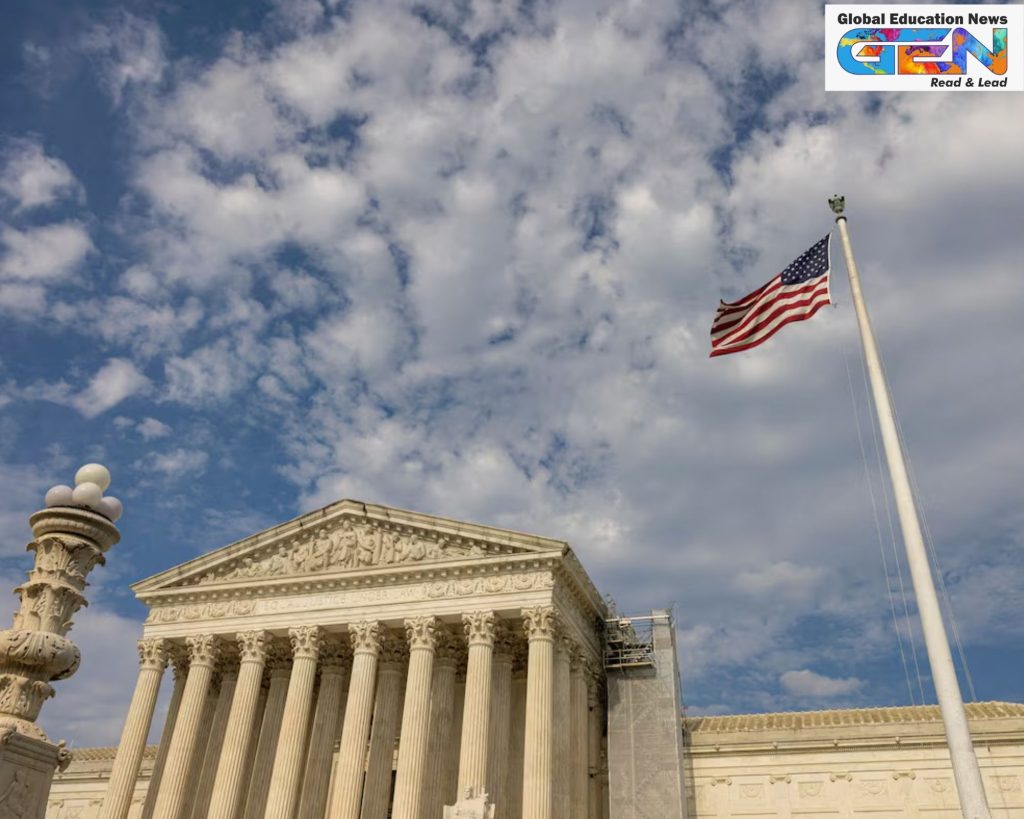
On July 14, 2025, the US Supreme Court delivered a landmark 6-3 ruling, allowing President Donald Trump’s administration to proceed with nearly 1,400 layoffs at the Department of Education. This decision, hailed by Trump as a “major victory for parents and students,” marks a significant step toward dismantling the federal agency and shifting education responsibilities back to the states. But what does this mean for the future of American education? Let’s dive into the details of this controversial move
- Key Points:
- Supreme Court lifts injunction blocking layoffs of ~1,400 employees.
- Decision supports Trump’s plan to halve the Education Department’s workforce.
- Office for Civil Rights hit hard, with 7 of 12 regional offices already closed.
- Move aims to reduce federal role in education, prioritizing state control.
Why This Matters: Trump’s Vision for a Leaner Federal Government
President Trump’s push to shrink the Department of Education stems from his March 2025 executive order, which directed Education Secretary Linda McMahon to begin dismantling the agency. Citing bureaucratic inefficiency and low student test scores, Trump argues that education functions should return to state governments. The Supreme Court’s 6-3 ruling, split along ideological lines, pauses a lower court’s injunction by US District Judge Myong Joun, who had warned the layoffs could “cripple” the department’s ability to fulfill its duties.
- Key Points:
- Trump’s executive order aims to close the Education Department entirely.
- Layoffs target nearly half the workforce, including voluntary resignations.
- Office of Federal Student Aid and Civil Rights face significant cuts.
- Critics argue the move bypasses Congress, which created the department in 1979.
What’s Happening: The Layoff Breakdown
The layoffs, affecting nearly 1,400 employees, are part of a broader effort to reduce the Department of Education’s workforce by half. Notices were sent to employees within hours of the Supreme Court’s unsigned order, with some staff facing a final workday of August 1, 2025. The Office for Civil Rights has already shuttered seven of its twelve regional offices, while the Office of Federal Student Aid lost hundreds of workers managing a $1.6 trillion student loan portfolio impacting 43 million borrowers.
- Key Points:
- Layoffs affect ~1,400 employees, nearly halving the department.
- Office for Civil Rights loses 7/12 regional offices.
- Federal Student Aid staff cuts threaten loan management.
- Employees on paid leave since March now face termination.
The Legal Battle: Supreme Court vs. Lower Courts
The Supreme Court’s decision overturns a May 2025 injunction by US District Judge Myong Joun in Boston, who argued that the layoffs would impair the department’s ability to support special education, distribute financial aid, and enforce civil rights laws. The 6-3 ruling, with the court’s three liberal justices dissenting, reflects a broader trend of judicial support for Trump’s efforts to reshape federal agencies. Critics, including Democratic lawmakers, warn that the move sets a dangerous precedent, allowing presidents to bypass Congress in dismantling agencies.
- Key Points:
- 6-3 ruling pauses Judge Joun’s injunction against layoffs.
- Liberal justices dissent, citing harm to students and families.
- Case returns to appeals court for further legal review.
- Ruling strengthens executive power over federal agencies.
Voices of Support and Criticism
Trump and Supporters: Trump celebrated the ruling on social media, calling it a “major victory” for returning education to state control. Education Secretary Linda McMahon stated that the cuts promote “efficiency and accountability,” arguing that the Supreme Court affirmed the president’s authority over federal staffing.
Critics’ Concerns: Democratic lawmakers, education advocates, and unions slammed the decision, warning of “chaos” for students and families. They argue that the layoffs undermine critical functions like civil rights enforcement and student loan management. The liberal justices’ dissent highlighted the “devastating blow” to public education, while Judge Joun previously noted “irreparable harm” to those relying on federal services.
- Key Points:
- Trump and McMahon see layoffs as streamlining federal operations.
- Critics warn of weakened civil rights and student aid programs.
- Liberal justices and unions fear long-term damage to education.
- Debate centers on presidential power vs. congressional authority.
Impact on Education: What’s at Stake?
The layoffs threaten the Department of Education’s ability to manage key programs, including:
- Federal Student Loans: A $1.6 trillion portfolio affecting 43 million borrowers.
- Civil Rights Enforcement: Reduced oversight in schools, impacting marginalized students.
- Special Education Support: Potential disruptions in funding and compliance.
- Student Achievement Tracking: Less capacity to monitor national education trends.
Critics argue that transferring these functions to states could lead to inconsistent standards and reduced protections, especially for vulnerable populations.
- Key Points:
- $1.6 trillion student loan portfolio at risk of mismanagement.
- Civil rights enforcement weakened by office closures.
- Special education and financial aid programs face uncertainty.
- State-led education may lead to uneven standards.
How to Stay Informed and Engaged
The Supreme Court’s ruling is a temporary measure, with the case returning to the appeals court to determine the layoffs’ legality. Here’s how to stay updated and get involved:
- Monitor Updates: Check ed.gov for official statements and timelines.
- Understand the Stakes: Research how federal education cuts affect your community.
- Engage in Advocacy: Support organizations advocating for public education and civil rights.
- Follow the Appeals Process: Stay tuned for lower court rulings on the layoffs’ legality.
- Key Points:
- Case now heads to appeals court for further review.
- Stay informed via ed.gov and reputable news sources.
- Advocate for education funding and protections.
- Understand local impacts of federal education cuts.
Why This Ruling is a Game-Changer
The Supreme Court’s decision to allow 1,400 layoffs at the Department of Education marks a pivotal moment in Trump’s push to shrink federal oversight. While supporters see it as a step toward efficiency and state empowerment, critics warn of long-term damage to public education and civil rights. With the appeals court now tasked with reviewing the layoffs’ legality, the future of the Education Department hangs in the balance. Will this ruling reshape American education for better or worse? Only time will tell.
- Key Points:
- Ruling advances Trump’s goal to dismantle the Education Department.
- Critics fear loss of federal protections for students.
- Appeals court will decide the layoffs’ final fate.
- Sparks debate on federal vs. state control of education.