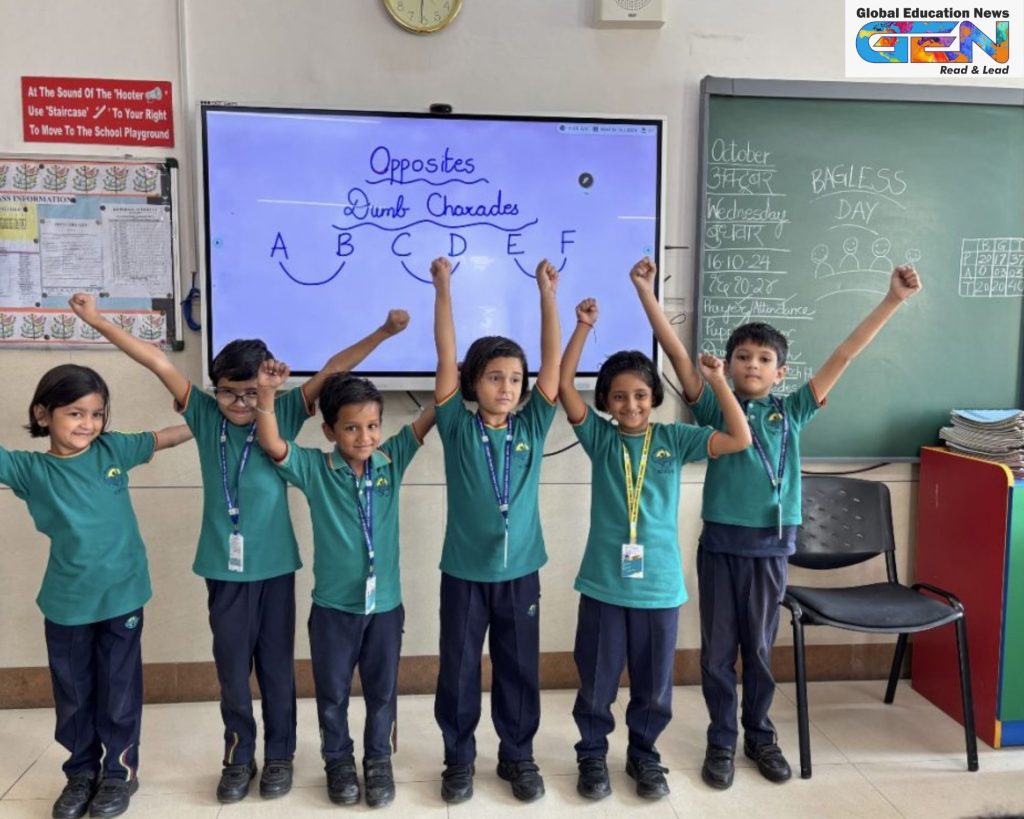
In a bold stride toward aligning with the National Education Policy (NEP) 2020’s vision of holistic, skill-centric education, the Uttar Pradesh government has mandated 10 bagless days annually for students in Classes 6-8 across its government schools. Announced on November 17, 2025, this initiative under the State Council of Educational Research and Training (SCERT)’s ‘Anandam’ program shifts the paradigm from textbook-heavy rote learning to immersive, activity-driven experiences. By designating these days as “no-bag zones,” UP aims to alleviate academic stress, ignite curiosity, and equip middle-schoolers with life skills amid a landscape where over 1.5 crore students in state-run institutions grapple with traditional pressures. This analysis unpacks the policy’s mechanics, anticipated impacts, and its place in broader reforms, revealing a potential blueprint for India’s evolving education ecosystem.
Policy Blueprint: Core Components and Implementation Roadmap
The initiative’s design emphasizes flexibility and integration, ensuring seamless embedding into the academic calendar without disrupting core curricula. Key elements include:
- Target Scope: Applies exclusively to Classes 6-8 in all UP government schools, reaching approximately 50 lakh students; excludes higher grades to focus on the critical middle-school transition phase.
- Duration and Scheduling: 10 full days spread across the academic year, with a preference for Saturdays to maximize participation; schools can cluster them thematically (e.g., two-day skill immersion blocks) for deeper engagement.
- Guiding Framework: Aligned with NEP’s middle-stage reforms, drawing from central guidelines that advocate 10 bagless periods featuring vocational exposure and creative pursuits; SCERT’s ‘Anandam’ module provides teacher training toolkits for execution.
- Resource Allocation: Minimal additional funding required—leverages existing school infrastructure, community partnerships, and local expertise; monitoring via district education officers to track attendance and feedback.
This structured yet adaptable approach addresses implementation hurdles like teacher workload, with pilot feedback from similar NEP trials in other states showing 85% adherence rates when tied to local contexts.
Experiential Activities: From Workshops to Real-World Internships
At the heart of the bagless days are diverse, hands-on engagements designed to bridge classroom theory with practical application, fostering creativity and collaboration. Highlighted pursuits encompass:
- Skill-Building Sessions: Vocational internships with local artisans—carpenters, potters, gardeners—exposing students to trades like pottery-making or basic electronics, instilling vocational awareness early.
- Creative and Thematic Workshops: Art, music, and storytelling circles to nurture expression; group projects on environmental themes, such as community clean-ups or sustainable farming demos.
- Outdoor and Exploratory Trips: Educational excursions to nearby farms, museums, or historical sites for contextual learning; picnics integrated with nature journaling to blend fun with observation skills.
- Interactive Competitions: Speech, debate, and quiz events on Saturdays; sports and fitness challenges to promote teamwork and physical well-being, with emphasis on inclusivity for differently-abled students.
These activities, inspired by NEP’s push for 50% curriculum time on experiential learning, aim to replace passive absorption with active discovery, potentially boosting retention by 30-40% based on analogous programs.
Objectives and Expected Benefits: A Holistic Push Against Rote Learning
UP’s directive explicitly targets the pitfalls of conventional education, where middle-school dropouts hover at 15% due to disengagement. Strategic goals and outcomes include:
- Stress Reduction and Joyful Learning: By suspending bags and homework, it creates a “playful pedagogy” environment, combating exam anxiety that affects 60% of urban middle-schoolers per recent surveys.
- Skill and Social Development: Enhances soft skills like communication and problem-solving through group dynamics; encourages interest exploration, aiding career discernment in a skilling economy.
- Equity and Inclusivity: Levels the playing field for rural and underprivileged students by using community resources, promoting gender-neutral participation and multilingual facilitation.
- Long-Term Gains: Fosters curiosity-driven mindsets, aligning with NEP’s aim for a 100% Gross Enrolment Ratio by 2030; early indicators from Delhi’s parallel rollout show improved attendance (up 12%) and parental satisfaction.
Critically, this counters rote memorization’s dominance—responsible for India’s middling PISA scores—by embedding NEP’s foundational literacies (reading, numeracy) within joyful contexts.
Challenges and Broader Reforms: Navigating the Road Ahead
While promising, the rollout faces logistical and cultural hurdles in UP’s vast network of 1.6 lakh schools:
- Potential Barriers: Teacher training gaps (only 40% NEP-certified currently) and rural connectivity issues for virtual components; resistance from syllabus-bound educators accustomed to drills.
- Mitigation Strategies: SCERT’s phased training camps and digital dashboards for activity logging; community involvement via parent-teacher associations to sustain momentum.
- Context in UP’s Education Overhaul: Builds on initiatives like ‘Nipun Bharat’ for foundational skills and digital classrooms under Samagra Shiksha; echoes national trends, with 15 states adopting bagless models post-NEP, signaling a federal shift toward experiential paradigms.
Analytically, success metrics—tracked via student portfolios and annual assessments—could position UP as a NEP vanguard, influencing scalable models for high-enrollment states.