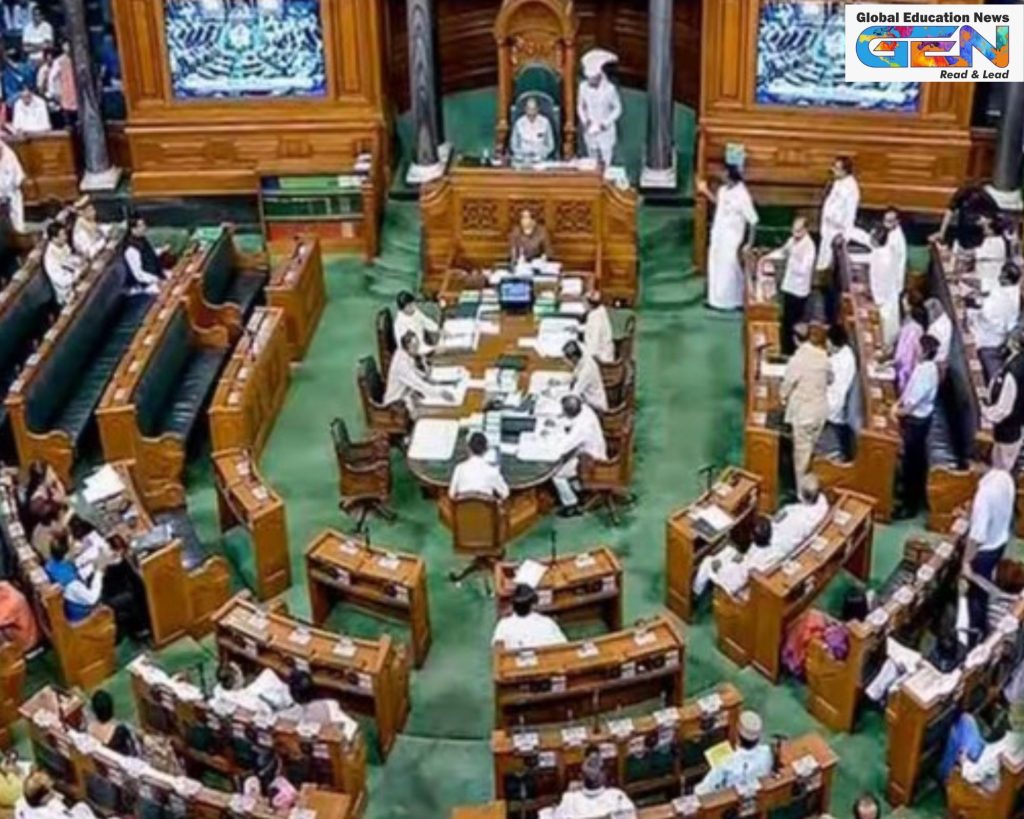
In a stark wake-up call for India’s education financing system, the Standing Committee on Education, Women, Children, Youth and Sports—chaired by Congress leader Digvijaya Singh—tabled a hard-hitting report on December 9, 2025, spotlighting how escalating higher education costs are slamming the door on poor and rural students. Despite schemes like PM Vidyalaxmi promising relief, the reality is a “deepening crisis” of inaccessible loans, with active accounts plummeting even as total debt balloons, signaling deeper inequities that undermine NEP 2020’s inclusive vision. This isn’t just numbers—it’s a barrier to social mobility, where commercialization turns classrooms into cash cows, forcing families into debt traps or dropouts, and demanding urgent, equitable overhauls to ensure loans fuel futures, not foreclose them.
The Alarming Dip: Fewer Loans, Bigger Burdens for the Vulnerable
The panel’s data paints a troubling paradox: while overall credit expands, education loans are contracting for those who need them most, exacerbated by fee hikes outpacing inflation by 10-15% annually in private institutions. This squeeze hits marginalized groups hardest—SC/ST/OBC students and rural applicants face rejection rates up to 40% higher due to documentation hurdles and bias—widening the urban-rural divide and stalling India’s demographic dividend.
- Shrinking Access Stats: Active student loan accounts slid from 23.36 lakh in 2014 to 20.63 lakh in 2025—a 12% drop—despite population growth and enrollment surges.
- Debt Explosion: Outstanding loans tripled from Rs 52,327 crore to Rs 1.37 lakh crore, with per-student borrowing jumping 162%, reflecting cost pressures but also fewer beneficiaries sharing the load.
- Scheme Shortfalls: Under PM Vidyalaxmi (launched Feb 2025), only 15% of Rs 4,427 crore sanctioned was disbursed by August—55,887 applications yielded just 21,967 releases, with some banks issuing zero loans, stranding low-income applicants in red tape.
- Poor Student Pain Points: Rising fees (up 20% in professional courses) and high interest (9-12%) push NPAs to 5.2%, but banks’ stringent CIBIL checks and collateral demands exclude BPL families, turning loans into luxuries for the affluent.
This trend, the panel warns, risks a “lost generation” where 70% of higher ed aspirants from low-income brackets abandon dreams, per surveys, amplifying caste and class gaps in a system meant to empower.
Bank Blunders and Systemic Snags: Why Loans Aren’t Flowing
Scrutinizing banking practices, the report raps public sector lenders for “inconsistent and exclusionary” norms that prioritize profits over purpose, with delays averaging 45-60 days and rejection excuses like “incomplete docs” masking deeper biases. In a nation where 60% of youth hail from non-metro areas, this urban-centric model—coupled with low awareness—ensures loans remain a myth for many, fueling informal moneylenders at 24%+ rates and perpetuating poverty cycles.
- Disbursal Delays Exposed: Only 39% of sanctioned PM Vidyalaxmi loans reached students, blamed on untrained staff and fragmented processes across PSBs, private banks, and NBFCs.
- Collateral Crunch: Current Rs 7.5 lakh cap under Credit Guarantee Fund leaves gaps for Rs 10-15 lakh courses, with 25% rejections tied to security demands, hitting women and minorities hardest.
- Awareness Gaps: Rural outreach is dismal—less than 10% of Class 11-12 students in state schools know schemes, per panel hearings, due to English-only campaigns ignoring India’s linguistic diversity.
- Commercialization Critique: Education’s profit pivot inflates costs without quality, the panel slams, urging RBI oversight to treat loans as social investments, not commercial gambles.
These lapses, if unchecked, could spike dropouts by 15-20% in underserved regions, eroding workforce skills and economic growth.
Roadmap to Relief: Panel’s Punchy Reforms for Fairer Financing
The committee’s blueprint is bold yet pragmatic, blending tech tweaks with policy pivots to democratize debt—drawing from global models like Australia’s income-contingent schemes that cut defaults 30%—while stressing accountability to reverse the access slide and align with SDG 4’s education equity goals. Implementation could unlock Rs 50,000 crore more in loans annually, but hinges on swift Finance Ministry action.
- Repayment Revolution: Roll out income-linked models (repay 8-10% of salary post-Rs 5 lakh threshold) and extend moratoriums to two years post-graduation, easing unemployment shocks and slashing NPAs.
- Guarantee and Collateral Boost: Hike Credit Guarantee to Rs 20 lakh; collateral-free up to Rs 8 lakh; use ration cards as eligibility proof, reserving 20% loans for BPL with govt as guarantor.
- Transparency Tech: Launch district-wise real-time dashboards tracking applications/rejections; integrate grievance portals with RBI ombudsman for 30-day resolutions and delay penalties.
- Outreach Overhaul: Multilingual (22 languages) campaigns via short videos in schools; mandate loan facilitation centers in every higher ed institution with trained counselors.
- Uniform Norms: RBI/DFS directives for standardized rates (subsidized at 7-8%), no CIBIL for ration-card holders, and expand PM Vidyalaxmi to non-elite institutes.
These steps could lift loan uptake 25% in two years, but the panel cautions: Without curbing fee hikes via regulatory caps, reforms risk being band-aids on a broken system.