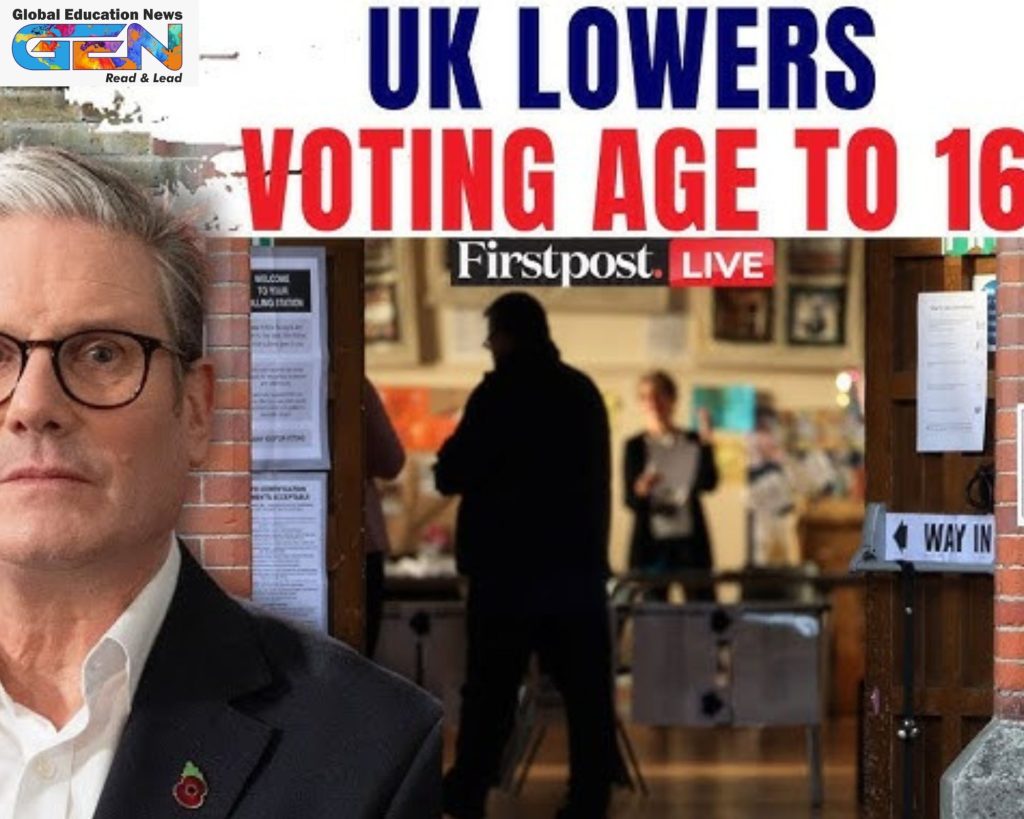
On July 17, 2025, the UK government announced a groundbreaking decision to lower the voting age to 16 for all elections, marking the biggest electoral reform since 1969, when the voting age was reduced from 21 to 18. This move, part of the Labour Party’s manifesto promise, will enable approximately 1.5–1.6 million 16- and 17-year-olds to vote in the next general election, due by August 2029, aligning UK-wide elections with Scotland and Wales, where younger voters already participate in devolved elections.
Key Points:
- Voting age lowered to 16 for all UK elections, effective by the next general election.
- Aligns with Scotland and Wales, where 16-year-olds vote in local and devolved elections.
- Fulfills Labour’s 2024 manifesto commitment to enhance democratic engagement.
Why Lower the Voting Age?
Prime Minister Keir Starmer and Deputy Prime Minister Angela Rayner argue that 16- and 17-year-olds, who can work, pay taxes, and serve in the military, deserve a say in how their contributions shape the nation. The reform aims to address declining voter turnout—59.7% in the 2024 general election, the lowest since 2001—and foster lifelong civic engagement among youth.
Key Points:
- 16-year-olds contribute through work, taxes, and military service, justifying voting rights.
- Aims to boost turnout and engage young people early in democratic processes.
- Supported by evidence from Scotland’s 2014 referendum, where 75% of 16-year-olds voted.
Broader Electoral Reforms
The voting age reduction is part of a comprehensive Elections Bill to modernize UK democracy. Key measures include expanding voter ID to include UK-issued bank cards and digital IDs, moving toward automated voter registration to add up to 9.5 million voters, and tightening rules on political donations to prevent foreign interference, such as through shell companies. These changes address issues like the 750,000 voters deterred by ID rules in 2024 and aim to enhance accessibility and trust in elections.
Key Points:
- Expands voter ID to include bank cards and digital formats like Veteran Cards.
- Automated voter registration to reduce errors, targeting 8 million unregistered voters.
- Stricter donation rules to counter foreign influence, e.g., concerns over Elon Musk’s potential $100m donation to Reform UK.
Political and Public Reactions
The reform has sparked polarized reactions. Supporters, including the Electoral Reform Society and the Children’s Commissioner, praise it as a step toward empowering youth and strengthening democracy. Critics, including the Conservative Party and Reform UK’s Nigel Farage, argue it’s a Labour ploy to boost votes, as younger voters lean toward Labour and the Greens. A Merlin Strategy poll for ITV News found 49% of 16- and 17-year-olds oppose the change, citing concerns about maturity and influence, while 51% support it. Public opinion is split, with 48% opposing and 27% favoring the reform, according to More in Common.
Key Points:
- Conservatives claim 16-year-olds lack maturity for voting but can’t marry or buy alcohol.
- Farage alleges a “left-wing bias” in schools could sway young voters against Reform UK.
- Polls show mixed youth support; 33% would vote Labour, 20% Reform, 18% Green.
Global Context and Electoral Impact
Globally, only a few countries like Austria, Brazil, and Ecuador allow voting at 16, with most maintaining 18 as the standard. Research from Austria and Scotland shows 16-year-olds often have higher turnout than 18-year-olds, but their small demographic (2.8–3% of the electorate) limits national impact. Analysts like YouGov’s Anthony Wells and More in Common’s Luke Tryl suggest the reform won’t significantly alter election outcomes but could influence close local races.
Key Points:
- Joins nations like Austria and Brazil with a voting age of 16 for national elections.
- Studies show no major electoral shifts but higher youth turnout when enfranchised early.
- Small voter base (1.5–1.6 million) unlikely to change national results but may affect marginal seats.
Engaging Young Voters
To ensure the reform’s success, the government plans to work with schools, the Electoral Commission, and youth groups to promote political literacy and voter registration, including for 14-year-olds to prepare for voting at 16. Safeguards will protect under-16s’ data, and special measures will support children in care to register. Critics, however, stress the need to address misinformation on social media to protect young voters.
Key Points:
- Voter registration from age 14 to prepare 16-year-olds for elections.
- Partnerships with schools to enhance civic education and combat misinformation.
- Data protections ensure under-16s are excluded from open electoral registers.
How to Get Involved
Citizens can stay informed through the UK government’s official channels (@GOVUK on X) or the Electoral Commission’s website. Engaging in local voter registration drives, advocating for political literacy in schools, or joining youth-led discussions can amplify this reform’s impact and empower the next generation of voters.
Key Points:
- Support voter education initiatives to prepare 16- and 17-year-olds.
- Advocate for transparent electoral reforms to rebuild public trust.