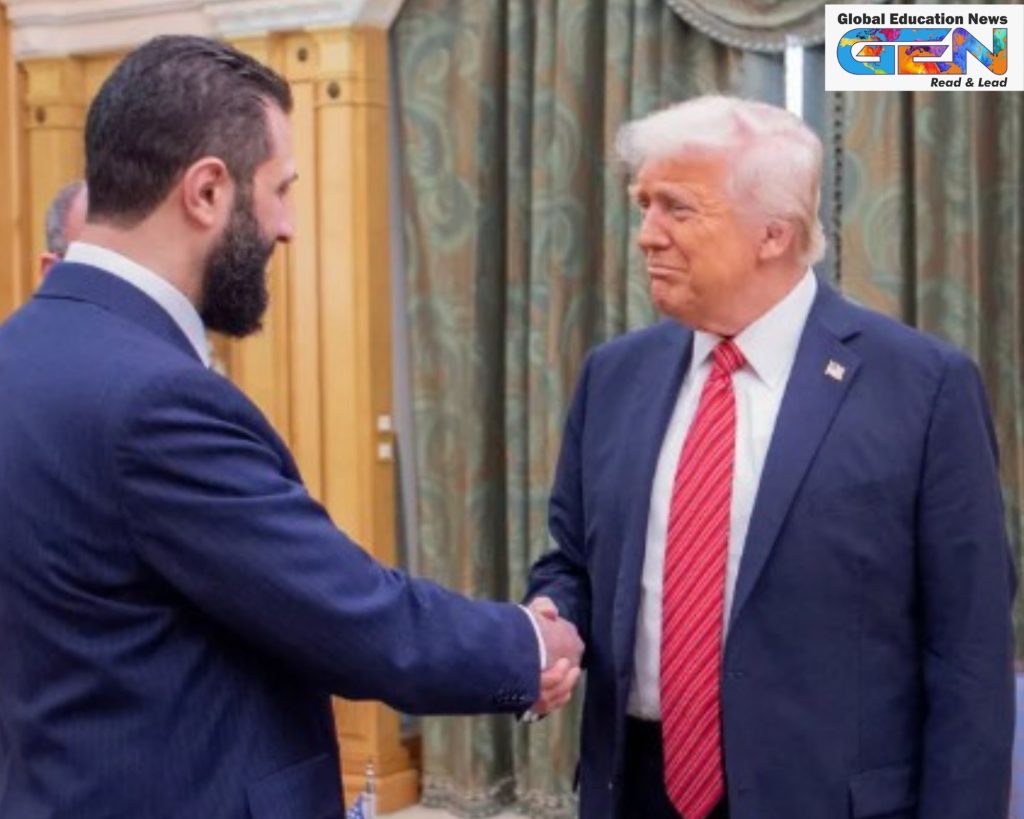
On May 13, 2025, US President Donald Trump announced the lifting of sanctions on Syria during a speech at the Saudi-US Investment Forum in Riyadh, aiming to support Syria’s recovery under interim President Ahmed al-Sharaa. This historic move, described as giving Syria “a chance at greatness,” marks a shift in US foreign policy and opens doors for global re-engagement with Syria. For India, a key player in Middle East diplomacy, this development presents opportunities to deepen economic ties, counter terrorism, and advance humanitarian goals in a region critical to its strategic interests. This article examines the sanctions lift, its implications for Syria, and India’s potential role in shaping Syria’s future.
Key Points:
- Trump lifted Syria sanctions on May 13, 2025, in Riyadh.
- Aims to support Syria’s economic recovery under al-Sharaa’s leadership.
- Offers India a chance to enhance trade, diplomacy, and counter-terrorism efforts.
Background of US Sanctions on Syria
The United States imposed sanctions on Syria starting in 1979, designating it a state sponsor of terrorism to restrict the Assad regime’s military and financial capabilities. Key milestones include:
- 2004: Sanctions targeted Syrian entities for supporting terrorism.
- 2011: Intensified during the Syrian civil war with asset freezes, investment bans, and petroleum restrictions under the Caesar Act (2020).
- Economic Impact: Sanctions devastated Syria’s economy, causing high unemployment, poverty, and limited access to global financial systems like SWIFT.
These measures, while targeting the regime, severely impacted Syrian civilians, hindering humanitarian aid and economic recovery.
Key Points:
- Sanctions began in 1979, escalated in 2004 and 2011.
- Crippled Syria’s economy and restricted humanitarian efforts.
- Relevant to India’s interest in stable Middle East economies for trade.
Ahmed al-Sharaa’s Rise to Power
Ahmed al-Sharaa, formerly Abu Mohammed al-Golani, became Syria’s interim president in January 2025 after his Hayat Tahrir al-Sham (HTS) coalition ousted Bashar al-Assad in December 2024. Despite his past with the al-Qaeda-affiliated Nusra Front, al-Sharaa has rebranded himself:
- Reform Efforts: Dissolved HTS, appointed women and minorities to his cabinet, and pledged inclusive governance.
- International Outreach: Engaged with France, Saudi Arabia, and Turkey, with the US lifting his $10 million bounty in December 2024.
- Challenges: His militant history raises concerns, particularly for Israel and India, which prioritize counter-terrorism.
For India, al-Sharaa’s leadership offers a chance to engage a transitioning Syria while monitoring his commitment to distancing from extremism.
Key Points:
- Al-Sharaa led HTS to topple Assad, now seeks legitimacy.
- Pledges moderate governance, but past affiliations concern India.
- India can leverage diplomacy to ensure Syria’s stability.
Reasons for Lifting Sanctions
Trump’s decision reflects regional advocacy and al-Sharaa’s diplomatic efforts, aligning with broader geopolitical goals:
- Regional Support: Saudi Arabia and Turkey pushed for sanctions relief to counter Iranian influence and invest in Syria.
- Al-Sharaa’s Pledges: Commitments to counterterrorism, minority rights, and de-escalation talks with Israel via the UAE.
- Economic and Humanitarian Goals: Aims to revive Syria’s economy and ease aid delivery.
- India’s Interests: A stable Syria aligns with India’s goals of reducing terrorism and securing trade routes in the Middle East.
India supported the UN’s call for sanctions relief, seeing it as a step toward regional stability and economic opportunities.
Key Points:
- Driven by Saudi-Turkish advocacy and al-Sharaa’s reforms.
- Supports Syria’s economic revival and humanitarian aid.
- Aligns with India’s interest in a terror-free, stable Middle East.
Implications for Syria’s Future
Lifting sanctions could reshape Syria’s trajectory, with ripple effects for India:
- Economic Reintegration: Access to global financial systems like SWIFT could attract Gulf investment, benefiting Syria’s oil and mineral sectors.
- Humanitarian Relief: Easier operations for aid organizations, addressing shortages in food, medicine, and electricity.
- Governance Challenges: Al-Sharaa must prove inclusivity amid concerns about his jihadist past.
- India’s Opportunities: Potential to export pharmaceuticals, IT services, and agricultural goods to Syria, while Indian firms like ONGC could explore oil and gas ventures.
India’s Role: As a non-permanent UN Security Council member in 2025, India can advocate for Syria’s reconstruction while ensuring counter-terrorism safeguards.
Key Points:
- Enables Syria’s economic and humanitarian recovery.
- Offers India trade and investment opportunities.
- India can influence Syria’s governance via UN diplomacy.
Regional Dynamics and International Reactions
The sanctions lift has sparked diverse reactions, with implications for India’s Middle East policy:
- Gulf Support: Saudi Arabia, Qatar, and the UAE back al-Sharaa to counter Iran, aligning with India’s interest in reducing Iranian influence near its trade routes.
- Israeli Concerns: Israel’s skepticism about al-Sharaa’s past prompts continued airstrikes, a concern for India, which balances ties with Israel and Arab states.
- UN and Aid Groups: The United Nations and Red Cross welcomed the move, supporting India’s push for humanitarian aid in conflict zones.
- Iran and Russia: Both nations, former Assad allies, face reduced influence, potentially easing India’s concerns about Iran-backed militias in the region.
- Syrian Public: Celebrations in Damascus reflect hope for economic relief, resonating with India’s people-centric diplomacy.
India’s Stance: India welcomed the UN’s support for sanctions relief, emphasizing reconstruction and counter-terrorism cooperation.
Key Points:
- Gulf states align with India’s anti-Iran stance.
- Israel’s caution requires India to balance regional ties.
- India supports UN-led reconstruction efforts.
India’s Strategic Role in Syria’s Recovery
India has a unique opportunity to engage with post-sanctions Syria, leveraging its historical ties and non-aligned foreign policy:
- Economic Engagement: Syria’s reconstruction offers markets for Indian exports (pharmaceuticals, textiles, IT) and infrastructure projects. Indian companies like L&T could bid for rebuilding contracts.
- Counter-Terrorism Cooperation: India, with its expertise in combating groups like Lashkar-e-Taiba, can share intelligence and training to ensure al-Sharaa’s government curbs extremism, especially given Syria’s proximity to Pakistan-influenced terror networks.
- Humanitarian Aid: India’s experience in disaster relief (e.g., Operation Maitri) positions it to supply medical aid and food to Syria, enhancing soft power.
- Diplomatic Leadership: Through forums like the UN and BRICS, India can advocate for inclusive Syrian governance and monitor al-Sharaa’s counter-terrorism commitments.
- Energy Security: Syria’s oil and gas reserves could attract Indian investment, supporting India’s energy needs amid volatile global markets.
Challenges: India must navigate al-Sharaa’s past, Israel’s concerns, and competition from Gulf investors while ensuring its initiatives align with counter-terrorism goals.
Key Points:
- India can export goods and services to rebuilding Syria.
- Offers counter-terrorism expertise to stabilize the region.
- Strengthens humanitarian and diplomatic ties via aid and UN advocacy.
Trump’s Vision and India’s Alignment
Trump’s vision for a Middle East driven by “commerce, not chaos” aligns with India’s interest in a stable, trade-friendly region. His May 14, 2025, meeting with al-Sharaa—the first US-Syrian presidential encounter in 25 years—urged Syria to join the Abraham Accords, expel foreign fighters, and counter ISIS. India supports these goals, particularly counter-terrorism and economic revival, which complement its Act East and Neighbourhood First policies extended to the Middle East. India’s participation in the Saudi-US Investment Forum, where Trump spoke, underscores its growing economic stake in the region.
Key Points:
- Trump’s commerce-focused Middle East vision aligns with India’s trade goals.
- India supports counter-terrorism and stability in Syria.
- Strengthens India’s role in Middle East investment forums.
Conclusion
President Donald Trump’s decision to lift sanctions on Syria in May 2025 marks a turning point for Syria’s recovery under Ahmed al-Sharaa and opens strategic avenues for India. By supporting Syria’s economic reintegration and counter-terrorism efforts, India can deepen trade, provide humanitarian aid, and ensure regional stability critical to its energy and security interests. While challenges like al-Sharaa’s past and Israel’s concerns persist, India’s non-aligned diplomacy and UN role position it to shape Syria’s future. For those exploring India-Middle East relations, Syrian reconstruction, or US foreign policy, this policy shift highlights a dynamic interplay of geopolitics and opportunity.