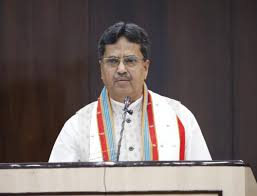
Agartala, Tripura – The Tripura government has announced plans to establish an international skill centre and a foreign language school aimed at enhancing the global employability of the state’s youth. This announcement was made by Chief Minister Prof. Dr. Manik Saha during the 3rd Regional Workshop under the NITI Aayog’s State Support Mission in Agartala. The move marks a forward-thinking approach toward skill building and preparing the next generation for opportunities beyond the domestic market.
A Vision for Global Skills and Language Proficiency
Why This Initiative Matters
Tripura’s latest policy focus underscores the need for internationally relevant skills and language proficiency to help its youth compete in an increasingly interconnected global job market. Historically, many students had to migrate to other states or countries for such training. The proposed centres aim to make global skill and language education accessible within the state itself, reducing both financial and geographic barriers.
Key Elements of the New Centres
1. International Skill Centre
The proposed international skill centre will offer training aligned with global industry standards — empowering youth with skills that are in demand across continents. This includes not only technical and vocational training but also industry-linked programs that enhance employability in sectors such as technology, services, healthcare, hospitality, and more.
2. Foreign Language School
The foreign language school will focus on teaching languages such as Japanese, Chinese, Spanish and other globally relevant languages, enabling students to communicate effectively in international environments — a key asset for overseas employment and cross-cultural collaboration.
Together, these institutions are expected to bridge the skill gap and prepare a workforce ready for global opportunities.
Broader Context: Governance and Youth Development
State Support Mission and Policy Innovation
Chief Minister Saha highlighted that the initiative aligns with the State Support Mission’s partnership-based model, emphasizing that states are equal partners in India’s development journey rather than mere implementers of central schemes. By participating actively in national reform dialogues, Tripura is positioning itself as a pioneer in governance innovation and policy execution.
Strengthening Institutes of Transformation
The Tripura Institute for Transformation (TIFT) — established to guide policy design, outcome monitoring, and multi-sector coordination — has played a key role in pushing reforms like this skill centre. TIFT’s involvement reflects the government’s focus on institutional readiness and long-term strategy.
Expected Benefits
Empowering Youth for International Careers
- Increased access to global job markets without leaving home.
- Language proficiency as an asset for overseas employment.
- Skill sets aligned with international standards for better career opportunities.
These developments are expected to help reduce employment-related migration by building local capacity for global qualification.
Strengthening the State’s Workforce
With a focus on both hard skills and communication, this initiative may significantly enhance Tripura’s contribution to sectors requiring specialized training or multilingual capabilities — from technology and business to travel and service industries.
Complementary Developments
Tripura’s skill and education landscape has been evolving rapidly. Recent strategic efforts include:
- Establishing initiatives to improve digital learning environments in schools.
- Expanding skill missions that target employment generation for women and youth.
- Supporting efforts to build quality infrastructure in education aligned with national frameworks.
These reforms collectively point to a holistic vision of education, skills and employability development in the state.
Challenges and Considerations
While the international skill centre and language school initiative holds promise, Tripura will need to ensure:
- Quality curriculum and trainers aligned with global benchmarks.
- Industry partnerships to facilitate internships, placements, and real-world exposure.
- Access and affordability so that students from all socio-economic backgrounds benefit.
Effective implementation will be crucial to turn this vision into tangible outcomes.