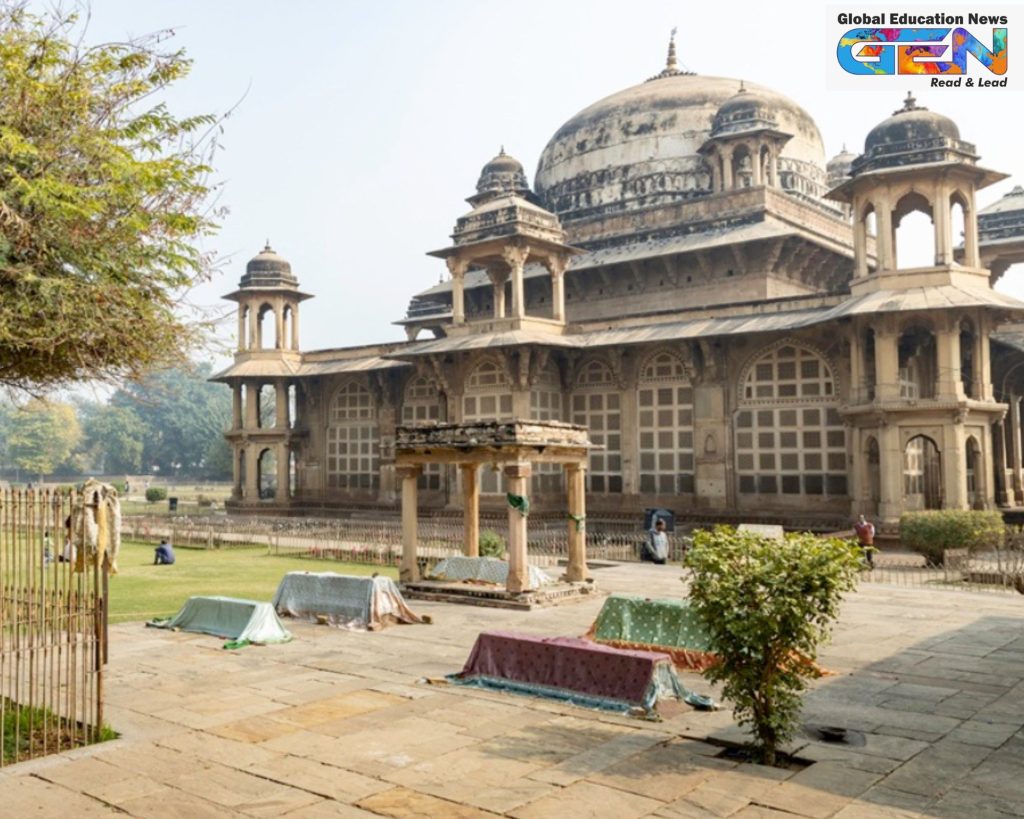
Nestled in the historic city of Gwalior, the Tomb of Hazrat Sheikh Muhammad Ghaus stands as a testament to India’s rich Sufi heritage and Mughal architectural brilliance. Constructed in the 16th century under Emperor Akbar’s patronage, this mausoleum honors Hazrat Sheikh Muhammad Ghaus, a revered Sufi saint of the Shattari order, and is also the resting place of Tansen, the legendary musician and one of Akbar’s nine jewels. With its intricate stone lattices and serene gardens, this monument is a must-visit for history buffs, architecture lovers, and spiritual seekers.
- Built in the 16th century during Akbar’s reign for Sufi saint Muhammad Ghaus.
- Houses the tomb of legendary musician Tansen, a disciple of Ghaus.
- Protected monument under Archaeological Survey of India (ASI).
Who Was Hazrat Sheikh Muhammad Ghaus?
Key Points:
- 16th-century Sufi saint, musician, and scholar of the Shattari order.
- Influenced Mughal emperors Babur, Humayun, and Akbar.
- Mentored Tansen and aided Babur’s conquest of Gwalior Fort in 1526.
Born in 1500 in Gwalior, Hazrat Sheikh Muhammad Ghaus (or Gwaliori) was a towering figure in the Sufi Shattari tradition. A scholar, musician, and author of Jawahir-i Khams (The Five Jewels), he translated the Sanskrit text Amrtakunda into Persian as Bahr al-Hayat, blending yoga with Sufism. Ghaus played a pivotal role in Babur’s 1526 conquest of Gwalior Fort, offering strategic insights, and later served as a spiritual guide to Emperor Humayun. His hospice in Gwalior became a hub for artists, nurturing talents like Tansen, whose music carried Sufi influences. After fleeing to Gujarat during Sher Shah Suri’s reign, Ghaus returned under Akbar, who built this grand mausoleum after his death in 1562.
Architectural Splendor of the Tomb
Key Points:
- Features early Mughal architecture with Gujarati and Rajasthani influences.
- Known for delicate stone latticework (jali) and a central dome once adorned with blue tiles.
- Surrounded by a serene garden and smaller tombs, including Tansen’s.
The Tomb of Muhammad Ghaus is a stunning example of early Mughal architecture, blending Indo-Islamic elements with regional styles from Gujarat and Rajasthan. Built on a square base, the mausoleum features a large central dome, originally covered in blue glazed tiles, and four hexagonal corner towers topped with smaller domes. The standout feature? Its intricately carved stone lattices (jali), which create a delicate, lace-like effect, filtering light and air into the central chamber. These perforated screens form a verandah around the tomb, offering a cool, airy ambiance. Set in well-maintained gardens with a view of Gwalior Fort, the complex also includes Tansen’s simpler tomb, making it a dual pilgrimage site for history and music lovers.
A Cultural and Spiritual Hub
Key Points:
- A pilgrimage center for Hindus and Muslims, revered for its spiritual legacy.
- Protected by ASI since 1962, barring religious activities to preserve its heritage.
- Madhya Pradesh High Court upheld ASI’s control in June 2025.
The tomb complex is more than a monument—it’s a symbol of Gwalior’s syncretic culture. As a Sufi shrine, it attracts devotees of all faiths, drawn to Ghaus’s legacy and Tansen’s musical genius. However, since its designation as a protected monument in 1962 under the Archaeological Survey of India (ASI), religious and cultural activities have been restricted to preserve its historical integrity. In June 2025, the Madhya Pradesh High Court rejected a plea by Syed Sabla Hasan, a claimant to the title of Sajjada Nashin (spiritual caretaker), affirming that the monument’s preservation outweighs such activities to prevent “national loss” of its originality. The ruling underscores its status as a cultural treasure.
Why the Tomb Matters Today
Key Points:
- Showcases Gwalior’s role in Mughal and Sufi history.
- Links to Tansen highlight India’s musical and spiritual heritage.
- ASI protection ensures its legacy for future generations.
The Tomb of Hazrat Sheikh Muhammad Ghaus is more than a monument—it’s a bridge to Gwalior’s past as a cultural and spiritual hub. Ghaus’s influence on Mughal emperors and his mentorship of Tansen, whose Dhrupad compositions revolutionized Indian classical music, cement its historical significance. The tomb’s protection by the ASI, reinforced by the Madhya Pradesh High Court’s June 2025 ruling, ensures its intricate architecture and serene ambiance remain untouched. As a site where Sufism, music, and Mughal artistry converge, it’s a must-visit for anyone exploring Madhya Pradesh’s rich heritage.
Step into Gwalior’s Sufi Legacy
Key Points:
- A 16th-century masterpiece open from 9 AM to 6 PM.
- Celebrates Sufi saint Muhammad Ghaus and musician Tansen.
- Visit madhya-pradesh-tourism.com for more details.
The Tomb of Hazrat Sheikh Muhammad Ghaus is a hidden gem in Gwalior, blending Mughal artistry, Sufi spirituality, and musical legacy. From its breathtaking stone lattices to its ties with Tansen and the Mughal court, this monument tells a story of faith and creativity. Plan your visit between November and April, explore its serene gardens, and marvel at its architecture. Check madhya-pradesh-tourism.com or gwalior.nic.in for updates, and immerse yourself in Gwalior’s timeless heritage. Don’t miss this chance to connect with India’s Sufi soul