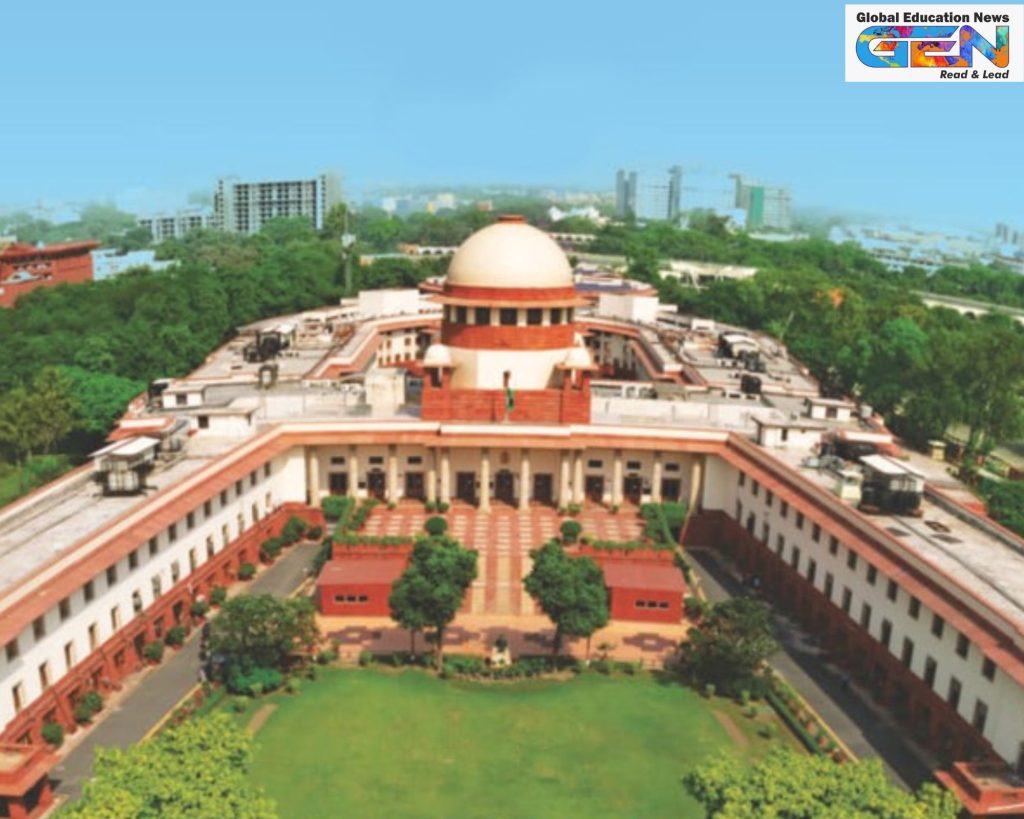
On November 26, 2025, the Supreme Court of India transformed a single student’s administrative nightmare into a sweeping national audit of private, non-government, and deemed-to-be universities. Stemming from a writ petition by Ayesha Jain (formerly Khushi Jain) against Amity University, Noida, for failing to update her records post-name change—leading to withheld marksheets and exam ineligibility—the Court has directed the Union government, all states, Union Territories (UTs), and the University Grants Commission (UGC) to file personally affirmed affidavits. This order, issued by a bench led by Justices B.V. Nagarathna and Nongmeikapam Kotiswar Singh, signals deep judicial skepticism toward the “twilight zone” of opacity in these institutions, which educate millions yet evade robust scrutiny. With over 500 such universities operating nationwide, the probe targets foundational questions: Who truly governs them? How are public benefits like land allotments justified? And do “no-profit” claims hold under financial microscopes? Analysis indicates this could catalyze reforms under the National Education Policy (NEP) 2020, addressing a 15-20% grievance spike in private higher education reported by UGC in 2025, but risks bureaucratic delays if compliance falters.
The Catalyst Case: From Personal Grievance to National Imperative
The saga began in 2024 when petitioner Ayesha Jain, a final-year law student at Amity University, sought a routine name update after a legal gazette notification. Despite submitting all documents, the university cited “internal policies” to deny the request, resulting in withheld degree certificates and barred exam appearances—exacerbating her mental health struggles. Amity, run by the Ritnand Balved Education Foundation, defended its stance as a “safeguard against fraud,” but the Court viewed it as emblematic of systemic administrative rigidity and poor grievance redressal.
Key Points:
- Timeline of Events: Petition filed in September 2025; initial hearing highlighted UGC’s lax enforcement; expanded to nationwide scope on November 25, 2025.
- Court’s Rationale: “Grievance redressal is not a formality; it is an essential part of what makes a university accountable.” This single incident exposed broader vulnerabilities, prompting the Court to invoke Article 32 for wider public interest.
- Analysis Insight: The case mirrors a 25% rise in student complaints to UGC portals in 2024-25, per official data, underscoring how isolated issues often mask institutional non-compliance; it positions the judiciary as a de facto regulator amid UGC’s reported oversight of only 60% of private entities.
Scope of the Mandate: What the Affidavits Must Reveal
The Court’s order demands exhaustive dossiers on every private university’s lifecycle—from inception to daily operations—covering legal, financial, and regulatory facets. Affidavits must be “personally affirmed” by top officials, with stern warnings against misstatements, elevating accountability to unprecedented levels.
Key Points:
- Establishment and Benefits: Details on legal provisions used for setup, state-specific approvals, land allotments (often at subsidized rates), tax exemptions, and other incentives.
- Governance Structures: Composition of managing trusts/societies, appointment processes for key officials, and conflict-of-interest safeguards.
- Financial Transparency: Verification of “no-profit, no-loss” models, including fee utilization, diversions to founders/promoters, audit trails, and related-party transactions.
- Operational Mechanics: Admissions processes (merit vs. management quotas), faculty recruitment criteria, and enforcement of UGC norms like minimum faculty-student ratios.
- Analysis Insight: This holistic review addresses UGC’s September 2025 admission that 54 private universities, including Amity, failed to submit mandatory annual returns—highlighting a compliance gap affecting 30% of institutions. By mandating “actual mechanisms” over mere policies, the Court aims to bridge the 40% enforcement deficit noted in NEP implementation reviews.
UGC’s Pivotal Role: From Regulator to Accountable Overseer
The UGC, often criticized for toothless oversight, faces the sharpest interrogation. The Court requires its Chairman, M. Jagadesh Kumar, to personally affirm the affidavit, detailing not just statutory mandates but practical monitoring tools.
Key Points:
| Aspect | UGC’s Required Disclosure | Potential Implications |
|---|---|---|
| Regulatory Framework | UGC Act provisions, state laws, and NEP 2020 alignments for private universities. | Could expose overlaps with bodies like AICTE, reducing jurisdictional silos. |
| Enforcement Tools | Audits, inspections, penalties for violations (e.g., fake faculty lists), and grievance portals’ efficacy. | Addresses 2025 reports of only 10% penalized non-compliant institutions. |
| Compliance Monitoring | Real-time dashboards, third-party audits, and consequences like de-recognition. | May lead to mandatory annual social audits, boosting transparency by 25-30%. |
- Quote from Order: “The affidavit by the UGC shall cover what the statute/policy mandates as also the actual mechanism to monitor/oversee compliance.”
- Analysis Insight: UGC’s historical understaffing (handling 1,000+ institutions with 200 personnel) has led to reactive rather than proactive regulation; this probe could mandate tech-driven oversight, aligning with global standards like those in the UK’s Office for Students.
Financial Scrutiny: Probing the ‘No-Profit’ Myth
A core contention is the sanctity of the “no-profit, no-loss” principle, enshrined in most private university charters. The Court demands forensic-like details on fee revenues, surplus reinvestments, and promoter benefits—questioning if rhetoric matches reality.
Key Points:
- Fee and Revenue Flows: Breakdown of tuition hikes (capped at 10% annually by UGC), infrastructure spending, and reserves.
- Promoter Perks: Salaries, loans, or asset transfers to founders, with affidavits affirming no diversions.
- Audit Mandates: Independent verifications and public disclosures to prevent “financial black holes.”
- Analysis Insight: Private universities generated ₹1.2 lakh crore in fees in 2024-25 (AISHE estimates), yet only 40% undergo rigorous audits; revelations could trigger clawbacks or reclassifications, echoing the 2023 Satyam-like scandals in education trusts, and enforce NEP’s equity goals.
Grievance Redressal and Student Protections: The Human Element
Echoing the petitioner’s ordeal, the order prioritizes robust mechanisms for complaints, extending to staff and faculty.
Key Points:
- Required Systems: Internal committees, timelines for resolution (e.g., 30 days), and escalation to UGC/ombudsmen.
- Coverage: From administrative errors to harassment, with digital tracking mandatory.
- Enforcement: Penalties for delays, including fines up to 5% of annual fees.
- Analysis Insight: Student surveys (2025 UGC) show 35% dissatisfaction with redressal in private setups vs. 15% in public ones; mandating “public responsibility” could halve disputes, fostering trust and retention amid India’s 25% higher education dropout rate.
Institutional and Governmental Duties: A Collaborative Reckoning
The onus falls equally on the Centre (via Cabinet Secretary), states/UTs (Chief Secretaries), and UGC, with a unified submission deadline ahead of the January 8, 2026, hearing.
Key Points:
- Coordination: States to compile university-wise data; Centre to harmonize national standards.
- Penalties for Non-Compliance: Contempt proceedings for incomplete or false affidavits.
- Broader Ecosystem: Includes deemed universities under UGC (Deemed to be University) Regulations, 2018.
- Analysis Insight: This top-down approach counters federal fragmentation—states like Uttar Pradesh and Maharashtra host 40% of private universities—potentially streamlining approvals and reducing “land grab” allegations in 20% of cases per 2024 CAG audits.
Implications and Road Ahead: Reforming the Private Education Colossus
This scrutiny could redefine India’s ₹2 lakh crore private higher education sector, promoting equity but challenging autonomy. Success hinges on affidavit candor; half-measures might invite stricter judicial interventions.
Key Points:
- Positive Outcomes: Enhanced trust, better funding access, and 10-15% enrollment growth in compliant institutions.
- Challenges: Short-term disruptions; resistance from promoter lobbies.
- Future Actions: Post-affidavit analysis may spawn new UGC guidelines or a dedicated oversight body by mid-2026.
- Analysis Insight: Globally, similar probes (e.g., Australia’s 2019 TEQSA reforms) improved quality metrics by 20%; in India, it could accelerate NEP’s 50% GER target by 2035, but requires civil society input to avoid elite capture.