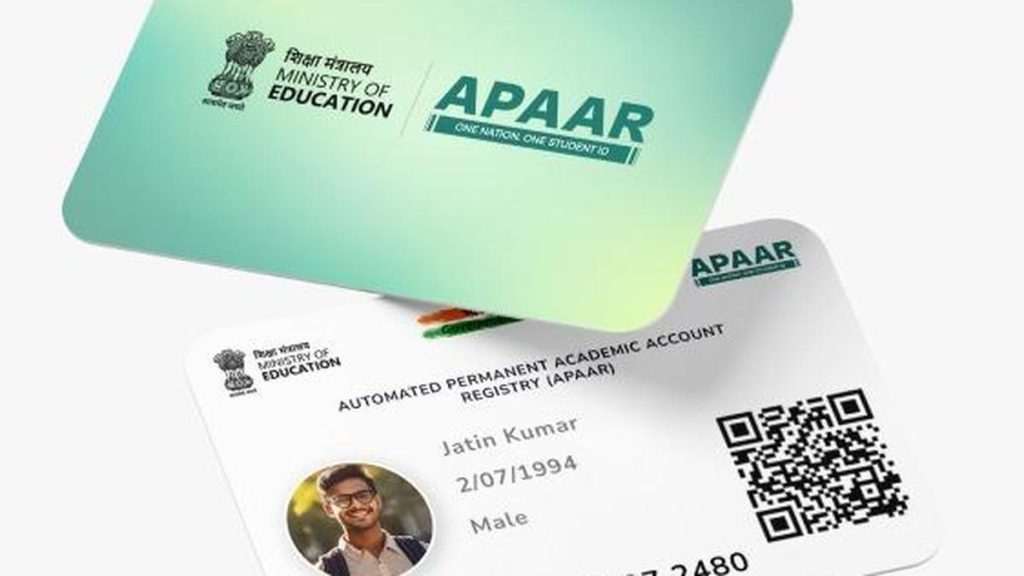
In a significant development for India’s education system and student data privacy, the Supreme Court has announced that it will direct the Central Board of Secondary Education (CBSE) to implement across the country the Orissa High Court’s ruling requiring changes to the consent form for the Automated Permanent Academic Account Registry (APAAR) ID.
The proposed changes will ensure that parents have a clear option to refuse consent or opt out of the APAAR scheme, reinforcing the principle that participation in the Aadhaar-linked student identification system must remain voluntary. The court also indicated that it would examine broader concerns relating to the collection, storage, and processing of students’ personal data.
Key Highlights
- Supreme Court will direct CBSE to implement the Orissa High Court’s APAAR consent ruling nationwide.
- Parents must be given a clear option to refuse consent or opt out of APAAR ID generation.
- The court has also asked CBSE to examine concerns related to student data privacy, storage, and processing.
- The ruling strengthens the voluntary nature of the APAAR scheme.
- Petitioners argued that mandatory Aadhaar linkage for APAAR raises constitutional and privacy concerns.
What Is APAAR ID?
The Automated Permanent Academic Account Registry (APAAR) is a flagship initiative introduced by the Ministry of Education under the National Education Policy (NEP) 2020.
Each student is assigned a unique 12-digit lifelong academic identification number, designed to create a unified digital academic record from school through higher education.
The APAAR ID enables students to:
- Maintain a lifelong digital academic profile.
- Store mark sheets, certificates, degrees, and achievements digitally.
- Transfer academic records seamlessly while changing schools or colleges.
- Reduce paperwork and improve record management.
- Facilitate better educational planning and governance.
Why Did the Supreme Court Intervene?
The matter reached the Supreme Court after petitions challenged the constitutional validity of the APAAR scheme, particularly its linkage with Aadhaar and the way parental consent was being obtained.
During the hearing, petitioners argued that although APAAR is officially described as voluntary, the model consent form did not provide parents with a meaningful opportunity to refuse participation, making the process effectively compulsory.
The court observed that since the Union government had accepted the Orissa High Court’s December 2025 judgment, its safeguards should be implemented across all CBSE-affiliated schools in the country.
What Did the Orissa High Court Rule?
In December 2025, the Orissa High Court directed authorities to revise the model APAAR consent form.
The court held that:
- Parents should have a clear “opt-out” or refusal option.
- A consent form without such an option undermines the voluntary nature of the scheme.
- Schools must ensure that consent is informed and freely given.
- Student data protection must receive stronger safeguards.
The Supreme Court has now indicated that these protections should be adopted across India for CBSE schools.
Privacy Concerns Take Centre Stage
One of the central issues before the Supreme Court was the protection of children’s personal data.
Petitioners argued that:
- APAAR relies on Aadhaar-based identity verification.
- Children’s educational and personal information could be stored for long periods.
- Existing guidelines do not sufficiently clarify how data will be processed, shared, or deleted.
- Stronger legal safeguards are required to comply with privacy principles.
The Supreme Court acknowledged these concerns and indicated that CBSE would be required to examine issues relating to data protection alongside the revised consent process.
Court Recognises the Benefits of APAAR
While raising concerns about consent and privacy, the Supreme Court also acknowledged the objectives behind the APAAR initiative.
The bench observed that a lifelong academic identifier could help:
- Maintain accurate student records.
- Simplify school transfers.
- Improve educational planning.
- Reduce duplication of documents.
- Enhance administrative efficiency.
The court suggested that the scheme itself serves a legitimate educational purpose, but its implementation must respect constitutional rights and informed parental consent.
What Will Change for Parents and Schools?
Once the Supreme Court’s directions are formally implemented, CBSE-affiliated schools are expected to:
- Revise APAAR consent forms.
- Clearly inform parents that participation is voluntary.
- Provide an explicit option to refuse or later withdraw consent.
- Explain how student data will be collected, stored, and used.
- Ensure compliance with applicable data protection requirements.
These measures are expected to improve transparency and strengthen trust between schools and parents.
Balancing Digital Innovation and Privacy
The case reflects a broader challenge facing education systems worldwide—leveraging digital technologies while safeguarding individual privacy.
As schools increasingly adopt digital platforms for record management and learning, policymakers are expected to place greater emphasis on:
- Transparent consent mechanisms.
- Responsible handling of student data.
- Compliance with privacy laws.
- Cybersecurity and secure digital infrastructure.
Experts believe that digital education initiatives can succeed only when supported by robust privacy protections and public confidence.
What This Means for India’s Education System
The Supreme Court’s intervention is likely to influence how future digital education initiatives are implemented across the country.
The ruling reinforces that technological reforms should not come at the cost of individual rights. By ensuring informed consent and strengthening data protection safeguards, the decision could become an important benchmark for future education technology policies under the National Education Policy (NEP).