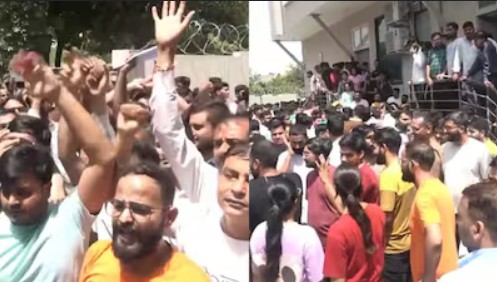
What was supposed to be a crucial three-hour examination for medical graduates turned into a frustrating ordeal for hundreds of NEET PG 2026 aspirants in Jaipur on August 30.
At two examination centres in the Sitapura area of Jaipur, repeated power and technical problems disrupted the computer-based NEET PG examination. Candidates reported repeated interruptions, problems accessing the examination system and difficulty completing the test within the scheduled window.
The disruption eventually forced the National Board of Examinations in Medical Sciences (NBEMS) to arrange a re-examination for candidates who could not complete the test.
The re-examination is scheduled for September 5, 2026, at 3 pm in Jaipur. A total of 2,445 candidates have been identified as affected, according to subsequent updates.
The incident has also triggered questions about examination-centre preparedness, backup power arrangements and the safeguards in place for a high-stakes national medical entrance examination.
What Happened at the Jaipur NEET PG Centre?
The NEET PG 2026 examination was scheduled across the country on August 30, with the test being conducted in a computer-based format.
At the two affected centres at iON Digital Zone iDZ, Sitapura, the examination was disrupted by an internal power-supply failure.
According to NBEMS, the examination could not be completed at test centres 41,682 and 41,683 because of the internal power issue. The board apologised to the affected candidates and subsequently announced a re-examination.
Candidates, however, described a much more chaotic experience.
Reports from the centre said that computer systems repeatedly shut down and candidates faced interruptions while attempting the examination. Some candidates alleged that the examination appeared to start and stop repeatedly, making it difficult to concentrate and complete questions under normal examination conditions.
Candidates Protest After Repeated Disruptions
The technical problems sparked anger among NEET PG aspirants at the affected centres.
After experiencing repeated interruptions, candidates gathered outside the examination venue and protested, demanding a fair solution.
For students who had spent months preparing for postgraduate medical admissions, the problem was not simply a technical inconvenience.
NEET PG scores determine candidates’ opportunities to compete for postgraduate medical seats and influence their choices of specialisation and institution. In a highly competitive examination, even a small difference in marks can affect the final outcome.
Candidates therefore raised concerns about whether their performance during a disrupted examination could be fairly compared with that of students who completed the test without such interruptions.
NBEMS Announces NEET PG Re-Exam
Following the disruption, NBEMS announced a separate examination for the affected candidates.
The NEET PG 2026 re-examination will be held on September 5, 2026, at 3 pm in Jaipur.
The re-examination is specifically for candidates who were unable to complete the August 30 examination because of the technical disruption at the two Sitapura centres.
NBEMS has said that details of the re-examination venue would be communicated separately and that revised admit cards would be issued to the affected candidates.
NEET PG 2026 Re-Exam: Important Details
| Particular | Details |
|---|---|
| Examination | NEET PG 2026 |
| Original exam date | August 30, 2026 |
| Affected location | Sitapura, Jaipur |
| Affected centres | TC 41682 and TC 41683 |
| Reason for disruption | Internal power-supply failure |
| Affected candidates | 2,445 |
| Re-examination date | September 5, 2026 |
| Re-examination time | 3 pm |
| City | Jaipur |
| Admit card | Revised admit cards to be issued |
| Conducting body | NBEMS |
NBEMS Orders Three-Member Probe
The controversy has now moved beyond the question of conducting a re-examination.
NBEMS has constituted a three-member committee to investigate the internal power-supply failure that disrupted the NEET PG examination at the two Jaipur centres.
The inquiry is expected to examine what caused the disruption and whether the examination-centre arrangements met the necessary requirements for conducting a high-stakes computer-based examination.
The investigation could also be important in determining accountability and identifying measures needed to prevent similar disruptions during future examinations.
Was There a NEET PG Paper Leak in Jaipur?
The disruption also led to speculation on social media about a possible NEET PG paper leak.
However, available official and credible reporting indicates that the problem was related to the power and technical failure at the examination centres, rather than a confirmed paper leak.
Claims circulating online about a paper leak were described as misleading, and the disruption should not be confused with evidence of a question-paper leak.
This distinction is particularly important because a technical failure during a computer-based examination and a question-paper leak are entirely different issues.
The current official action is focused on the power-supply failure, affected candidates and examination-centre preparedness.
Why the Incident Matters for NEET PG Aspirants
NEET PG is among India’s most important medical entrance examinations.
For thousands of medical graduates, the examination represents the gateway to postgraduate medical education and specialised training.
The Jaipur incident highlights several concerns about the conduct of high-stakes computer-based examinations:
Reliable Power Infrastructure
A computer-based examination requires uninterrupted electricity and dependable technical infrastructure.
Backup power arrangements are therefore not merely a convenience. They are essential to ensuring that candidates are tested under comparable conditions.
Technical Contingency Planning
Even when power supply is available, computer-based tests can be affected by server, network or system failures.
Examination authorities need contingency mechanisms capable of dealing with such disruptions without compromising candidates’ performance.
Equal Examination Conditions
A national examination is expected to provide broadly comparable conditions for all candidates.
When some candidates experience repeated interruptions while others complete the examination normally, questions about fairness inevitably arise.
Transparent Communication
Candidates need clear and timely information when an examination is disrupted.
Uncertainty can quickly fuel rumours, particularly when students and parents are waiting for an explanation about whether their examination will be considered valid.
The Challenge of Conducting a Fair Re-Exam
The decision to hold a re-examination gives affected candidates another opportunity to complete the test under proper conditions.
However, it also creates a new challenge: maintaining fairness between the candidates taking the original examination and those appearing in the re-examination.
The authorities will need to ensure that the re-examination is conducted under secure and standardised conditions and that the evaluation process appropriately accounts for the circumstances.
For the affected candidates, the September 5 test is therefore more than simply another examination date.
It is an opportunity to complete an examination that they were unable to finish under the originally scheduled conditions.
What Affected NEET PG Candidates Should Watch For
Candidates affected by the Jaipur disruption should pay close attention to official NBEMS communications regarding the re-examination.
The most important updates will include:
- Revised admit card details
- Exact re-examination centre
- Reporting instructions
- Examination-day requirements
- Any additional instructions issued by NBEMS
- Further information arising from the investigation
Candidates should rely on official examination communications rather than unverified social media claims, particularly regarding allegations of paper leaks or changes to the examination process.
What the Jaipur Incident Says About Exam Preparedness
The NEET PG 2026 disruption has once again highlighted a broader issue in India’s examination system: high-stakes tests require high-reliability infrastructure.
A candidate’s preparation may span years, but the final examination depends on systems that must function for only a few critical hours.
That makes preparation at the examination-centre level just as important as preparation by the candidate.
Power backup, server reliability, technical support, communication systems and emergency response protocols all become crucial when thousands of medical graduates are appearing for an examination that can influence their professional future.
A Test Not Just for Candidates, But for the Examination System
The Jaipur NEET PG incident has placed the examination system itself under scrutiny.
The immediate response — a re-examination for affected candidates — addresses the most pressing concern by giving them another opportunity.
The three-member NBEMS investigation will now be important in determining what went wrong and how such failures can be prevented.
For candidates, the expectation is straightforward: a fair examination conducted under stable and equal conditions.
For examination authorities, the incident is a reminder that technical preparedness cannot be treated as a secondary part of examination planning.
NEET PG aspirants prepare for months, sometimes years, for a single examination. When a technical failure interrupts that opportunity, the responsibility for restoring fairness rests with the system.
The September 5 re-examination will therefore be closely watched — not only by the 2,445 affected candidates, but by the wider medical education community seeking reassurance that India’s high-stakes entrance examinations can be conducted with the reliability and transparency students deserve.