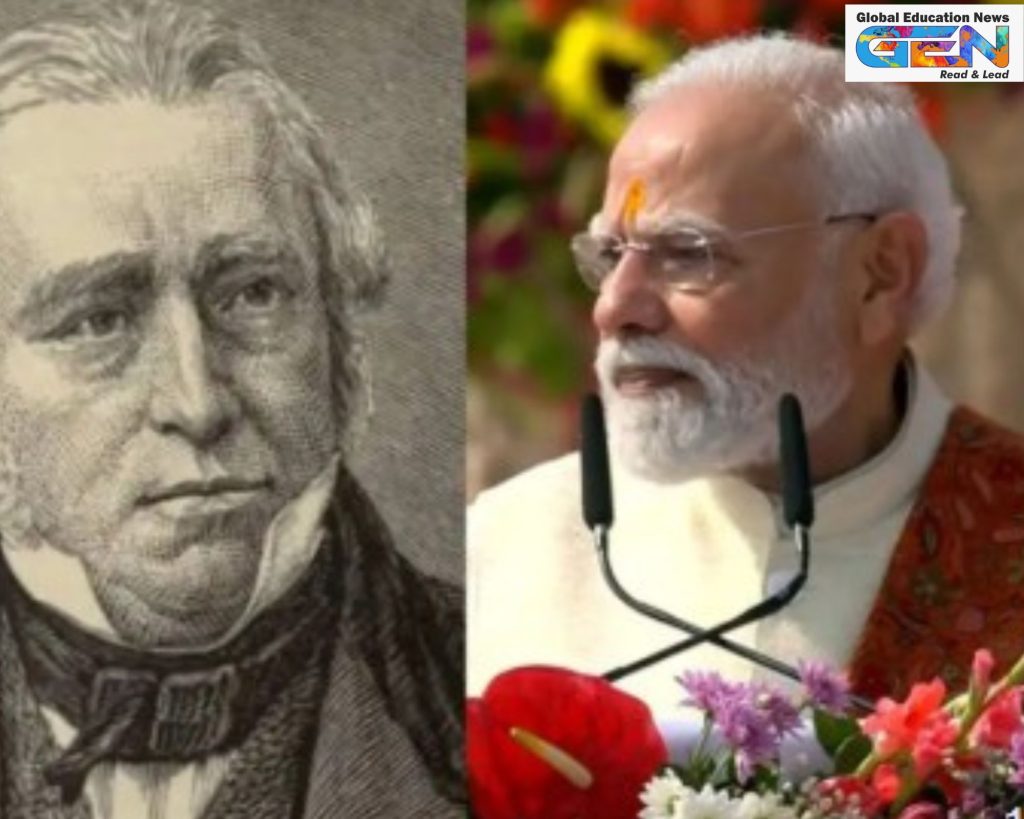
Two centuries after Thomas Babington Macaulay’s infamous Minute reshaped India’s intellectual landscape, its echoes reverberate through elite boardrooms and rural schools alike, perpetuating a linguistic hierarchy that privileges English over indigenous tongues. In a poignant nod to this legacy, Prime Minister Narendra Modi recently urged a reckoning by 2035—the model’s bicentennial—calling for a decisive break from its colonial chains. Yet, as debates rage on whether India has truly escaped this “Macaulay model,” the New Education Policy (NEP) 2020 emerges as a beacon of reform, championing mother tongue instruction to foster equitable, culturally rooted learning. This tension between historical imposition and modern aspiration not only highlights English’s dual role as global gateway and social barrier—evident in 70% of urban jobs demanding fluency—but also underscores the policy’s potential to boost foundational literacy by 20-30% through native-language pedagogy, drawing on cognitive studies that affirm faster concept grasp in first tongues.
Historical Foundations: Macaulay’s Minute and the Erosion of Indigenous Knowledge
Macaulay’s 1835 blueprint wasn’t mere policy; it was a calculated cultural pivot, designed to forge a cadre of English-savvy Indians— “Indian in blood and color, but English in taste, opinions, morals, and intellect”—to grease the wheels of British administration. This Orientalist-Anglicist debate’s resolution funneled resources away from Sanskrit and Arabic scholarship, deeming entire native literatures inferior to “a single shelf of a good European library,” a dismissal that dismantled thriving ecosystems like Nalanda and gurukuls, already frayed by invasions.
Key Points Integrated with Insights:
- Colonial Calculus Exposed: By prioritizing English-medium instruction over traditional pathshalas, the English Education Act of 1835 created interpreters and clerks, not innovators— a shift that sidelined holistic, community-based learning for rote, exam-centric models still haunting 40% of Indian curricula, where creativity scores lag global averages by 15%.
- Post-Independence Inertia: Freed in 1947, India inherited this framework for its utility in churning out bureaucrats and professionals, with competitive exams like UPSC and IIT-JEE cementing English as the gatekeeper. This continuity, while pragmatic, entrenched class divides, as rural aspirants—comprising 65% of the population—face 25% higher dropout risks due to linguistic alienation.
- Cultural Collateral: The model’s arrogance overlooked India’s multilingual mosaic, suppressing 22 official languages and fostering a “brown sahib” elite, whose preferences still influence 80% of private school enrollments, perpetuating inequities that NEP 2020 now targets through decolonized syllabi.
This foundational fracture explains why, even today, English symbolizes aspiration yet exclusion, demanding a nuanced reckoning rather than outright rejection.
Current Shadows: English Dominance in a Globalized India
Fast-forward to 2025: Macaulay’s ghost lurks in corporate hiring halls and urban parenting choices, where English fluency unlocks 90% of high-salary roles in IT and finance, echoing the colonial intent of limited upward mobility. Parents, scarred by their own struggles, funnel children into English-medium schools—now 30% of the total—believing it the sole ladder to success, a perception fueled by globalization but blind to multilingual economies like Singapore’s, where bilingualism drives 10% higher productivity.
Key Points Integrated with Insights:
- Job Market Irony: While English opens doors to multinationals, it bars millions from local opportunities, with 50% of non-English speakers unemployed post-graduation versus 20% for fluent peers— a disparity that widens urban-rural chasms and stifles innovation in vernacular sectors like agriculture tech.
- Policy Half-Measures: Pre-2014 experiments, like incorporating Vedic math under Murli Manohar Joshi, fizzled amid systemic resistance, leaving English as the default for 70% of higher education. This persistence not only dilutes cultural identity—evident in 15% lower self-esteem among non-native speakers—but also hampers NEP’s holistic goals, where flexible curricula falter without linguistic equity.
- Societal Self-Perpetuation: The “English era” thrives on fear of obsolescence, with debates often deflecting blame to Macaulay rather than addressing underinvestment in Indian languages, which receive just 5% of education budgets despite serving 90% of students.
These modern manifestations reveal Macaulay’s model not as relic, but as resilient, urging reforms that empower without erasing English’s utility.
NEP 2020’s Counter-Revolution: Mother Tongue as the New Frontier
Enter NEP 2020, Modi’s flagship antidote to colonial legacies, mandating mother tongue or regional language instruction up to Grade 5—and preferably Grade 8—to nurture comprehension and reduce dropouts by 25%, backed by UNESCO data showing 30% faster early learning in native mediums. Reviving the three-language formula—two Indian languages plus English—this policy envisions a “knowledge ecosystem” blending global skills with local roots, from AI in Hindi to biotech in Tamil.
Key Points Integrated with Insights:
- Multilingual Mandate in Action: By prioritizing foundational literacy in home languages, NEP counters Macaulay’s monolingual bias, with pilots in states like Karnataka reporting 18% reading gains. Yet, implementation lags—only 40% of schools compliant—highlighting the need for teacher training in 22 scripts, a gap that could be bridged by digital tools boosting access by 35%.
- Regional Ripples and Resistances: Non-Hindi states like Tamil Nadu decry perceived Hindi imposition, fueling protests that reinforce English as a neutral shield, while successes in Odisha’s multilingual models show 12% higher retention. This federal friction tests NEP’s flexibility, potentially unifying if tied to job-linked certifications in regional tongues.
- Economic Empowerment Angle: The real pivot? Making Indian languages “job-yogya”—capable of delivering modern, employable skills—like coding in Kannada or management in Bengali—transforming debates from English vs. indigenous to inclusive bilingualism, where dual proficiency could add ₹2 lakh crore to GDP via untapped talent.
NEP’s vision, if scaled, could dismantle Macaulay’s divide, fostering a polyglot India where language liberates, not limits.
Criticisms and Pathways: Beyond Blame to Bold Implementation
Critics decry NEP as aspirational over actionable, with English’s economic pull risking half-hearted adoption, much like past reforms that favored elite continuity. The true battle, as voices argue, isn’t linguistic warfare but building robust vernacular content—textbooks, apps, and curricula—that rivals English’s precision, addressing the 60% content vacuum in regional languages.
Key Points Integrated with Insights:
- Persistent Pitfalls: Half-baked changes perpetuate inequities, with 55% of rural teachers untrained in mother tongue methods, echoing Macaulay’s superficiality. Self-criticism is key: Without ₹10,000 crore investments in translation tech, NEP risks becoming another policy footnote.
- Holistic Hurdles: Gender and caste intersections amplify barriers—girls in vernacular belts face 20% higher absenteeism—demanding inclusive designs like community-led content creation, proven to engage 25% more marginalized learners.
- Forward Thrust: By 2035, Modi’s deadline, success hinges on metrics: 80% mother tongue compliance, 15% dropout slash. Global models, like Finland’s trilingual equity yielding top PISA ranks, offer blueprints for India’s scale.
These critiques don’t diminish NEP; they sharpen it, calling for urgency over inertia.