September 18, 2025
Delhi, India
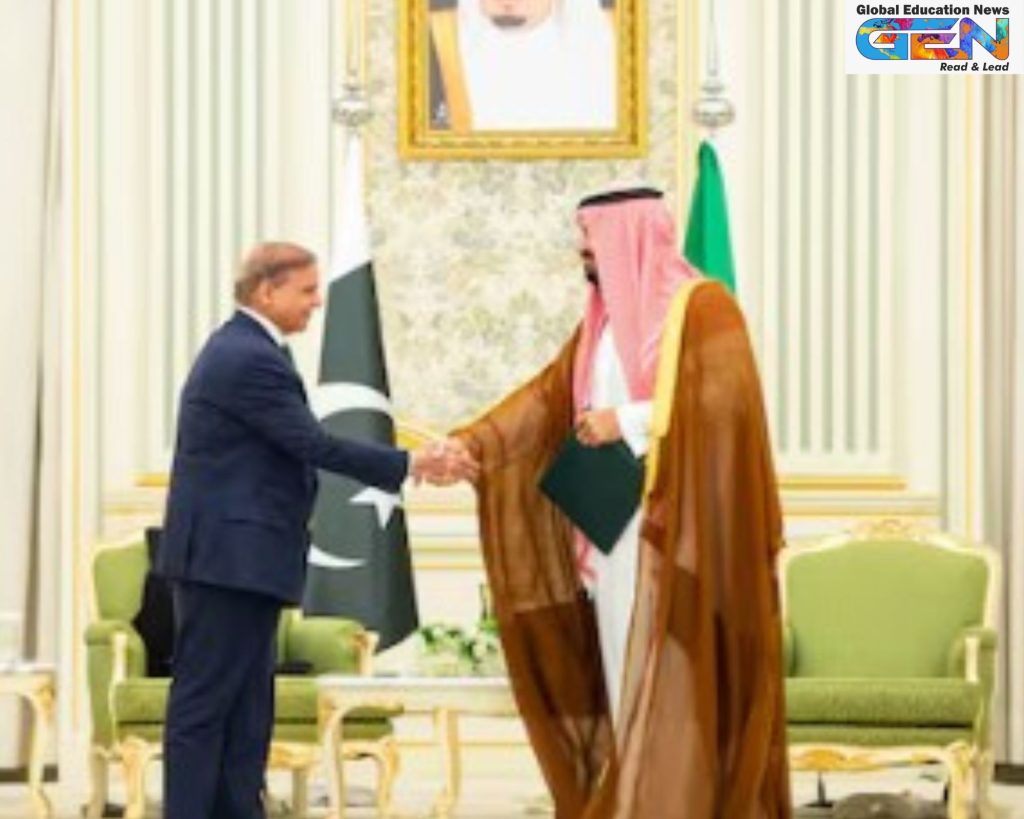
In a high-stakes Riyadh ceremony on September 17, 2025, Saudi Crown Prince Mohammed bin Salman and Pakistan Prime Minister Shehbaz Sharif inked the Strategic Mutual Defence Agreement, formalizing decades of informal ties. The pact’s bombshell clause: “Any aggression against either country shall be considered an aggression against both,” pledging joint deterrence and military cooperation. Witnessed by Pakistan Army Chief Asim Munir and Saudi Defence Minister Khalid bin Salman, it marks a thaw after frosty years—think Pakistan’s 2015 Yemen snub. For Pakistan, it’s a perceived win against India; for Saudi, a hedge against regional fires. But as X user @DrBilalAfzal quipped, “Mutual on paper, but burdens not equal—Riyadh won’t risk India for Pak.”
- Key Points:
- Signing date: September 17, 2025, at Al-Yamamah Palace; builds on 1967 training pacts (8,000+ Saudis trained by Pak).
- Scope: Joint exercises, intel sharing, rapid response; no explicit troop commitments.
- Immediate buzz: Pakistan hails “strategic victory”; Saudi stresses “not aimed at any specific country.”
India’s Cool-Headed Response: “We’ll Study Implications” – No Panic, Just Vigilance
New Delhi isn’t sweating—yet. On September 18, 2025, MEA spokesperson Randhir Jaiswal stated India was “aware” of the pact’s brewing and will “study implications for national security, regional, and global stability.” No alarm bells, but a firm nod to protecting interests across domains. With Indo-Saudi trade at $41.88B (FY24-25)—Saudi’s 4th largest partner vs. Pakistan’s $3-4B puny pie—Riyadh quickly reassured: “Our India ties are more robust than ever.” X echoes this: @sidhant noted, “Saudi has good ties with India,” while @theskindoctor13 warned of Pakistan’s nukes as its “only leverage.”
- Key Points:
- MEA stance: Watchful, not reactive; aligns with “comprehensive national security” doctrine.
- Economic anchor: India buys 18% of Saudi oil; joint ventures in renewables, defence (e.g., BrahMos exports eyed).
- Analyst view: Christopher Clary tweeted, “Riyadh envisions no role in next India-Pak clash.”
The Israel Angle: A Gulf Wake-Up Call Post-Qatar Strike
Timing is everything—and this pact screams Middle East meltdown. Signed days after Israel’s September 10, 2025, Doha strike targeting Hamas leaders (with alleged Trump nod), it signals Gulf jitters over US reliability. With Israeli ops raging in Gaza, Lebanon, Syria, Yemen, and now Qatar, Arab states fear a nuclear-armed foe next door. Enter Pakistan: The Muslim world’s sole atomic power (150-170 warheads) and largest army (650,000 troops). As Al Jazeera notes, it’s a “watershed” for an “Islamic bloc” front, not South Asia. X’s @Worldwar_3_ hyped it as “Muslim nations unite!” but @Vantagemonitor called it “old habits, not a US plot.”
- Key Points:
- Trigger: Israel’s Qatar hit (Sept 10) upends diplomacy; Gulf eyes US bases (40,000 troops) warily.
- Nuclear nod: Pact “encompasses all military means”—Saudi’s coy response fuels rumors of Pak umbrella access.
- Broader bloc: Echoes OIC unity; counters Israel’s undeclared nukes (80-400 est.).
Nuclear Whispers and Houthi Hooks: What Saudi Really Wants from Pakistan
Beneath the bluster, Saudi eyes Pakistan’s bomb. Long-rumored funding (per ex-Gen Feroz Khan’s “Eating Grass”) and diplomat hints of a “nuclear umbrella” resurface. But reciprocity? Unlikely—Riyadh won’t torch $42B India trade for Pak’s woes. Instead, the pact hooks Islamabad into Saudi’s Yemen quagmire: Houthi missiles rain since 2015, and the “attack on one” clause could drag Pak troops back (as in 1960s). Ties soured over 2015 refusal; now, it’s payback time. X’s @MdAshraful joked, “If India attacks Pak, Saudi joins,” but @KhoobBhaalu countered, “Wars aren’t won on social media.”
- Key Points:
- Pak leverage: Nukes + army size; Saudi’s “comprehensive” pact hints at tech/intel swaps.
- Yemen trap: Houthis hit Riyadh 50+ times; could invoke mutual aid, pulling Pak in.
- Asymmetry: Dr Bilal Afzal: “Security for finance, but burdens unequal.”
For India: More Bark Than Bite – A Diplomatic Win for Pakistan, Headache for Riyadh
Experts like Christopher Clary dismiss Indo-Pak war scenarios: Saudi weighed four past conflicts and sees no role. It’s posturing—boosts Pak morale, deters Israel, but spares India (robust ties via I2U2, $100B investment pledge). Still, India monitors: Potential Pak nukes to Gulf upends balances. As @thecsrjournal noted, “Raises regional security concerns.” Long-term? Deepens Saudi-Pak reset, but Riyadh’s India pivot (oil, Hajj, defence deals) holds firm.
| Aspect | Saudi-Pak Pact Impact on India | Likelihood of Saudi Intervention |
|---|---|---|
| Economic | Minimal risk; $42B trade vs. $4B Pak ties | Low – Riyadh prioritizes energy security |
| Military | Symbolic deterrence for Pak; no troop pledges | Very Low – No history in Indo-Pak wars |
| Nuclear | Fuels Pak umbrella rumors; indirect escalation risk | Medium – If Israel strikes, Pak aids Saudi first |
| Diplomatic | India studies for stability; strengthens Quad ties | Low – Saudi reaffirms “robust” India relations |
- Key Points:
- Pak fantasy: F-15s vs. India? Unlikely—Saudi’s Typhoons stay home.
- India edge: Strategic autonomy; no formal pacts needed with US/Israel.
- X take: @drnishant9599 shared TOI link; consensus: “More about Israel.”
Geopolitical Chess: A United Islamic Front or Saudi’s Smart Hedge?
This pact reshapes maps: Gulf hedges US wane (Biden sanctions on Pak missiles), eyes Islamic solidarity post-Doha. For India, it’s a nudge to deepen Gulf bonds—think BrahMos sales, rupee oil trades. Pakistan gains clout but risks Yemen quagmires; Saudi gets a nuclear shadow without full commitment. As @Vantagemonitor threaded, “Riyadh falling back on old habits.” Will it deter Israel or drag Pak into ME fires? Sound off below—posturing or powder keg?