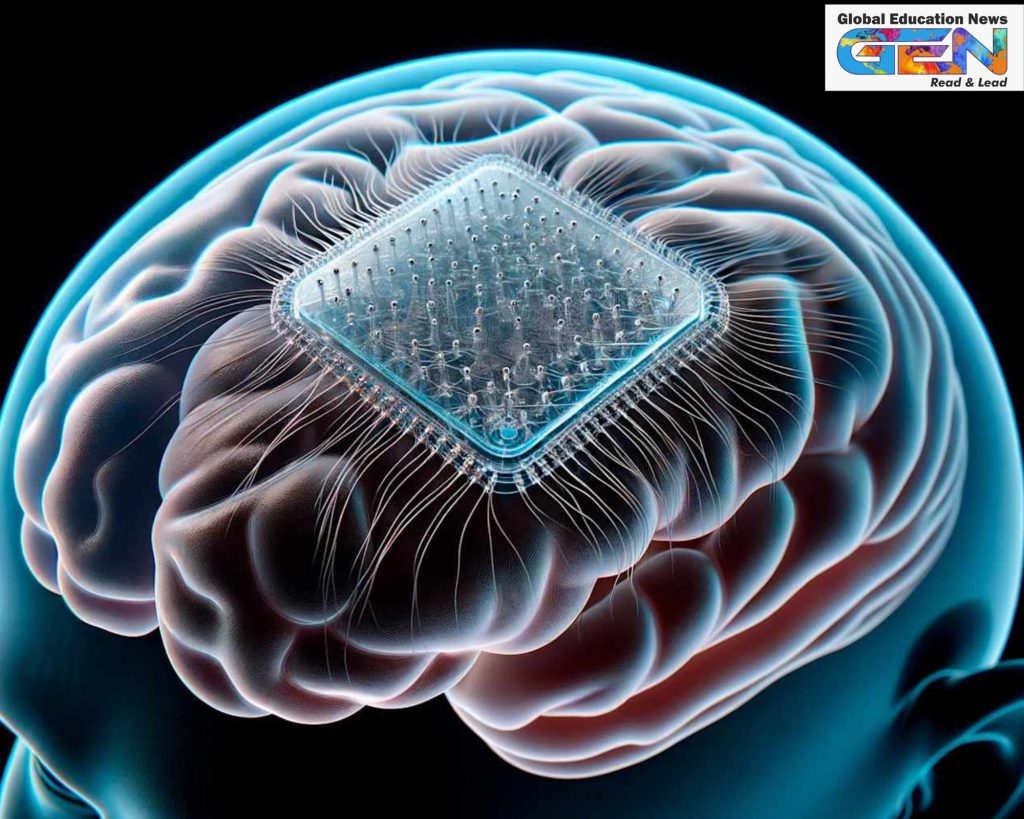
RMIT University in Melbourne, Australia, unveiled a revolutionary neuromorphic device that mirrors the human brain’s ability to process visual information. This tiny chip, developed by the Functional Materials and Microsystems Research Group, detects hand movements, stores memories, and processes data without an external computer, marking a significant advancement in artificial intelligence (AI). Led by Professor Sumeet Walia and Professor Akram Al-Hourani, this innovation promises to transform autonomous vehicles, advanced robotics, and smart sensors with energy-efficient, brain-like processing. This article explores the RMIT neuromorphic marvel, its groundbreaking technology, potential applications, and why it’s a game-changer for the future of AI.
The Neuromorphic Breakthrough: Mimicking the Human Brain
The RMIT device is a single-chip neuromorphic system that integrates sensing, processing, and memory, replicating the human brain’s visual cortex. Unlike conventional AI systems that rely on power-intensive external processors, this chip uses molybdenum disulfide (MoS2), a metal compound, to capture light and convert it into electrical signals, much like neurons. Key features include:
- Instant Motion Detection: The device senses hand movements in real-time, mimicking the human eye’s ability to detect environmental changes.
- On-Chip Memory: It stores visual data internally, eliminating the need for external storage and reducing latency.
- Energy Efficiency: By emulating analogue processing, it consumes significantly less power than digital systems, addressing AI’s growing energy demands.
Professor Sumeet Walia, Director of the RMIT Centre for Opto-electronic Materials and Sensors (COMAS), explained: “This proof-of-concept device mimics the human eye’s ability to capture light and the brain’s ability to process that visual information, enabling it to sense a change instantly and make memories without using huge amounts of data and energy.”
The research, published in Advanced Materials Technologies, highlights how atomic-scale defects in MoS2 enable this brain-like functionality, with Thiha Aung, a PhD scholar, as the first author.
X Buzz: Posts by @CommsroomC hail the device as a “game-changer for AI vision,” with users excited about its potential to “see and think like humans.”
How It Works: The Science Behind the Chip
The RMIT neuromorphic device leverages neuromorphic materials and advanced signal processing, spearheaded by Professor Akram Al-Hourani, Deputy Director of COMAS. The chip’s core component, molybdenum disulfide, is engineered with atomic-scale defects that allow it to:
- Capture light and convert it into electrical signals, similar to neural processing.
- Process these signals on-chip, bypassing the need for external computing.
- Store visual memories efficiently, enabling rapid decision-making.
This design contrasts with current digital systems, which Professor Walia notes are “very power-hungry and unable to keep up as data volume and complexity increases.” By mimicking the brain’s analogue processing, the device offers a scalable, low-energy solution for real-time AI applications.
Expert Quote: “This technology is a leap toward autonomous systems that can make ‘true’ real-time decisions, unlike the limitations of today’s digital AI,” says Al-Hourani.
Applications: Redefining AI Across Industries
The RMIT neuromorphic device has transformative potential across multiple sectors:
- Autonomous Vehicles: Its instant motion detection enhances safety for self-driving cars, aligning with innovations like Dolby Vision in vehicles showcased at CES 2025.
- Advanced Robotics: Robots, such as CASBOT 01 unveiled at CES 2025, could use this chip for human-like vision in smart homes, factories, or disaster response.
- Healthcare: Smart sensors could monitor patient movements or assist in diagnostics, improving precision in medical settings.
- Smart Surveillance: Real-time motion detection strengthens security systems, reducing reliance on cloud processing.
- Wearable Technology: Compact, low-power chips could power next-gen augmented reality (AR) devices, complementing trends like Apple Vision Pro 2, rumored for 2025.
Industry Impact: The device’s energy efficiency addresses sustainability concerns, as highlighted in X discussions about AI’s carbon footprint, making it a frontrunner in edge computing.
Why It Matters: A Step Toward Brain-Like AI
The RMIT device tackles critical challenges in AI development. Traditional systems, like those powering ChatGPT, rely on energy-intensive data centers, raising environmental and scalability issues. By contrast, this neuromorphic chip is compact, energy-efficient, and capable of on-device processing, aligning with global trends in brain-inspired computing. For instance, Google DeepMind’s 2025 AGI research and Bloomberg’s biocomputing primer underscore the shift toward neuromorphic systems.
In India, where NEP 2020 promotes STEM innovation, this breakthrough could inspire educational initiatives like Atal Tinkering Labs, especially as women’s STEM participation remains at 35% globally, per UNESCO’s 2025 report. Integrating such technologies into curricula could boost female enrollment and address gender gaps.
Public Sentiment on X: @TechBit calls it “the future of AI vision,” with users praising its potential to reduce AI’s energy demands.
Challenges and Future Directions
Despite its promise, the RMIT device faces hurdles:
- Manufacturing Scalability: Producing neuromorphic chips cost-effectively for mass markets remains a challenge, as seen in the semiconductor industry’s struggles.
- System Integration: Adapting existing AI frameworks to leverage this technology requires collaboration, similar to CASBOT’s open skills library approach.
- Global Competition: Companies like Samsung, with Vision AI displays at CES 2025, and NVIDIA, advancing AI hardware, pose competitive pressures.
RMIT has filed a provisional patent for the technology, signaling plans to commercialize it. Future goals include refining the chip for broader applications, such as integration with Hawk-Eye-like precision systems in sports or industrial automation, and forging partnerships to scale production.
Future Vision: “This is just the beginning. We envision fully autonomous systems that see and think like humans,” says Walia.
2025 Tech Landscape: A Perfect Timing
The RMIT breakthrough aligns with a wave of vision-based innovations in 2025:
- CES 2025 featured Li Auto’s Dolby Vision for cars and Samsung’s Vision AI, highlighting the demand for advanced visual processing.
- Apple Vision Pro 2, reportedly set for 2025, underscores the market for compact vision tech.
- Neuromorphic Momentum: Research from MIT and Intel on neuromorphic computing, cited in Scientific American, complements RMIT’s work, positioning it as a leader.
In education, RMIT’s innovation could inspire programs like India’s 50,000 Atal Tinkering Labs by 2030,
What’s Next for Tech Enthusiasts?
For students, researchers, and innovators:
- Learn Neuromorphic Computing: Explore courses on SWAYAM or Coursera to understand brain-inspired AI.
- Track RMIT’s Progress: Visit rmit.edu.au for updates on the neuromorphic project and research opportunities.
- Engage Online: Join X discussions or Reddit’s r/Technology to debate AI’s future.
- Prototype Projects: Experiment with Arduino or Raspberry Pi to build vision-based AI, inspired by RMIT’s chip.
Pro Tip: “Dive into neural network basics to grasp neuromorphic tech. RMIT’s work shows AI can be both smart and sustainable,” advises a tech educator.
Conclusion: A New Era of AI Vision
Unveiled on May 19, 2025, RMIT University’s neuromorphic device is a marvel that brings human-like vision to AI, promising smarter, greener technology. By processing light and movement like the brain, this chip could redefine autonomous vehicles, robotics, healthcare, and more. As the world embraces innovations like CES 2025’s vision tech and India’s STEM push, RMIT’s breakthrough stands at the forefront of the neuromorphic revolution. Stay updated via rmit.edu.au, and let this innovation spark your tech curiosity!