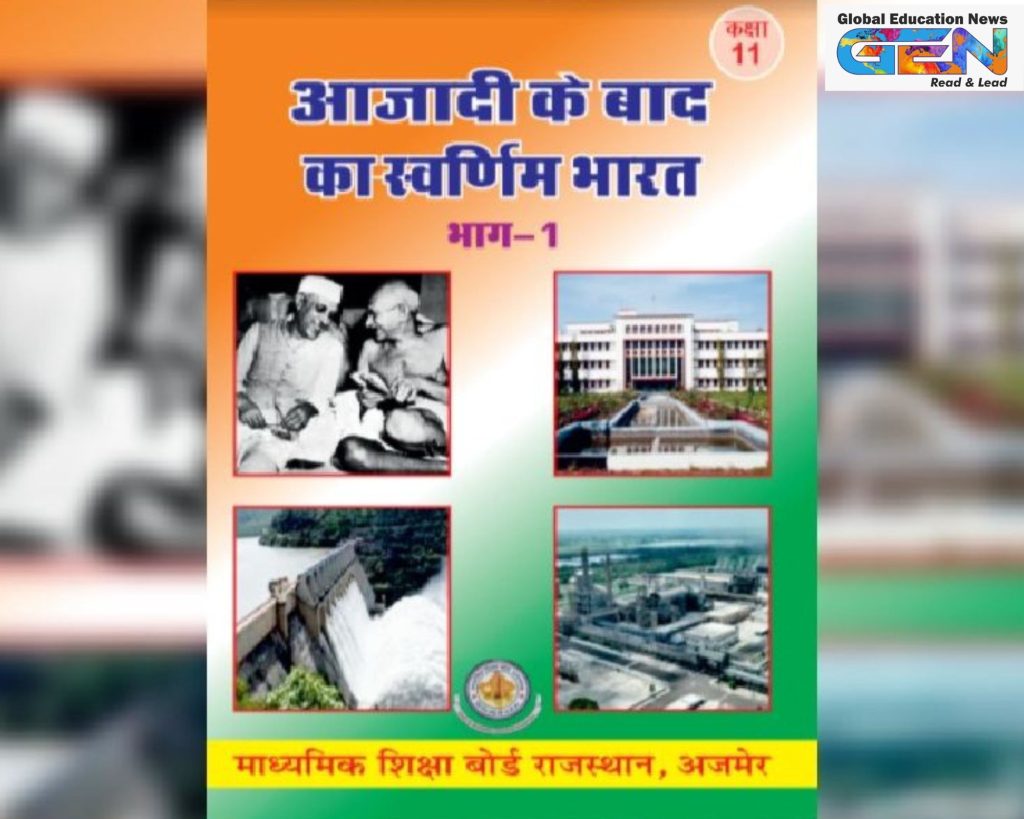
- What Happened: Two Class 12 textbooks, Azadi Ke Baad Swarnim Bharat Parts 1 and 2, were removed from the syllabus.
- Why: Education Minister Madan Dilawar claims they overly focus on the Nehru-Gandhi family, neglecting other national icons.
- Impact: Nearly 4.9 lakh printed copies, 80% distributed to 19,700 schools, now face scrapping.
On July 11, 2025, Rajasthan’s Education Minister Madan Dilawar ignited a political firestorm by announcing the discontinuation of two Class 12 supplementary textbooks, Azadi Ke Baad Swarnim Bharat (Glorious India After Independence) Parts 1 and 2. Introduced under the previous Congress government, these books were deemed “non-evaluative” and accused of disproportionately glorifying the Nehru-Gandhi family while sidelining other key figures like Sardar Patel, Lal Bahadur Shastri, and Dr. B.R. Ambedkar. With 4.9 lakh copies already printed and distributed across 19,700 schools, this decision has sparked debates over curriculum integrity, ideological bias, and the future of school education in Rajasthan.
What’s in the Books? The Content at the Heart of the Row
- Content Focus: Covers India’s freedom movement, post-independence progress, and contributions of Congress leaders.
- Key Figures Highlighted: Jawaharlal Nehru, Indira Gandhi, Rajiv Gandhi, and Manmohan Singh feature prominently.
- Visuals: Cover images include Nehru, Mahatma Gandhi, Indira Gandhi, Rajiv Gandhi, and a photo of Sonia Gandhi, Manmohan Singh, and Ashok Gehlot distributing Aadhar cards.
The textbooks, part of the Rajasthan Board of Secondary Education (RBSE) syllabus for over 20 years, detail India’s post-independence journey, emphasizing the roles of Jawaharlal Nehru, Indira Gandhi, Rajiv Gandhi, and Manmohan Singh. They highlight initiatives like the Right to Education, Right to Information, and the Aadhar program under Congress-led UPA governments. However, Minister Dilawar criticized the books for “glorifying” the Nehru-Gandhi family while omitting contributions from leaders like Sardar Patel, Dr. B.R. Ambedkar, and BJP stalwarts like Atal Bihari Vajpayee, Bhairon Singh Shekhawat, and Vasundhara Raje. The minister also noted that the books carry no exam marks, questioning their academic value.
Minister’s Stance: A Push for Balanced Representation
- Dilawar’s Critique: Claims the books glorify Congress leaders who “suspended democracy” during the Emergency.
- Omitted Leaders: Questions the absence of figures like Sardar Patel, Lal Bahadur Shastri, and PM Narendra Modi’s 11-year tenure.
- Sarcastic Remark: “If poison is worth lakhs, would you consume it?”—referring to the cost of printed books.
Minister Dilawar defended the decision, arguing that the textbooks create a false narrative that “only the Gandhi family contributed to India’s progress.” He criticized the inclusion of Congress leaders involved in the Emergency and the lack of mention of PM Narendra Modi’s achievements, such as Swachh Bharat, demonetization, and GST. Dilawar also controversially called Mughal emperor Akbar a “looter and rapist,” raising further questions about the government’s approach to historical narratives. The decision to scrap the books, despite their widespread distribution, has led to accusations of financial waste and ideological overreach.
Why This Matters: A Broader Debate on Education and History
- Curriculum Integrity: Sparks questions about balancing historical accuracy with political neutrality.
- Financial Waste: Scrapping 4.9 lakh books raises concerns about resource mismanagement.
- National Context: Aligns with India’s ongoing efforts to reform education, like adding 75,000 medical seats by 2030.
This controversy highlights the delicate balance between education and politics in shaping young minds. The removal of Azadi Ke Baad Swarnim Bharat reflects broader tensions over how history is taught, with critics arguing that selective narratives risk distorting India’s past. The Congress’s claim of a “national learning crisis” due to reduced education spending adds fuel to the debate, emphasizing the need for inclusive, fact-based curricula. As India pushes for educational reforms, such as expanding medical education, ensuring a balanced representation of all leaders is crucial for fostering critical thinking among students.
Call to Action: Join the Conversation
- Voice Your Opinion: Should textbooks prioritize neutrality or highlight all leaders’ contributions?
- Stay Informed: Follow updates on Rajasthan’s education policies and curriculum changes.
- Demand Accountability: Advocate for transparent and inclusive education reforms.
The removal of these textbooks is more than a policy change—it’s a flashpoint in the battle over India’s historical narrative. As Rajasthan’s schools navigate this shake-up, the debate over curriculum bias, educational equity, and historical truth rages on.