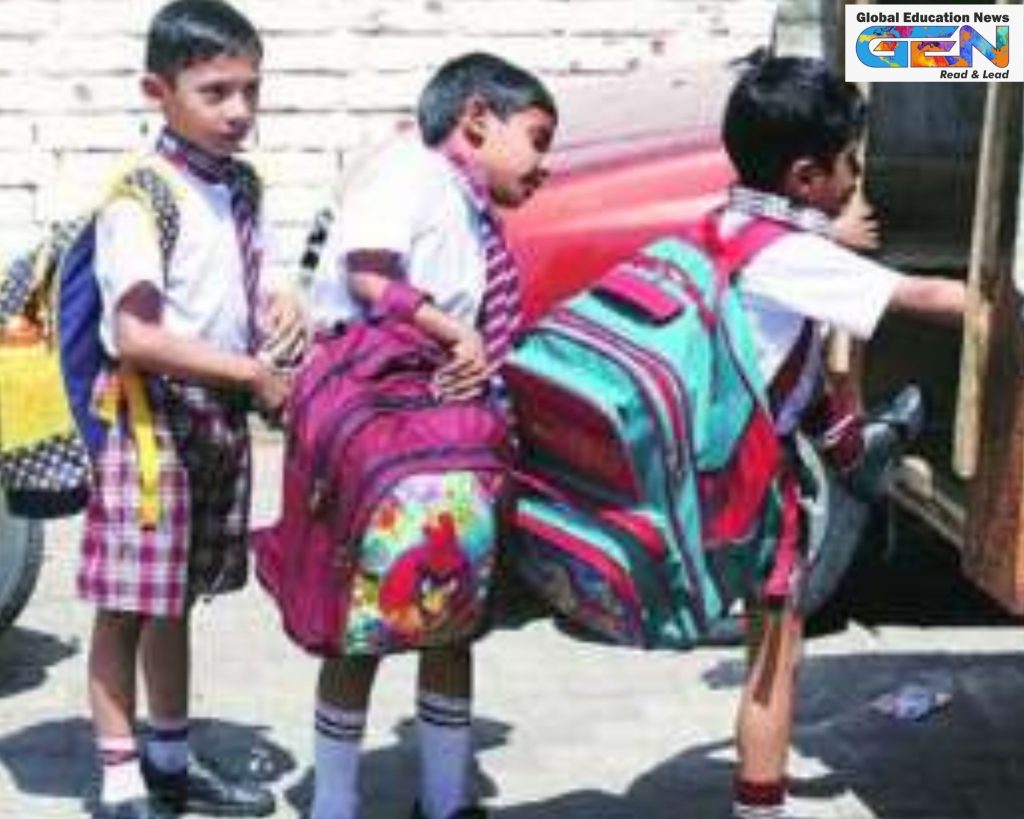
In the dusty lanes of Rajasthan’s villages and the bustling streets of Jaipur, the sight of young schoolchildren lugging backpacks heavier than themselves has long been a poignant symbol of education’s unintended toll. Enter a smart policy tweak from the state’s School Education Department: Starting the 2026-27 academic session, textbooks for Classes 1 to 5 will roll out in two phases, slashing the school bag burden by nearly 50% and paving the way for lighter loads and livelier learning. Announced on December 30, 2025, this child-centric reform isn’t just about easing spines—it’s a nod to holistic development, ensuring kids carry only what’s needed for the day. As Secretary Krishna Kunal puts it, “Textbooks will be distributed in two stages so that students carry only what they need. This will reduce the weight of school bags by nearly 50%, which will positively impact children’s physical health and learning capacity.” With the 2027-28 session eyeing quarterly distributions to trim loads further to 25%, Rajasthan is scripting a story of smarter schooling—one that could inspire states grappling with similar backpack blues. Let’s unpack this weighty win and its ripple effects for the 10 lakh+ primary students across the desert state.
The Policy at a Glance: Phased Distribution for Pain-Free Packs
Rajasthan’s move is simple yet surgical: Instead of handing over the full semester’s stack at once, textbooks will arrive in installments, mirroring the curriculum’s flow and keeping bags breezy. This targets Classes 1-5, where young shoulders bear the brunt of bulky books, often exceeding 5-7 kg and contributing to posture issues in 20-30% of kids, per 2025 health surveys.
- Phase 1 (2026-27): Two-stage rollout—initial batch for the first half of the term, second for the latter—halving the average load from 4-5 kg to 2-2.5 kg.
- Phase 2 (2027-28 Onward): Quarterly distributions, paring it down to about 25% of current weights (1-1.5 kg per day), with digital supplements for lighter days.
- Subjects in Scope: All core texts—Hindi, English, Math, EVS, and regional languages—ensuring no subject left behind.
Kunal elaborated: “Once the quarterly system is implemented, the overall load of school bags will come down further—to about 25% of what students currently carry.” This phased finesse aligns with NEP 2020’s child-centered ethos, prioritizing well-being over warehouse-like backpacks.
| Phase | Timeline | Distribution Model | Expected Bag Weight Reduction |
|---|---|---|---|
| Initial (2026-27) | Academic session start | Two stages (half-term batches) | 50% (from 4-5 kg to 2-2.5 kg) |
| Advanced (2027-28+) | Full year | Quarterly (one-fourth per cycle) | 75% (to 1-1.5 kg daily) |
Why Now? The Heavy Toll of Heavy Bags on Rajasthan’s Young Learners
Rajasthan’s classrooms, serving 1 crore+ students in 1 lakh schools, have long wrestled with the backpack burden—a silent saboteur of health and happiness. Surveys from 2025 reveal that 40% of primary kids report back pain from overloaded bags, while 25% skip school on “heavy days.” The root? Semester-long stacks that cram everything from textbooks to workbooks, defying NEP’s guidelines for “light bags, joyful learning.”
- Health Hazards: Chronic strain leads to spinal issues in 15-20% children by Class 5; fatigue hampers focus, dipping retention by 10-15%.
- Equity Erosion: Rural girls, trekking 2-3 km to school, bear disproportionate loads, contributing to 12% higher dropout rates.
- Learning Lag: Heavy hauls mean less time for play or revision—contradicting NEP’s 5+3+3+4 structure that stresses experiential edges.
Kunal’s rationale rings true: “This will positively impact children’s physical health and learning capacity.” It’s a proactive plug for a problem plaguing 50% of Indian primary schools, per NCERT data.
Benefits: Lighter Loads, Louder Learning
This two-phase pivot promises a cascade of positives, turning textbook tomes into timely tools.
- Physical Relief: 50% weight cut eases musculoskeletal risks, boosting attendance by 5-8% (pilot data from similar Bihar schemes).
- Engagement Explosion: Lighter bags mean more mental bandwidth for activities—projected 15% rise in participation in arts/sports.
- Parental Peace: Less worry over “bag breaks” for spines; easier commutes for working families.
- Long-Term Lift: Quarterly model fosters modular learning, aligning with NEP’s credit banks for flexible futures.
For Rajasthan’s 10 lakh primary kids, it’s not just less weight—it’s wings for whimsy and wisdom.
Implementation Roadmap: From Announcement to Action
The School Education Department’s rollout is rolling out with rigor: A January 2026 circular mandates compliance, with pilots in 100 schools to fine-tune.
- Logistics Lowdown: Books sourced via Rajasthan State Text Book Board; distribution via school clusters, with digital trackers for phases.
- Teacher Tie-In: 5,000 educators trained on modular delivery; parental workshops on bag-light benefits.
- Monitoring Muscle: Quarterly audits; feedback loops via UDISE+ for tweaks.
Challenges? Supply chain snags in remote blocks (20% schools)—mitigated by mobile units. Budget: ₹200 crore, a fraction of the ₹5,000 crore annual textbook spend.