On November 24, 2025, the Indian government unveiled a multifaceted initiative to propel quantum technology from research labs to classrooms nationwide. Led by the Department of Science and Technology (DST), this effort combines grassroots education funding with high-end infrastructure, aligning with the National Quantum Mission (NQM) to position India as a global quantum leader by 2030. By empowering engineering colleges and premier institutions, the program addresses skill gaps and fosters indigenous innovation in a field projected to add $1 trillion to the global economy.
Key Points:
- Announcement Venue: DST Secretary Prof. Abhay Karandikar revealed details during an event at IIT Bombay, emphasizing rapid implementation.
- Dual Focus: Blends accessible teaching labs for undergraduates with advanced fabrication hubs to reduce foreign dependency.
- Economic Stakes: Supports NQM’s vision for self-reliance in quantum computing, sensing, and materials, targeting applications in healthcare, energy, and defense.
Funding the Future: ₹1 Crore Boost for 100 Engineering Colleges
To embed quantum education at the undergraduate level, DST is granting ₹1 crore per institution to 100 selected engineering colleges for establishing dedicated teaching laboratories. This funding covers lab setup, curriculum development for minor programs, and faculty training, ensuring hands-on exposure to quantum principles like superposition and entanglement.
Key Points:
- Selection Process: Over 500 proposals received; 100 will be chosen based on infrastructure readiness and institutional commitment.
- Program Scope: Targets minor courses in quantum mechanics, algorithms, and applications, aiming to train 1,000+ students yearly and build a talent pipeline for startups and R&D.
- Official Vision: “We are going to set up teaching labs in hundred engineering colleges and institutions for teaching undergraduate minor programs,” stated Prof. Karandikar, highlighting the initiative’s role in democratizing access.
- Complementary Support: Includes a new quantum algorithms technical group for capacity building, aiding startups in algorithm design and tech transfer.
Advanced Infrastructure: ₹720 Crore for State-of-the-Art Fabrication Facilities
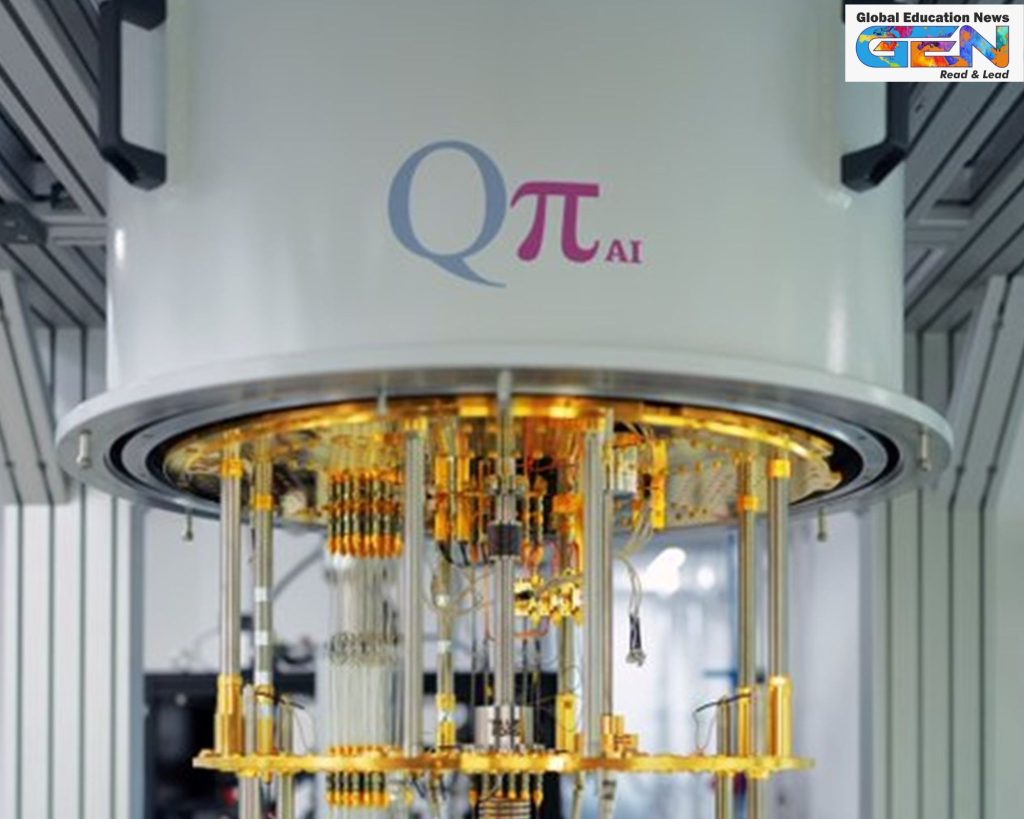
Complementing the educational push, Union Minister Dr. Jitendra Singh announced ₹720 crore for four Quantum Fabrication and Central Facilities at leading institutions. These hubs will pioneer indigenous production of quantum chips, sensors, and devices, equipped for cryogenic engineering, superconductivity, and photonics—key enablers for scalable quantum systems.
Key Points:
- Total Investment: ₹720 crore, with two major central facilities at IIT Bombay and IISc Bengaluru, plus smaller-scale ones at IIT Kanpur and IIT Delhi.
- Institutional Roles:
- IIT Bombay and IIT Kanpur: Anchor quantum sensing and metrology infrastructure for precision measurements.
- IISc Bengaluru and IIT Bombay: Lead quantum computing fabrication using superconducting, photonic, and spin qubits.
- IIT Delhi: Focus on quantum materials and device development ecosystem.
- Accessibility Model: Open to NQM investigators, academia, industry, startups, MSMEs, and strategic sectors to foster collaborations and commercialization.
- Indigenization Goal: Reduces reliance on foreign labs, accelerating R&D in healthcare tech, green energy devices, and secure communications.
National Quantum Mission: The Overarching Framework
Launched in 2023 with ₹6,000 crore, the NQM integrates these initiatives into a cohesive ecosystem with four thematic hubs: quantum computing (IISc Bengaluru), quantum communication (IIT Madras), quantum sensing (IIT Delhi), and quantum materials (IIT Bombay). IIT Bombay’s hub has already shown progress, underscoring the mission’s momentum.
Key Points:
- Hub Synergies: Facilities will support cross-hub projects, enhancing interdisciplinary work in qubits, error correction, and simulation.
- Broader Ecosystem: Aligns with NEP 2020’s push for emerging tech curricula; includes international partnerships for knowledge exchange.
- Milestones Achieved: Early NQM successes include prototype quantum repeaters and sensors, paving the way for these expansions.
- Sustainability Measures: Emphasizes green fabrication processes to align with India’s net-zero ambitions.
Impact Analysis: Catalyzing Innovation and Workforce Development
This initiative could transform India’s quantum landscape by creating 5,000+ skilled jobs in five years and spawning 50+ startups. By scaling from college labs to national facilities, it bridges academia-industry gaps, potentially boosting GDP contributions from quantum tech to 2-3% by 2040. Challenges like talent retention and supply chain localization persist, but phased rollouts with monitoring will mitigate risks.
Key Points:
- Educational Ripple: 100 labs could introduce quantum minors to 20% more engineering students, diversifying STEM pipelines.
- Economic Multipliers: Fabrication hubs projected to cut import costs by 40% and enable exports in quantum sensors by 2028.
- Global Positioning: Positions India alongside US and EU quantum programs, with DST eyeing joint ventures.
- Inclusivity Drive: Prioritizes diverse institutions, including regional colleges, to ensure equitable regional development.