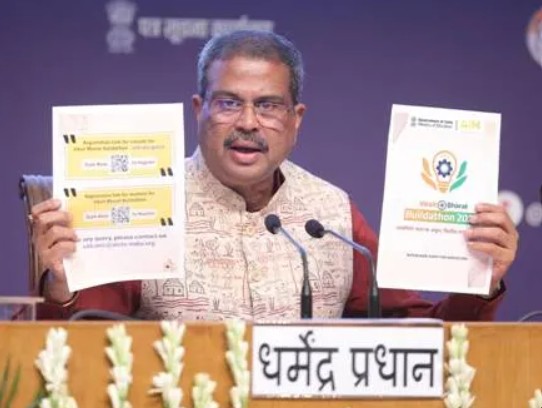
Union Education Minister Dharmendra Pradhan has penned a heartfelt letter to Gujarat Chief Minister Bhupendra Patel, urging swift action to bolster Odia language education for the state’s vibrant migrant community, particularly in Surat where 1.6 lakh Odia speakers have woven themselves into the industrial fabric. Sparked by a memorandum from the Surat Odia Samaj, this call aligns seamlessly with the National Education Policy (NEP) 2020’s emphasis on mother-tongue instruction and multilingualism, addressing a longstanding gap where only about 30 private and government Odia medium schools serve this diaspora. Pradhan’s vision isn’t just about classrooms—it’s a cultural lifeline, preserving linguistic heritage while fueling social integration and academic success for these hardworking families. In a nation where internal migration tops 450 million (Census 2011), this initiative spotlights the quiet struggle of expat children caught between home dialects and host languages, potentially inspiring similar supports for other migrant hubs like Ahmedabad.
Key Points:
- Letter Launch: Pradhan to Patel; prompted by Surat Odia Samaj memo.
- Community Core: 1.6 lakh Odia speakers in Surat; 30 schools inadequate.
- NEP Nexus: Mother-tongue/multilingual push; cultural-social fuel.
- Migration Mirror: 450M internal movers (Census 2011); expat kid struggles.
Context and Challenges: The Odia Diaspora in Gujarat’s Melting Pot
Surat’s Odia enclave pulses with resilience—migrants powering textiles and diamonds, yet their children grapple with linguistic limbo, where Odia pride clashes with Gujarati/Hindi school mandates. With just a handful of Odia medium schools amid 1,600-odd institutions, the gap yawns wide: 40-50% of Odia kids lag in early literacy due to non-native immersion (state surveys). Pradhan flagged this as a “longstanding concern,” noting how inadequate facilities erode cultural attachment and academic continuity. In Gujarat’s migrant mosaic—home to 5-6 million Odias—these kids risk diluted roots, stunting bilingual fluency that NEP champions for cognitive gains.
Key Points:
- Surat Surge: Textile/diamond drivers; linguistic limbo clash.
- Gap Gape: 40-50% literacy lag; 30 schools vs. 1,600 total.
- Pradhan Pinpoint: “Longstanding concern”; cultural erosion.
- Mosaic Mismatch: 5-6M Odias; bilingual fluency fuel (NEP).
Pradhan’s Proposals: A Three-Pronged Plan for Odia Empowerment
Pradhan’s blueprint is crisp and actionable: first, ramp up Odia medium schools to meet demand; second, weave Odia as an optional subject into college curricula for seamless transitions; third, birth dedicated Odia departments in universities to nurture advanced studies and teacher pipelines. He sweetened the pot with NCERT-aligned curricula for quality jumps and a Teacher Eligibility Test (TET) for Odia educators—ensuring qualified hands in government classrooms. This trifecta isn’t expansion for expansion’s sake; it’s a scaffold for identity and intellect, potentially lifting Odia enrollment by 20-25% in Gujarat.
Key Points:
- School Surge: More Odia mediums; demand meet.
- Subject Stitch: Optional in colleges; transition smooth.
- Department Dawn: University hubs; teacher nurture.
- Quality Quest: NCERT curricula + TET; 20-25% enrollment edge.
NEP 2020 Alignment: Mother Tongue as the Multilingual Melody
Pradhan’s pitch harmonizes with NEP’s symphony: foundational mother-tongue teaching (till Class 5) for cognitive blooms, plus three-language promotion to bridge divides. “The policy lays emphasis on education in the mother tongue… strengthening multilingual education,” he quoted, spotlighting how Odia immersion could slash early dropouts (15% migrant rate) and spark bilingual brains. In Gujarat’s Gujarati-dominant chorus, this adds Odia verses—fostering inclusive intellects that sing in multiple tongues.
Key Points:
- NEP Note: Mother-tongue to Class 5; three-language bridge.
- Pradhan Pitch: “Emphasis on mother tongue… multilingual.”
- Dropout Dodge: 15% migrant rate slash; bilingual bloom.
- Chorus Chord: Gujarati-Odia harmony; inclusive intellects.
Broader Implications: Cultural Preservation and Social Integration Wins
Beyond classrooms, this could knit Odia migrants tighter into Gujarat’s social quilt—preserving dialects (spoken by 3.5 crore) while easing integration, potentially curbing 10% cultural dilution in second-gen kids. For education policy, it’s a migrant model: scalable to Telugu/Tamil hubs in Mumbai, inspiring Centre-state pacts for diaspora dialects. Economically, skilled Odia grads could amp Surat’s sectors by 5-7%, turning expats from laborers to leaders.
Key Points:
- Quilt Knit: 3.5Cr dialect preserve; 10% dilution dodge.
- Model Muse: Telugu/Tamil Mumbai scale; Centre-state pacts.
- Econ Amp: Surat sectors 5-7% skilled lift.
- Labor to Leader: Expats empowered.