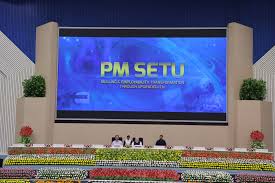
In a decisive push to enhance technical skill development and improve job outcomes for India’s youth, the government has announced a **significant investment — nearly ₹6,000 crore — in modernising Industrial Training Institutes (ITIs) under the Pradhan Mantri Skilling and Employability Transformation through Upgraded ITIs (PM-SETU) scheme. This plan aims to revitalise the vocational education landscape and address long-standing challenges in linking ITI training with real-world employment opportunities.
What Is PM-SETU?
PM-SETU is a flagship government initiative designed to transform India’s ITI network into modern, industry-aligned skill development centres. The scheme forms the core of a larger ₹60,000 crore national programme to upgrade 1,000 government ITIs over five years. It includes:
- Revamping infrastructure to global standards
- Aligning courses with current and future industry needs
- Strengthening industry partnerships for placements and apprenticeships
- Enhancing training quality through new trades and updated curricula
- Establishing National Skill Training Institutes as Centres of Excellence to support innovation and best practices
The model emphasises a hub-and-spoke approach — where larger, well-equipped ITIs act as central hubs providing advanced training, innovation labs, and placement support, while smaller affiliated ITIs (spokes) extend access to students in semi-urban and rural areas.
₹6,000 Crore Focus: Modernising ITIs for Jobs
The current allocation of nearly ₹6,000 crore is targeted specifically at rapidly upgrading selected ITIs in the initial phase of the programme. This investment is intended to:
- Upgrade workshops, digital laboratories, and training infrastructure
- Provide industry-standard tools and equipment
- Introduce emerging trades like electronics, automotive, renewable energy, digital services, and robotics
- Expand placement services and career counselling
- Strengthen linkages with employers and apprenticeship networks
This concentrated infusion of funds is meant to jump-start the transformation in priority regions and sectors where skill shortages and youth unemployment are most acute.
Will It Deliver Jobs? — Key Challenges and Opportunities
1. Bridging the Skills-Jobs Gap
India’s growing workforce, particularly youth, has struggled with a persistent mismatch between skills acquired and skills demanded by industry. Traditional ITI courses have often been criticised for outdated curricula, lack of industry exposure, and low placement rates. PM-SETU seeks to address these by:
- Updating courses to match labor-market needs
- Partnering with private sector players to co-design training modules
- Introducing real-time industry exposure through internships and apprenticeships
If these reforms are implemented effectively, they can significantly improve employability outcomes for graduates.
2. Quality of Training and Industry Linkages
For the ₹6,000 crore investment to translate into jobs, industry collaboration must go beyond equipment and advisory roles. Effective outcomes depend on:
- Industry commitments to absorb trained graduates
- Structured internships and job placements
- Continuous feedback loops between employers and trainers
This level of integration could elevate ITIs from traditional outlets of certificates to pathways into steady employment.
3. Addressing Regional and Social Inequities
A large share of ITIs are located in rural or semi-urban areas where industries are sparse. Without local employment opportunities, graduates may still face challenges in securing jobs close to home. Additionally, interventions must ensure accessibility and support for women, differently-abled learners, and disadvantaged communities.
Voices from the Ground
Although formal evaluation data is still emerging, early statements from education and skill development stakeholders suggest a cautious optimism:
- Students and parents express hope that modern infrastructure and updated courses will enhance job prospects.
- Trainers and administrators acknowledge that improved tools and partnerships with industry could make ITIs more relevant.
- Observers emphasise that placements and career pathways must be core to implementation rather than peripheral.