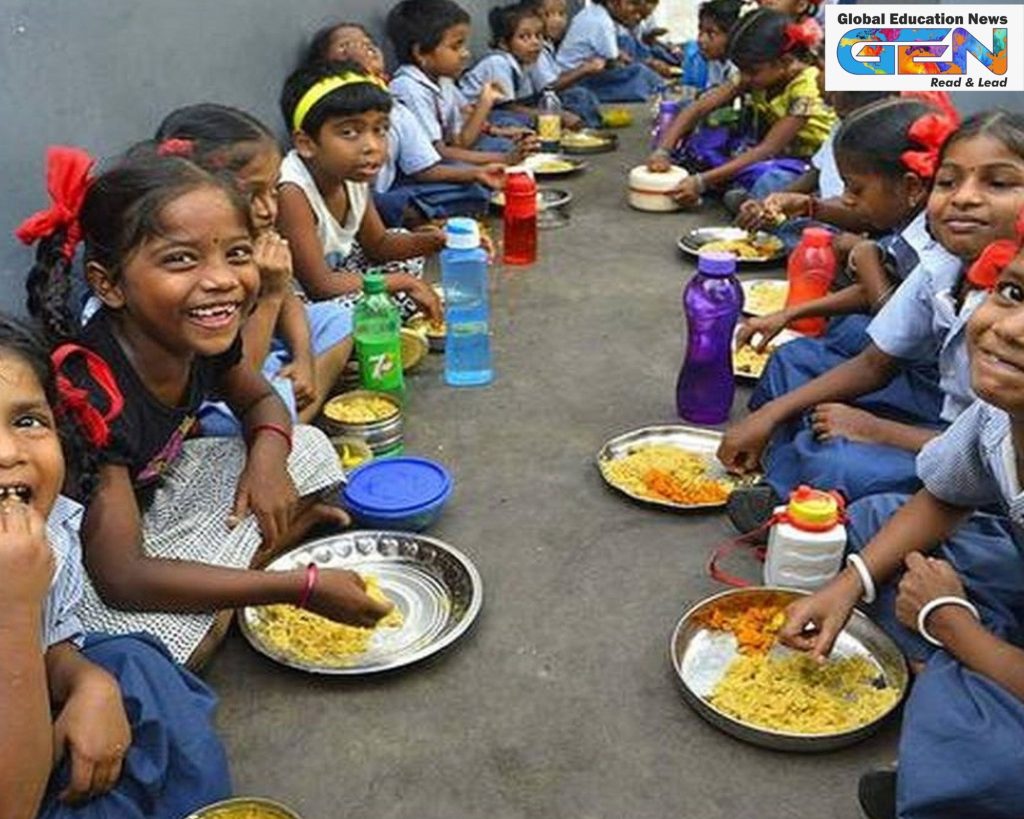
Launched in 1995 as the National Programme of Nutritional Support to Primary Education, the PM POSHAN (Pradhan Mantri Poshan Shakti Nirman) scheme is India’s ambitious effort to combat classroom hunger and boost education. Serving over 11.8 crore children across 11.2 lakh schools, it’s the world’s largest school meal program, offering hot-cooked meals to students from Bal Vatika (pre-primary) to Class 8. With a budget of ₹12,467.39 crore for 2024–25, the scheme aims to improve nutrition, increase school attendance, and promote social equity. But on the ground, is it delivering? Let’s dive into the story of PM POSHAN in 2025!
Key Points:
- Reach: Covers 11.8 crore children in 11.2 lakh schools nationwide.
- Budget: ₹12,467.39 crore allocated for 2024–25.
- Goals: Tackle hunger, boost enrollment, and improve nutritional status.
- Menu: Provides 450–700 calories and 12–20g protein per meal, per the National Food Security Act, 2013.
The Legacy of Midday Meals: A Century of Impact
India’s midday meal journey began in the 1920s in Tamil Nadu, where visionary leaders introduced meals for marginalized children. By 1995, the central government launched the nationwide program, which evolved into PM POSHAN in 2021. States like Tamil Nadu have set benchmarks, with initiatives like the Chief Minister’s Breakfast Scheme, serving 1.7 million students at a cost of ₹404 crore. Studies show the scheme reduces stunting in children of mothers who benefited from it, proving its intergenerational impact.
Key Points:
- Historical Roots: Began in Tamil Nadu in the 1920s, scaled nationally in 1995.
- Tamil Nadu’s Lead: Breakfast scheme benefits 1.7 million students.
- Intergenerational Benefits: 13–32% reduction in stunting linked to the scheme (2006–2016).
- Supreme Court Mandate: Enforced cooked meals in all states by 2001.
Ground Realities: Where PM POSHAN Stumbles
Despite its noble goals, PM POSHAN faces significant hurdles. From insufficient funding to hygiene lapses, the scheme struggles to deliver consistent quality across India’s diverse landscape.
Funding Woes: Stretching Every Rupee
The scheme’s budget is stretched thin. For instance, schools in Uttar Pradesh receive just ₹4–₹6.19 per child daily, barely covering rising food costs. Transportation and grinding charges for grains often fall on schools, and funds are frequently delayed. In Maharashtra, a decision to cut funding for eggs sparked outrage, as they’re a vital protein source in 16 states.
Key Points:
- Low Allocation: ₹6.78 per child for primary, ₹9.29 for upper primary (2025–26).
- State Disparities: Southern states like Tamil Nadu outperform, while northern states face resource shortages.
- Maharashtra’s Egg Cut: ₹50 crore funding for eggs withdrawn, raising nutrition concerns.
Hygiene and Safety: A Persistent Concern
Food safety remains a critical issue. Incidents of contamination—lizards, worms, and even snakes—have led to hospitalizations, eroding trust. A 2013 tragedy in Bihar, where 23 children died from pesticide-contaminated meals, highlighted systemic gaps. In West Bengal, allegations of overreported meals worth ₹100 crore surfaced, pointing to corruption.
Key Points:
- Contamination Cases: Bihar (2013, 2023) and Delhi (2014) reported food poisoning.
- West Bengal Probe: ₹100 crore discrepancy in meal reporting flagged in 2023.
- Monitoring Gaps: Haryana lacks lab checks for food quality, per a 2016 CAG report.
Social Barriers: Caste and Discrimination
Caste-based discrimination persists in some areas, with dominant caste groups refusing meals cooked by marginalized communities. Tamil Nadu has made strides, with teachers promoting social dining, but challenges remain in rural pockets.
Key Points:
- Caste Issues: Upper-caste students in some areas reject meals by non-dominant caste cooks.
- Progress in Tamil Nadu: Breakfast scheme and teacher efforts reduce discrimination.
Bright Spots: Success Stories and Innovations
Despite challenges, PM POSHAN has transformative impacts. It boosts school attendance, especially for girls, and reduces malnutrition. Tamil Nadu’s proactive approach—adding breakfast and diverse menus—sets a gold standard. The scheme’s Tithi Bhojan initiative encourages community contributions, fostering equity. Nutrition gardens in schools teach children about sustainable food sources.
Key Points:
- Attendance Boost: Increased enrollment, especially among girls.
- Tamil Nadu’s Model: Breakfast scheme and diverse menus outperform other states.
- Nutrition Gardens: Promote hands-on learning about food production.
- Community Engagement: Tithi Bhojan builds social cohesion.
How to Fix PM POSHAN: A Roadmap for 2025
To realize its full potential, PM POSHAN needs targeted reforms:
Key Points:
- Increase Funding: Adjust per-child allocation to match inflation (e.g., ₹12.13–₹17.62 total meal cost).
- Strengthen Monitoring: Implement robust quality checks, like lab testing, as suggested by CAG.
- Address Disparities: Ensure equitable resource allocation across states.
- Enhance Hygiene: Enforce strict food safety protocols to prevent contamination.
- Community Involvement: Expand initiatives like Tithi Bhojan and nutrition gardens.
Why PM POSHAN Matters in 2025
With 30% of the world’s stunted children in India, PM POSHAN is a critical tool to fight malnutrition and boost education. Its successes—like improved attendance and reduced stunting—are undeniable, but challenges like funding, hygiene, and social barriers demand urgent action. As India aims to meet global nutrition targets by 2030, strengthening PM POSHAN could transform millions of lives.