September 13, 2025
Delhi, India
In a significant move to safeguard India’s unparalleled intellectual heritage, Prime Minister Narendra Modi launched the Gyan Bharatam Portal on September 12, 2025, during the second day of the International Conference on Gyan Bharatam at Vigyan Bhawan, New Delhi. This digital platform, part of the ambitious Gyan Bharatam Mission announced in the Union Budget 2025-26, aims to accelerate the digitization, preservation, and global dissemination of over 1 crore ancient manuscripts. Modi emphasized that the mission is not just a government initiative but a “proclamation of India’s culture, literature, and consciousness,” urging youth involvement to bridge ancient wisdom with modern technology. The launch aligns with India’s vision of becoming a “Vishwa Guru” by 2047, integrating traditional knowledge into contemporary education and innovation.
Key Points:
- Launch Event: Held at the three-day conference themed “Reclaiming India’s Knowledge Legacy through Manuscript Heritage,” organized by the Ministry of Culture from September 11-13, 2025.
- Modi’s Address: Highlighted the destruction of millions of manuscripts in history and the need to “explore the past through technology,” calling it an extension of Atmanirbhar Bharat.
- Funding Boost: Allocation increased from ₹3.5 crore to ₹60 crore for the National Mission for Manuscripts (NMM), revived and expanded as Gyan Bharatam.
Inside the Gyan Bharatam Portal: Features and Objectives
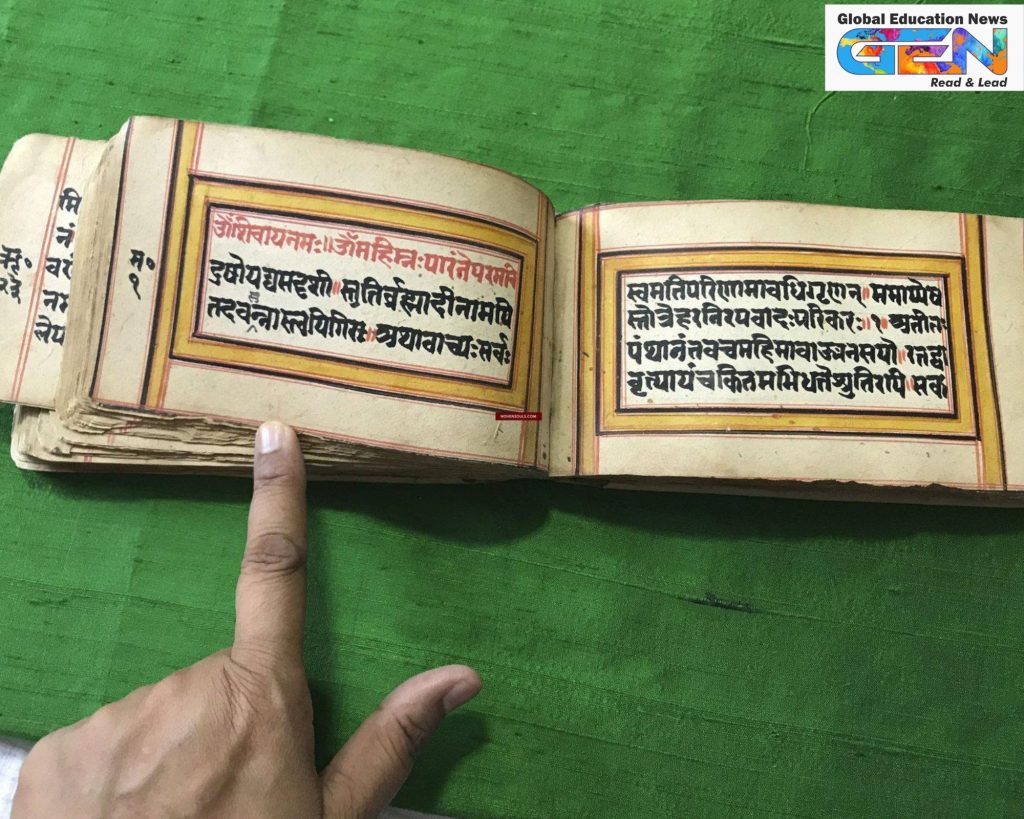
The Gyan Bharatam Portal serves as a centralized national digital repository, transforming fragile ancient texts into accessible, searchable resources. Developed under the Ministry of Culture, it builds on the 2003 National Mission for Manuscripts (NMM) by incorporating AI and modern tech for enhanced usability. Manuscripts cover diverse fields like philosophy, Ayurveda, astronomy, and governance, written in scripts such as Sanskrit, Prakrit, and regional languages on materials like palm leaves and birch bark. The portal facilitates public participation, research, and global collaborations, ensuring India’s knowledge legacy endures for future generations.
Key Points:
- Digitization & Preservation: Surveys, documents, conserves, and digitizes manuscripts to prevent loss due to age or environmental factors.
- AI-Driven Tools: Enables advanced search, machine translation, annotation, and metadata standards for easy access.
- Research & Capacity Building: Supports scholarly publications, trains conservators, and integrates content into education per NEP 2020.
- Public & Global Engagement: Encourages citizen involvement through “Manuscript Melas” and international partnerships for best practices.
The International Conference on Gyan Bharatam: A Global Dialogue
The three-day hybrid conference, attracting over 1,100 participants including 500 national and international delegates, scholars, and experts, commemorates Swami Vivekananda’s 1893 Chicago address on September 11. It features thematic sessions on conservation, AI-based archiving, palaeography, and ethical custodianship, culminating in the “New Delhi Declaration on Manuscript Heritage” to set global standards for digitization and research. PM Modi visited an exhibition showcasing rare artifacts like Kautilya’s Arthashastra, Ramayana’s Sundarakanda, and Gilgit manuscripts, highlighting India’s “invaluable tradition of knowledge.”
Key Points:
- Participants & Format: Over 1,100 attendees from India and abroad; hybrid mode for wider reach, with plenary sessions and working group presentations.
- Key Discussions: Strategies for deciphering ancient scripts, integrating manuscript knowledge into modern curricula, and fostering interdisciplinary research networks.
- Exhibition Highlights: First-time display of treasures from various repositories, emphasizing cultural diplomacy and innovation.
- Outcomes: Formation of expert groups for conservation and digital endeavors; paper submissions deadline was August 10, 2025, via the official site.
Why It Matters: Preserving India’s Manuscript Treasure Trove
India boasts the world’s largest manuscript collection—over 10 million documents—yet many remain undigitized and at risk. The Gyan Bharatam initiative addresses this by creating an “alliance” of stakeholders, including Manuscript Resource Centres (MRCs) and Conservation Centres (MCCs) across the country. It aligns with Viksit Bharat by valuing heritage as a driver of progress, unlocking innovations in fields like medicine and science, and boosting the $2.5 trillion global cultural industry. By making knowledge open-access, it empowers scholars, students, and the public, reinforcing India’s soft power.
Key Points:
- Scale of Heritage: Manuscripts span 1 crore+ items in diverse subjects; previous efforts like NMM digitized thousands but need expansion.
- Educational Integration: Supports NEP 2020 by embedding ancient wisdom in curricula, fostering holistic learning.
- Economic & Innovative Impact: Potential to spur research in AI, linguistics, and sustainability from texts like Ayurvedic treatises.
- Challenges Addressed: Tackles issues like script decipherment, ethical access, and climate threats through tech and partnerships.