A Beacon in the High-Altitude Education Revolution
The Himalayan Institute of Alternatives (HIAL) in Ladakh stands as a testament to grassroots innovation in education, blending ancient wisdom with modern sustainability challenges. Founded by renowned educator and activist Sonam Wangchuk, HIAL has garnered international acclaim for initiatives like the iconic “ice stupas”—gravity-fed ice structures that combat water scarcity in arid regions. In a pivotal development reported on December 14, 2025, a parliamentary standing committee has spotlighted HIAL’s model as “exemplary,” recommending swift University Grants Commission (UGC) recognition to amplify its impact. This endorsement arrives amid escalating tensions in Ladakh, where Wangchuk’s activism has intersected with political unrest, highlighting the delicate balance between educational reform and regional autonomy demands.
This analysis dissects the parliamentary report’s key insights, evaluates HIAL’s contributions to India’s National Education Policy (NEP) 2020, and probes the broader implications for sustainable higher education in ecologically vulnerable zones.
Sonam Wangchuk: The Visionary Architect of Experiential Learning
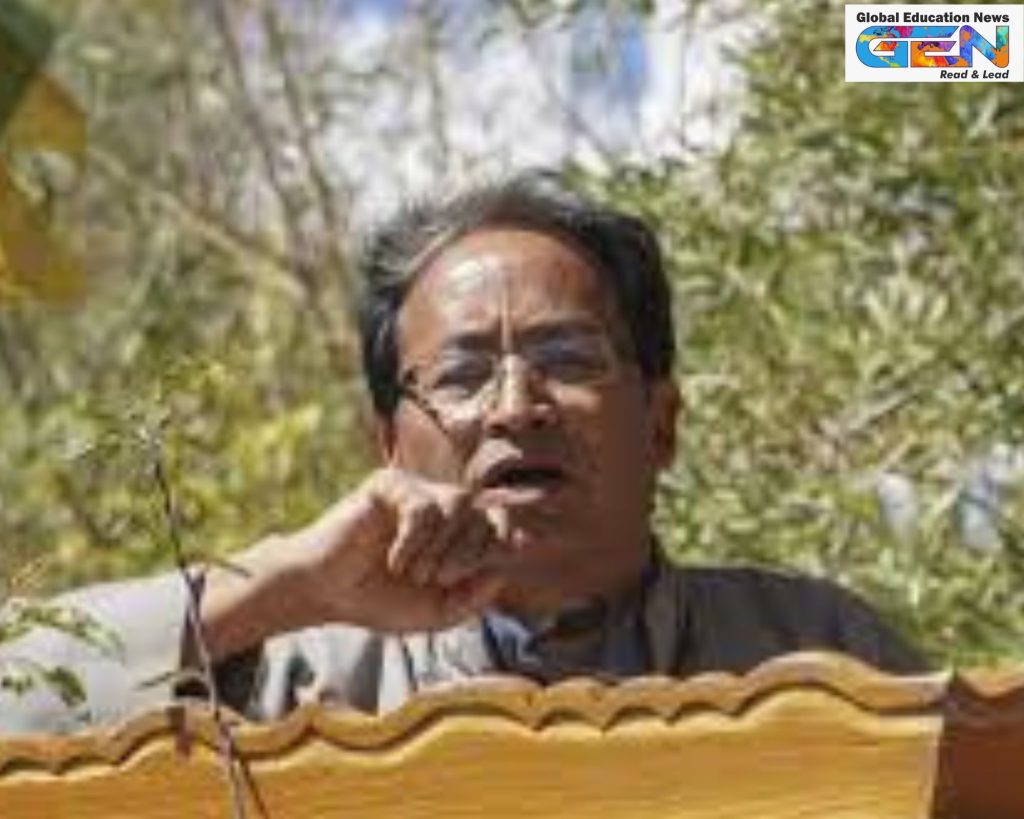
Sonam Wangchuk, a mechanical engineer turned education reformer, has dedicated over three decades to reimagining learning in Ladakh’s harsh terrain. His journey began with the Students’ Educational and Cultural Movement of Ladakh (SECMOL) in the 1980s, transforming dropout rates from 96% to under 20% through hands-on, context-driven curricula.
- Key Milestones in Wangchuk’s Career:
- Founded SECMOL in 1988, emphasizing skill-building over rote memorization, leading to pass rates exceeding 80% for rural students.
- Invented the “ice stupa” in 2013, a low-cost water harvesting technique now adopted globally, earning him the Ramon Magsaysay Award in 2018.
- Launched HIAL in 2017 as an alternative university, focusing on multidisciplinary programs in sustainable engineering, ecology, and indigenous knowledge systems (IKS).
Wangchuk’s philosophy—rooted in “learning by doing”—directly aligns with NEP 2020’s push for experiential education, making HIAL a living prototype for policy execution.
HIAL’s Innovative Model: Bridging Local Roots and Global Challenges
HIAL operates as a network of campuses across Ladakh, serving as “living labs” where students tackle real-world issues like glacial retreat and biodiversity loss. Unlike conventional universities, it prioritizes project-based learning, community immersion, and IKS integration, fostering graduates who are not just employable but ecologically attuned leaders.
- Core Program Pillars:
- Experiential Learning: Students design solar-powered irrigation systems or map cultural heritage sites using GIS tools, directly addressing Ladakh’s 70% water dependency on melting glaciers.
- Community Engagement: Partnerships with local nomads and farmers yield initiatives like permaculture farms, impacting over 5,000 residents through skill-sharing workshops.
- IKS Integration: Courses weave Buddhist ethics and traditional herbal medicine into STEM curricula, promoting holistic sustainability as per NEP 2020 guidelines.
The institute’s international fame stems from scalable innovations, yet its lack of UGC recognition limits degree conferral, confining it to certificate programs and hindering enrollment growth.
Parliamentary Panel’s Endorsement: A Blueprint for National Replication
The Standing Committee on Education, Women, Youth, and Sports—chaired by Congress MP Digvijaya Singh—tabled its report in Parliament on December 14, 2025, dedicating a section to HIAL following a study visit to Ladakh. The panel’s bipartisan praise underscores HIAL’s alignment with NEP 2020, positioning it as a scalable model amid India’s push for multidisciplinary higher education.
- Key Recommendations from the Report:
- Immediate UGC recognition for HIAL to enable formal degree awards, addressing a multi-year delay that stifles institutional growth.
- Replicate HIAL’s framework nationwide via “Centres of Innovation in Education,” emphasizing experiential pedagogy and IKS in regions like the Northeast and Arid West.
- Highlighted successes: HIAL’s role in boosting local entrepreneurship and research, with ice stupas exemplifying community-driven climate adaptation.
This rare governmental nod—amid Wangchuk’s ongoing detention—signals potential policy momentum, though implementation hinges on bureaucratic agility.
Analysis: Implications for NEP 2020 and Sustainable Education Reform
HIAL’s validation by Parliament could catalyze a paradigm shift in Indian higher education, where only 2% of institutions currently emphasize sustainability per UGC data. By formalizing HIAL’s model, the government could address NEP 2020’s equity goals, empowering marginalized Himalayan communities facing 2-3°C warming rates double the global average.
- Broader Impacts:
- Equity and Access: Recognition would democratize quality education for Ladakhi youth, reducing urban migration by 30% through localized, affordable programs.
- Policy Scalability: Serves as a template for 1,000+ new autonomous colleges under NEP, integrating IKS to preserve India’s 5,000+ ethnic knowledge traditions.
- Challenges to Overcome: Bureaucratic inertia and funding gaps; HIAL’s annual budget of ₹5 crore pales against IITs’ ₹1,000 crore allocations.
Critically, this endorsement tests the Centre’s commitment to federalism, as Ladakh’s autonomy protests underscore tensions between innovation and oversight.
Hurdles on the Horizon: Political and Administrative Headwinds
Despite the acclaim, HIAL grapples with existential threats exacerbated by Wangchuk’s activism. Detained under the National Security Act (NSA) on September 26, 2025, following deadly protests for statehood and Sixth Schedule protections, Wangchuk faces accusations of incitement—charges his supporters decry as politically motivated.
- Major Challenges:
- Land and Funding Crises: Ladakh administration revoked HIAL’s land allotment; Union Home Ministry cancelled its FCRA registration, slashing foreign aid by 40%.
- Operational Disruptions: Harsh winters and isolation compound enrollment dips, with student numbers hovering at 200 amid recognition limbo.
- Activism-Education Nexus: Wangchuk’s dual role amplifies visibility but invites scrutiny, mirroring global cases where innovators like Greta Thunberg face institutional backlash.
These obstacles reveal systemic frictions in India’s education landscape, where innovation often collides with regulatory rigidity.