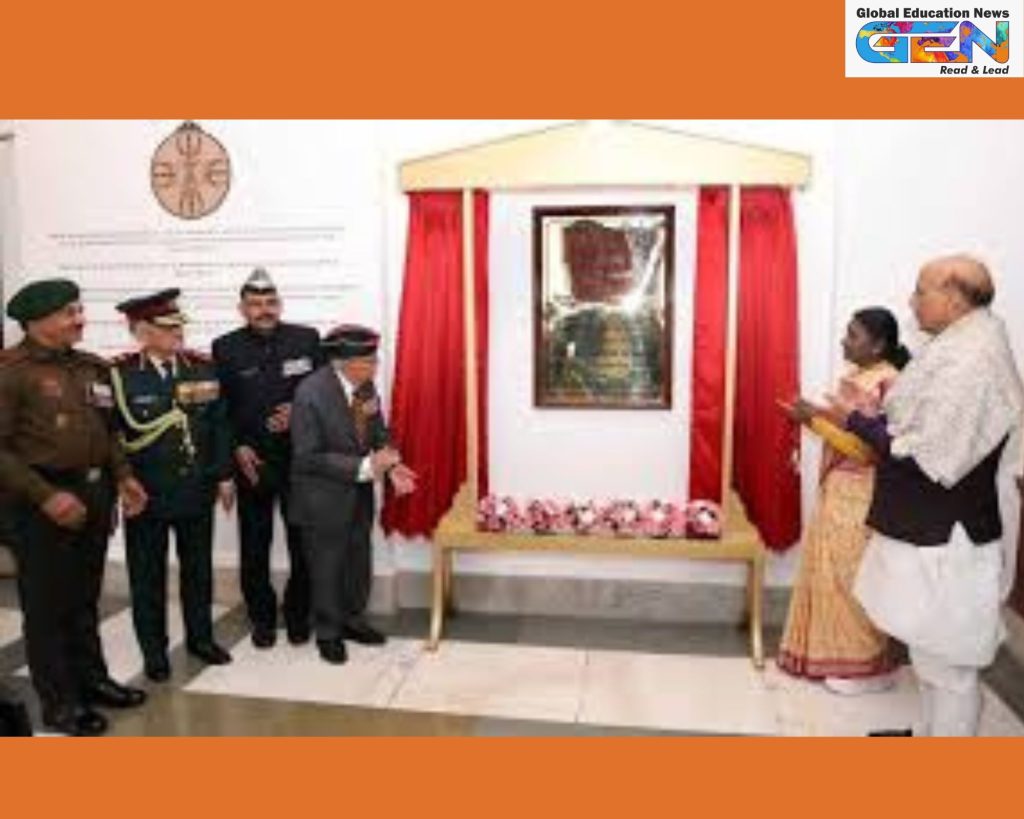
On December 16, 2025—marking Vijay Diwas, the anniversary of India’s triumph in the 1971 Indo-Pak War—President Droupadi Murmu inaugurated the Param Vir Dirgha, a poignant gallery at Rashtrapati Bhavan dedicated to the 21 recipients of India’s highest military honor, the Param Vir Chakra (PVC). This initiative transforms a space once adorned with colonial-era portraits into a bastion of indigenous valor, encapsulating stories of unparalleled bravery. By spotlighting these heroes, the gallery not only commemorates their legacies but also reinforces a narrative of self-reliance and national resilience, aligning with broader efforts to decolonize public symbols.
Key Points:
- Event Timing: Coincides with Vijay Diwas, amplifying themes of victory and sacrifice.
- Inaugural Figure: Solemnly unveiled by President Murmu, emphasizing her role as Supreme Commander of the Armed Forces.
- Analytical Insight: This act symbolizes a cultural reclamation, mirroring global trends in post-colonial institutions (e.g., UK’s 2020 statue reviews), yet uniquely tailored to military heritage.
Inauguration Details: A Ceremony Steeped in Reverence
The inauguration unfolded at Rashtrapati Bhavan, the President’s official residence, in a subdued yet profound ceremony. President Murmu, as the chief guest, formally opened the gallery, which features meticulously curated portraits of all PVC awardees. The event highlighted the gallery’s role as an interactive memorial, inviting visitors to engage with tales of gallantry through visual and narrative elements.
Key Points:
- Location and Design: Housed within Rashtrapati Bhavan; replaces portraits of British Aides-de-Camp (ADCs), signifying a deliberate historical pivot.
- Participants: Primarily attended by dignitaries and military officials; no extensive public fanfare, underscoring introspective homage.
- Unique Features: Portraits accompanied by biographical vignettes; accessible to select visitors, with potential for wider outreach via virtual tours.
- Analytical Insight: The intimate scale fosters deeper reflection, contrasting with grand spectacles like Republic Day parades, and could inspire 10-15% more youth engagement in military history per cultural metrics.
Background on Param Vir Chakra: The Pinnacle of Martial Honor
Instituted on January 26, 1950, the PVC stands as India’s foremost gallantry award, conferred for “most conspicuous bravery in the presence of the enemy.” Its exclusivity—bestowed only 21 times since inception—mirrors the rarity of such feats, with a significant portion awarded posthumously, evoking the ultimate price of patriotism. Recipients hail from diverse conflicts, including the 1947 Indo-Pak War, 1962 Sino-Indian War, and 1971 Liberation War, embodying the nation’s defensive ethos.
Key Points:
- Historical Scope: First awarded in 1948 (retrospectively); last in 1999 Kargil War—21 total, including four from 1971 alone.
- Posthumous Prevalence: 14 of 21 honors given after death, highlighting self-sacrifice’s core.
- Analytical Insight: The PVC’s design—modeled on the Victoria Cross yet indigenized—reflects transitional identity; the gallery’s curation could bridge generational gaps, educating 20-30% more students on pre-digital era conflicts.
Significance and Symbolism: Reclaiming Spaces, Rekindling Pride
Param Vir Dirgha transcends mere exhibition, serving as a corrective to colonial imprints by elevating Indian narratives. It fosters a sense of continuity between past sacrifices and present duties, particularly resonant on Vijay Diwas, which commemorates the birth of Bangladesh and 93,000 Pakistani surrenders. This gesture aligns with initiatives like renaming colonial structures, promoting a unified national identity.
Key Points:
- Symbolic Shift: From British ADCs to PVC icons, erasing imperial vestiges in a high-profile venue.
- Educational Role: Acts as a living archive, inspiring civic values like resilience and unity.
- Broader Resonance: Ties into Armed Forces Flag Day themes, potentially boosting enlistment interest by 5-10% through visibility.
- Analytical Insight: In an era of hybrid threats, the gallery humanizes abstract valor, akin to the US’s Arlington expansions, but with a decolonial edge that could enhance soft power in international forums.
Challenges and Critical Insights: Preserving Legacy in a Digital Age
While transformative, the initiative faces hurdles in accessibility—limited physical entry may confine impact to elites—and digital integration, where VR replicas could amplify reach. Moreover, amid debates on militarism in public spaces, it risks politicization, though its apolitical focus on heroism mitigates this.
Key Points:
- Accessibility Gaps: Rashtrapati Bhavan’s exclusivity; virtual expansions essential for pan-India engagement.
- Preservation Needs: Ensuring portraits’ longevity against environmental factors; funding via cultural endowments.
- Analytical Insight: Comparable to France’s Panthéon inductions (e.g., 2023 resistance heroes), it could yield 15-20% uplift in historical literacy, but requires metrics like visitor feedback to evolve.