Published on October 11, 2025
Contents
NITI Aayog’s NEP 2020 Implementation ReportKey Achievements and Progress AreasState-Wise Highlights and Leading ExamplesMajor Challenges IdentifiedRecommendations for Accelerated NEP 2020 ImplementationFocus on Higher Education Reforms Under NEP 2020Future Targets and Vision for Viksit BharatCall to Action: Stakeholders Unite for Equitable Education
Delhi, India
NITI Aayog’s NEP 2020 Implementation Report
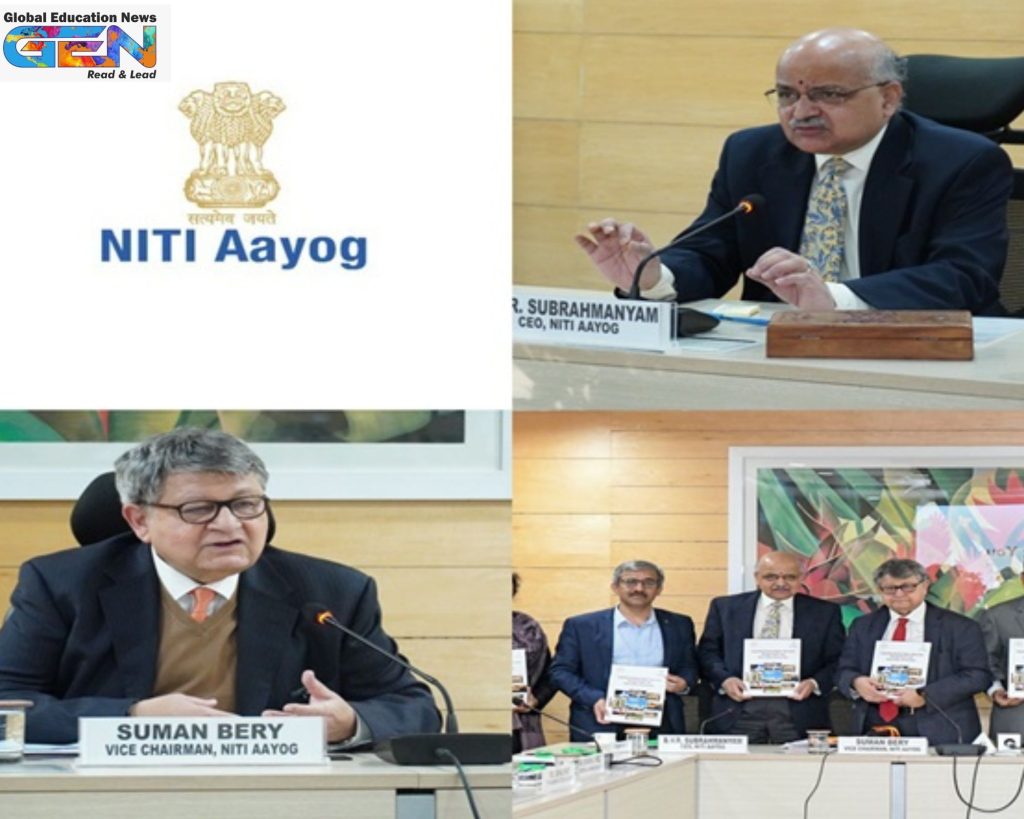
- Released on October 10, 2025, this is NITI Aayog’s first comprehensive nationwide review of the National Education Policy (NEP) 2020, assessing progress across all states and union territories since its adoption in 2020.
- NEP 2020, replacing the 1986 policy, envisions an inclusive, flexible, and multidisciplinary education system emphasizing critical thinking, multilingualism, and 21st-century skills to build human capital for Viksit Bharat by 2047.
- The report, launched amid cooperative federalism, draws from stakeholder inputs and aligns with SDG 4 (Quality Education), highlighting NEP’s role in fostering innovation, equity, and economic growth.
Key Achievements and Progress Areas
- Digital Learning Expansion: Initiatives like DIKSHA (4.93 billion sessions), PM eVIDYA, and National Digital Education Architecture (NDEAR) have revolutionized access, especially post-COVID, with 12 billion QR codes for energized digital textbooks and 2,700+ foundational literacy resources.
- Early Childhood Care and Education (ECCE): Launch of Adharsila (play-based curriculum for ages 3-6) and Navchetana (holistic development for birth to 3 years) under NIPUN Bharat Mission, boosting rural enrollment for ages 3-5 from 2018-2024.
- Foundational Literacy and Numeracy (FLN): Significant gains in arithmetic levels in government and private schools, with competency-based assessments and gamified content ensuring every child achieves FLN by Grade 3 by 2026-27.
- Higher Education Reforms: Gross Enrolment Ratio (GER) progress with 93% at primary and 57.2% at higher secondary levels; Academic Bank of Credits (ABC) integrated for 2.36 crore students, enabling flexible credit transfers and multiple entry/exit options.
State-Wise Highlights and Leading Examples
- Proactive States: Karnataka, Maharashtra, and Delhi lead in FLN programs and mother-tongue-based primary learning, aligning with NIPUN Bharat; Odisha’s “Teach Gajapati” volunteer campaign addresses teacher shortages through alumni engagement and community drives.
- Infrastructure Upgrades: Over 14,500 schools transformed into PM SHRI models with solar panels, nutrition gardens, and Atal Tinkering Labs; states like Gujarat and Tamil Nadu exemplify public-private partnerships (PPPs) for green campuses and skill labs.
- Inclusivity Gains: Schemes like ULLAS (New India Literacy Programme) enrolled 20 million+ learners with 3.9 million volunteer teachers; National Means-cum-Merit Scholarship awards 1 lakh benefits annually to prevent dropouts among economically weaker sections.
Major Challenges Identified
- Teacher Training and Capacity: Inadequate preparation for NEP-aligned pedagogies, with systemic gaps in continuous professional development; faculty shortages persist, especially in rural areas, hindering holistic and transdisciplinary teaching.
- Infrastructure and Digital Divide: Rural schools face insufficient digital tools and connectivity (only 58.2% have computers, up from 38.5% in 2019-20), exacerbating inequities for socially and economically disadvantaged groups (SEDGs).
- Funding and Governance Hurdles: Below 6% GDP allocation limits scaling; uneven state adoption due to administrative bottlenecks, resistance to reforms like Higher Education Commission of India (HECI), and delays in vocational integration and school complexes.
- Equity and Access Issues: Language barriers, material shortages for multilingual education, and higher dropout rates (14.1% at secondary) disproportionately affect girls, PwD students, and remote regions.
Recommendations for Accelerated NEP 2020 Implementation
- Investment and Decentralization: Boost public spending to 6% of GDP, with state-specific roadmaps tailored to local contexts; prioritize rural infrastructure via RUSA Phase III and PM-USHA funding for low-GER districts.
- Teacher Empowerment: Institutionalize digital platforms for ongoing training, including AI skilling from Grade 6; merit-based recruitment and incentives like sabbaticals to achieve 1:20 pupil-teacher ratio.
- Partnerships and Innovation: Strengthen PPPs for technology and capacity-building; establish Research Hubs in state public universities (SPUs) for interdisciplinary projects, targeting 20% publication increase per faculty.
- Monitoring and Equity Focus: Develop data-driven frameworks like School Quality Assessment Framework (SQAF) for real-time outcomes; create Gender Inclusion Funds and Special Education Zones to enhance SEDG representation to 30% by 2028.
Focus on Higher Education Reforms Under NEP 2020
- Multidisciplinary Shift: All 58,743 HEIs to become multidisciplinary by 2040, with 35 flagship MERUs receiving ₹100 crore each for autonomy and global ties; biannual admissions in 153 universities to boost GER to 50% by 2035.
- Regulatory Streamlining: Graded autonomy via NAAC/NIRF performance; HECI as single regulator with “light but tight” oversight; PhD enrollment doubled to 2.34 lakh under 2022 regulations.
- Digital and Global Integration: SWAYAM with 5.15 crore enrollments and 40% credit transfers; Study in India program attracting 47,602 international students; twinning degrees with 103 HEIs for enhanced employability.
Future Targets and Vision for Viksit Bharat
- Short-Term Goals (2025-2027): Achieve 100% FLN by Grade 3, saturate PM SHRI schools with NEP components, and digitize 80% courses in SPUs.
- Medium-Term Milestones (2028-2035): 100% GER across levels, 100% literacy by 2030, and GPI of 1.0 in higher education; integrate AI/ML in curricula for net-zero emissions by 2070.
- Long-Term Vision: Universal quality education by 2047, positioning India as a global knowledge hub with 2% GDP on R&D; foster innovation through 16,051 Institution’s Innovation Councils and Anusandhan NRF’s ₹50,000 crore corpus.
Call to Action: Stakeholders Unite for Equitable Education
- Educators, policymakers, and parents must collaborate via platforms like NETF and community Eco Clubs to embed sustainability and skills; track progress through PRABHAND MIS for transparent accountability.
- As NITI Aayog’s Vice Chairperson noted, this report celebrates early wins while urging action: equitable, quality education is key to every Indian child’s future.