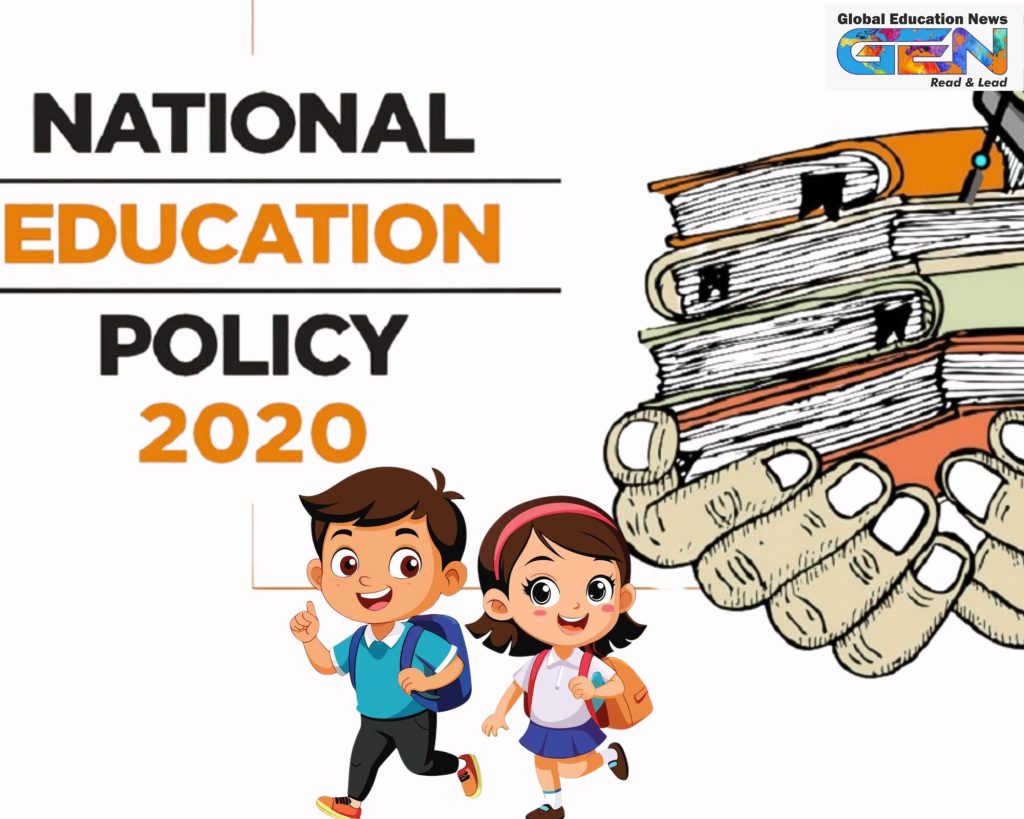
Launched in July 2020, the National Education Policy (NEP) 2020 is a transformative blueprint to overhaul India’s education system, aligning it with international standards. By replacing outdated curricula and rote learning with a flexible, holistic, and inclusive framework, NEP 2020 fosters critical thinking, skill development, and digital innovation. Authored by Aman Sahni, Director of The Beacon School, Gurugram, this policy aims to empower young minds to thrive in a globalized world, addressing the needs of over 250 million students in India’s education ecosystem.
Key Points:
- NEP 2020 aims to align Indian education with global benchmarks.
- Replaces rote learning with holistic, skill-based learning.
- Impacts over 250 million students across schools and higher education.
The 5+3+3+4 Model: A New Foundation
NEP 2020 introduces a 5+3+3+4 curriculum structure, replacing the traditional 10+2 model, to align with children’s cognitive development stages. This framework emphasizes Early Childhood Care and Education (ECCE) and ensures structured learning from age 3:
- Foundational Stage (5 years): 3 years of preschool + Grades 1–2, focusing on play-based learning.
- Preparatory Stage (3 years): Grades 3–5, introducing foundational literacy and numeracy.
- Middle Stage (3 years): Grades 6–8, emphasizing conceptual understanding and critical thinking.
- Secondary Stage (4 years): Grades 9–12, offering multidisciplinary learning and career preparation.
This structure, inspired by global models like Finland’s education system, aims to improve learning outcomes by fostering early development and reducing academic pressure.
Key Points:
- 5+3+3+4 model aligns with cognitive development from age 3.
- ECCE ensures structured stimulation for young learners.
- Inspired by global education systems for better learning outcomes.
Skill Development and Vocational Training
NEP 2020 prioritizes skill-based and vocational education starting from Grade 6, integrating practical skills like coding, carpentry, gardening, and digital literacy into the curriculum. Compulsory internships provide real-world exposure, preparing students for diverse careers. By 2025, over 1 crore students in CBSE schools alone are benefiting from vocational courses, aligning with India’s Skill India Mission and global trends where 70% of jobs require practical skills.
Key Points:
- Vocational training introduced from Grade 6 with internships.
- Skills include coding, carpentry, and digital literacy.
- Aligns with Skill India Mission, impacting over 1 crore students.
Flexibility in Higher Education
NEP 2020 revolutionizes higher education with multiple exit options to accommodate diverse student needs:
- 1 year: Certificate
- 2 years: Diploma
- 3–4 years: Bachelor’s degree
The Academic Bank of Credits (ABC), with over 2 crore students registered by 2025, digitally stores credits, allowing seamless breaks and re-entries due to financial, social, or health challenges. This flexibility mirrors systems in the U.S. and U.K., where modular education enhances accessibility. The policy also promotes multidisciplinary degrees, enabling students to combine subjects like music and physics or chemistry and economics.
Key Points:
- Multiple exit options: Certificate, diploma, or degree.
- Academic Bank of Credits supports over 2 crore students.
- Promotes multidisciplinary learning for flexible career paths.
Emphasis on Critical Thinking and Holistic Development
Moving away from rote memorization, NEP 2020 champions competency-based learning and interdisciplinary education. Board exams, such as those conducted by CBSE and ICSE, now focus on application-based questions, with a 30% increase in analytical components since 2023. Students can pursue diverse interests without rigid stream boundaries, fostering creativity, problem-solving, and holistic development. This approach aligns with global standards like the OECD’s PISA framework, emphasizing 21st-century skills.
Key Points:
- Competency-based exams prioritize application over memorization.
- Interdisciplinary learning removes rigid subject boundaries.
- Aligns with OECD PISA standards for critical thinking.
Digital Push and Inclusive Education
NEP 2020 integrates technology in education through platforms like DIKSHA (40 crore+ users), SWAYAM, and e-Pathshala, offering e-content and online courses. The policy addresses digital equity, ensuring access for rural and underprivileged students through initiatives like PM e-VIDYA. By 2025, over 10 lakh schools have adopted digital tools. NEP also promotes inclusive education, with 4.5 lakh divyang students enrolled in mainstream schools and tailored curricula for socio-economically disadvantaged groups.
Key Points:
- DIKSHA and PM e-VIDYA enhance digital access for 40 crore+ users.
- Over 10 lakh schools adopt digital learning tools.
- Inclusive education supports 4.5 lakh divyang and disadvantaged students.
Implementation Challenges and Solutions
Despite its progressive vision, NEP 2020 faces challenges like teacher training, infrastructure gaps, and regional disparities. Only 60% of teachers are trained for competency-based pedagogies as of 2025, and rural internet penetration remains at 45%. The government is addressing these through:
- National Professional Standards for Teachers (NPST): Training 50 lakh teachers by 2027.
- Digital India Mission: Expanding broadband to 2.5 lakh villages.
- Public awareness campaigns via MyGov and NCERT workshops.
Collaboration between Centre and state governments is critical to ensure uniform implementation across 1.5 crore schools and 50,000 colleges.
Key Points:
- Challenges: Teacher training (60% trained), rural internet (45% penetration).
- Solutions: NPST, Digital India, and awareness campaigns.
- Requires Centre-state collaboration for uniform rollout.
A Global Benchmark for India’s Future
NEP 2020 positions India as a leader in global education reform, with its focus on flexibility, skills, and inclusivity. By fostering critical thinking, vocational training, and digital equity, it prepares students for a dynamic world. Stakeholders are encouraged to engage with platforms like DIKSHA and SWAYAM and advocate for robust implementation to realize the vision of a Viksit Bharat by 2047.
Key Points:
- Aligns India with global education leaders like Finland and Singapore.
- Prepares students for 21st-century challenges through skill-based learning.
- Stakeholders urged to leverage digital platforms for NEP’s success.