Published on October 29 , 2025
Delhi, India
The National Council for Promotion of Urdu Language (NCPUL), an autonomous body under the Union Ministry of Education, has launched a transformative project to rejuvenate Urdu children’s literature. This series of illustrated storybooks aims to reconnect young readers with Urdu’s linguistic beauty while embedding stories in India’s diverse cultural fabric and contemporary realities, in line with the National Education Policy (NEP) 2020’s emphasis on multilingualism and heritage preservation.
- Project Scope: 56 books planned, showcasing cultures from all states and Union Territories; 22 already released, with the rest slated for publication in the coming months.
- Target Age Groups: Divided into two categories—8-12 years (focus on foundational stories) and 12-18 years (deeper explorations of themes).
- Core Objectives: Shift from Persian/Arabic-dominated narratives to India-centric tales; foster critical thinking, curiosity, and ethical awareness rather than rote moral lessons.
- Alignment with NEP 2020: Promotes foundational literacy in regional languages, cultural diversity, and innovative education to make Urdu relevant for the digital age.
This initiative addresses a long-standing gap in Urdu kids’ books, making the language more accessible and appealing to multilingual Indian youth.
Book Series Themes: Rooted in Tradition, Forward-Looking
The collection weaves timeless Indian elements with cutting-edge topics, creating engaging narratives that reflect everyday life, festivals, heroes, and technological ethics. Stories encourage exploration of India’s unity in diversity, from historical icons to modern challenges.
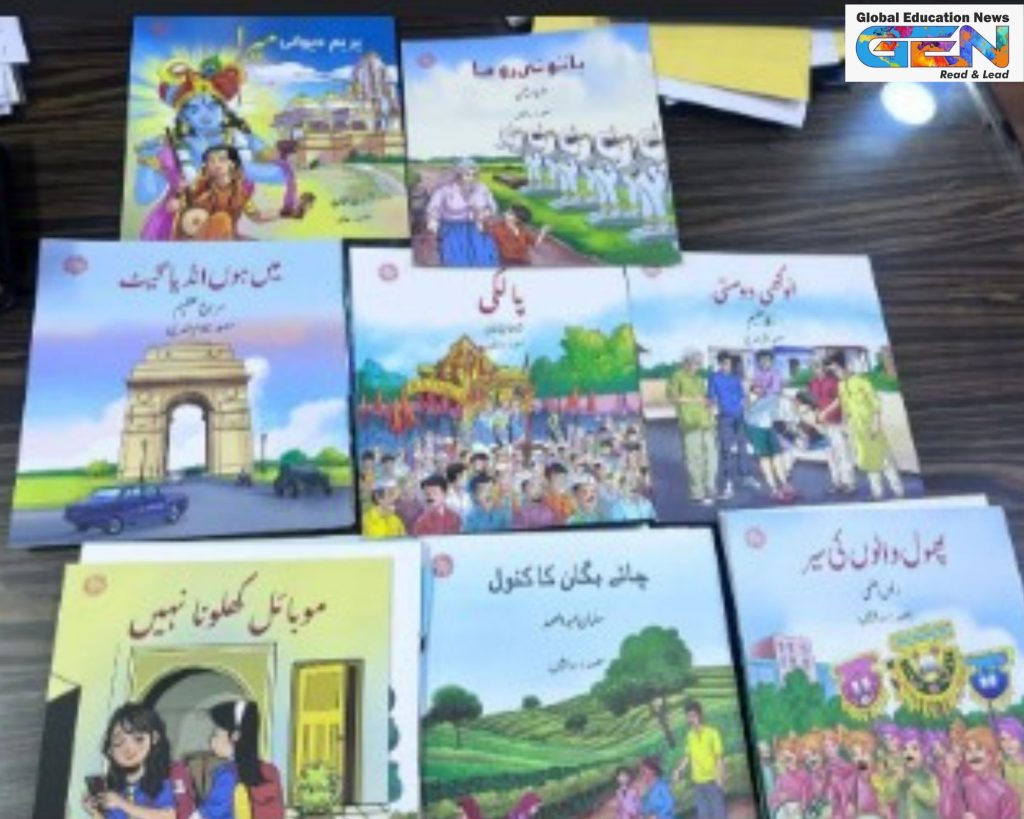
- Cultural and Historical Narratives: Includes “Prem Diwani Mira Bai” on the bhakti poet’s devotion; the Palkhi festival of Maharashtra honoring Vithoba; Delhi’s Phool Walon Ki Sair promoting communal harmony; Gautam Buddha’s life lessons; and folk traditions like Maharashtra’s Lezim dance.
- Unsung Heroes Spotlight: Profiles figures such as freedom fighter Mazharul Haque, advocate of Hindu-Muslim unity; alongside luminaries like Tansen, Hasrat Mohani, and other regional icons to inspire resilience and patriotism.
- Modern and Ethical Themes: Explores AI applications in schools, robotics innovations, and responsible mobile phone use; addresses ethical dilemmas like technology’s role in society, blending science with storytelling to spark innovative thinking.
- Diverse Representations: Covers landmarks like India Gate and Gol Ghar; festivals, folk arts, and regional customs from across India, ensuring inclusivity for all states and UTs.
By integrating these elements, the series transforms Urdu literature into a vibrant mirror of India’s evolving identity, appealing to children’s intellectual curiosity.
Authors and Creative Process: Expertise Meets Youth Input
Renowned Urdu litterateurs have crafted these stories, ensuring literary depth and cultural authenticity. The process involved collaborative workshops to refine content based on young readers’ perspectives.
- Key Contributors: Sahitya Akademi awardee Zakia Mashhadi; Prof. Ejaz Ali Arshad, former Vice Chancellor of Maulana Mazharul Haq University; Naima Jafri Pasha; children’s specialist Mohammad Siraj Azeem; and Iqbal Barki.
- Workshop Engagement: Last month’s session invited 8-18-year-olds to review drafts, incorporating their suggestions for relatability and excitement—e.g., adding interactive elements to AI stories.
- Illustrations and Format: Vibrant, child-friendly visuals enhance readability; books designed for self-paced exploration, with simple Urdu script to build language confidence.
- Quality Assurance: Editorial oversight ensures age-appropriate complexity, from basic vocabulary for younger readers to nuanced discussions for teens.
This authorial blend guarantees high-caliber content that honors Urdu’s poetic tradition while adapting to modern storytelling demands.
Distribution and Accessibility: Broad Reach with Multilingual Expansion
NCPUL is prioritizing widespread availability to maximize impact, leveraging digital and print formats to reach Urdu-medium schools, libraries, and homes across India.
- Initial Rollout: 22 books already in circulation via NCPUL’s publication network; full series to follow, with free distribution to select institutions.
- Bilingual Future: Upcoming Urdu-Hindi and Urdu-English editions to support NEP’s trilingual framework, aiding non-native speakers and cross-cultural learning.
- Digital Integration: Plans for e-books and apps compatible with NCPUL’s existing platforms, ensuring accessibility in remote areas.
- Partnership Potential: Collaborations with schools and cultural bodies for workshops and readings, extending reach to over 10 million Urdu learners.
These strategies aim to democratize access, turning the series into a cornerstone for Urdu language revival among children.
Impact and Expert Insights: Fostering Linguistic and Cultural Vitality
The project is poised to reshape Urdu children’s literature, filling voids in representation and relevance, while nurturing a generation of thoughtful, culturally grounded readers.
- Linguistic Revival: Counters declining Urdu readership by making it “fun and familiar,” potentially boosting enrollment in Urdu-medium education by 15-20%.
- Cultural Bridge: Highlights India’s multicultural tapestry, promoting empathy and unity; experts note it as a “vital step” in decolonizing Urdu narratives from foreign influences.
- Educational Outcomes: Encourages critical skills through stories on ethics and innovation; aligns with global trends in STEM-infused humanities for holistic development.
- Official Vision: NCPUL Director Dr. Shams Equbal: “When children see their festivals and heroes in Urdu, the language becomes alive—essential for its survival in a diverse India.”
- Expert Endorsement: Delhi University Prof. Mohammad Kazim: “This fills a huge gap in contemporary Urdu books on AI and culture, making the language competitive with English resources.”