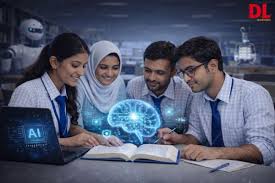
India is entering a decisive phase in its education transformation journey, as the government outlines a comprehensive roadmap combining curriculum reform, artificial intelligence (AI) integration, and systemic modernization. Spearheaded by Dharmendra Pradhan, this strategy reflects a shift from incremental reforms to large-scale structural change.
With over 30 crore students in the system, the stakes are enormous, making this roadmap one of the most ambitious education overhauls globally.
NCERT Reset: Reforming the Core of School Education
Key Developments:
- Revision of NCERT textbooks, including sensitive and debated topics
- Oversight by expert committees to ensure balance and transparency
- Alignment with evolving legal and academic standards
The reform signals a move toward content accuracy, neutrality, and relevance, ensuring textbooks reflect contemporary realities while maintaining academic integrity.
Analytical Insight:
This “NCERT reset” is not merely about content revision—it represents a recalibration of knowledge frameworks, ensuring that school education keeps pace with societal and constitutional developments.
AI Integration: From Concept to Classroom
Strategic Focus:
- AI to be introduced as:
- A subject of study
- A tool for learning and teaching
- Integration across:
- School education
- Higher education
- Research ecosystems
The government emphasizes that students must be equipped with future-ready skills, making AI literacy a foundational requirement.
Implementation Measures:
- Development of AI curriculum from early grades
- Use of platforms like DIKSHA and SWAYAM
- Teacher training and capacity building
India is also establishing Centers of Excellence in AI, including at premier institutions, to drive innovation and research.
Scale of Transformation: One of the Largest Globally
Key Indicators:
- Over 250 million learners in the ecosystem
- Around 1.5 million schools and 1,100+ universities
- Rapid expansion of digital and EdTech infrastructure
Global Context:
India’s education reforms are increasingly being seen as a model for large-scale transformation, particularly in integrating technology with accessibility.
Rising Global Competitiveness of Indian Education
Key Achievements:
- Significant increase in Indian institutions in global rankings
- Growth from ~54 institutions (pre-2014) to nearly 290 today
Interpretation:
This reflects:
- Improved quality of higher education
- Greater international visibility
- Stronger policy focus on research and innovation
Policy Alignment with NEP 2020
The roadmap is deeply aligned with the National Education Policy 2020, which emphasizes:
Core Pillars:
- Holistic and multidisciplinary education
- Foundational literacy and numeracy
- Integration of technology and digital learning
- Focus on skills and employability
The AI push represents the next phase of NEP implementation, transitioning from policy vision to execution.
Infrastructure and Digital Ecosystem Expansion
Key Focus Areas:
- Strengthening digital learning platforms
- Expanding access to quality educational resources
- Building research and innovation ecosystems
Government initiatives aim to ensure that technology reaches even remote and underserved areas, bridging the digital divide.
Challenges in Implementation
Despite its ambitious vision, the roadmap faces several critical challenges:
A. Teacher Readiness
- Need for large-scale AI training programs
- Limited availability of trained professionals
B. Digital Divide
- Unequal access to devices and internet connectivity
- Rural-urban disparities
C. Ethical Concerns
- Data privacy and AI bias
- Responsible use of technology in classrooms
Experts caution that without addressing these issues, the AI push may widen inequalities instead of reducing them.
Strategic Vision: Education for Viksit Bharat 2047
The roadmap aligns with India’s long-term vision of becoming a knowledge-driven global power by 2047.
Key Goals:
- Create a future-ready workforce
- Foster innovation and entrepreneurship
- Strengthen global competitiveness
AI is positioned not just as a tool, but as a core driver of economic and intellectual growth.