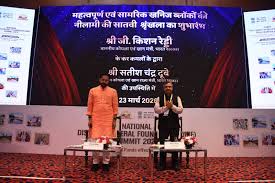
The National District Mineral Foundation (DMF) Summit 2026 marks a crucial step in strengthening the governance and utilisation of funds generated from mining activities. With a sharp focus on efficient fund utilisation, transparency, and impact-driven development, the summit aims to ensure that mineral-rich regions translate their resources into sustainable socio-economic progress.
This article provides a structured, analytical breakdown of the summit’s objectives, discussions, and long-term policy implications.
1. Purpose of the DMF Summit 2026
The summit was organized to address one of the biggest challenges in mining governance—effective utilisation of DMF funds.
Core objectives:
- Improve outcome-based utilisation of funds
- Strengthen coordination between Centre, states, and districts
- Identify policy reforms for better governance
- Focus on development in mining-affected areas
Key Insight: The summit shifts focus from fund allocation to measurable impact, ensuring funds reach the intended beneficiaries.
2. What Are DMF Funds?
District Mineral Foundation (DMF) funds are collected from mining companies and used for the welfare of communities affected by mining.
Key sectors supported:
- Healthcare and nutrition
- Drinking water supply
- Education
- Skill development and livelihoods
- Infrastructure and environment protection
Insight: DMF funds are a critical tool for inclusive development in resource-rich but underdeveloped regions.
3. Key Focus Areas of the Summit
Major themes discussed:
- Governance and transparency in fund utilisation
- Convergence with central schemes
- Impact assessment and monitoring
- Best practices from states and districts
Analysis: The emphasis on data-driven monitoring and evaluation signals a move toward more accountable governance.
4. Focus on Aspirational Districts & Blocks
A major highlight was the prioritisation of:
- Aspirational District Programme (ADP)
- Aspirational Block Programme (ABP)
Objective:
- Channel DMF funds into the most underdeveloped regions
- Ensure targeted interventions in health, education, and infrastructure
Key Insight: Aligning DMF funds with national development programs enhances efficiency and impact multiplier effects.
5. Multi-Stakeholder Participation
The summit brought together a wide range of stakeholders:
Participants:
- Central ministries
- State governments
- District administrations
- Policy think tanks like NITI Aayog
- Technical agencies
Analysis: This collaborative approach ensures holistic policy-making and better implementation on the ground.
6. Emphasis on Transparency and Monitoring
Key initiatives:
- Strengthening digital monitoring systems
- Use of portals for real-time fund tracking
- Improved auditing and reporting mechanisms
Insight: Technology-driven governance can significantly reduce leakages and inefficiencies in fund utilisation.
7. Showcasing Best Practices
An exhibition held alongside the summit highlighted successful DMF-funded projects across India.
Featured sectors:
- Renewable energy
- Education and skill development
- Healthcare infrastructure
- Livelihood generation
Analysis: Sharing best practices encourages replication of successful models across states.
8. Policy Impact and Expected Outcomes
Key expected outcomes:
- Improved fund utilisation efficiency
- Better coordination between schemes
- Enhanced socio-economic indicators in mining regions
- Stronger institutional framework for DMF governance
Key Point: The summit aims to convert DMF into a high-impact development instrument rather than just a funding mechanism.
9. Challenges Identified
Key issues:
- Underutilisation of funds in some districts
- Lack of planning and project prioritisation
- Weak monitoring mechanisms
- Coordination gaps between agencies
Insight: Addressing these challenges is critical for achieving sustainable and equitable development.