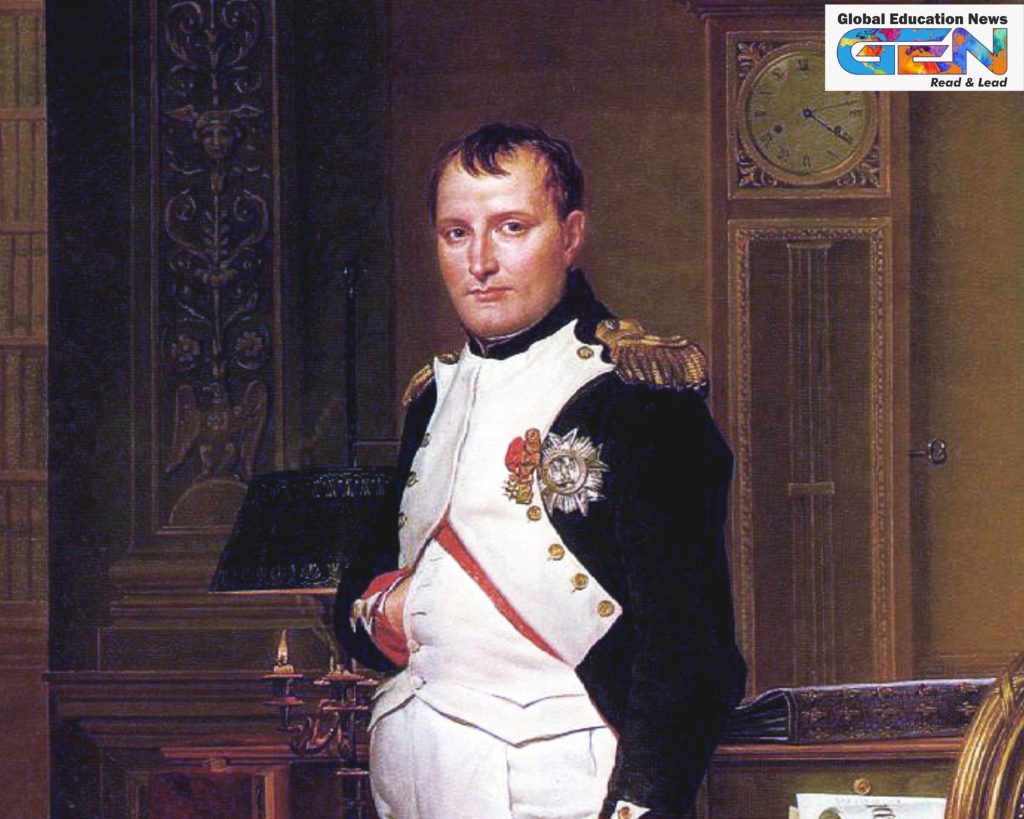
On May 18, 1804, Napoleon Bonaparte was proclaimed Emperor of the French, a moment that marked the pinnacle of his meteoric rise and the birth of the First French Empire. This historic event, formalized by the French Senate, transformed a Corsican soldier into one of history’s most formidable leaders, whose ambition and genius reshaped Europe. From the ashes of the French Revolution, Napoleon forged a legacy of reform, conquest, and controversy that endures today. This article explores the significance of May 18, 1804, delving into Napoleon’s journey to the throne, his transformative achievements, the challenges he faced, and the lasting impact of his rule, captivating history enthusiasts, students, and curious readers alike.
The Road to May 18, 1804: Napoleon’s Rise
Born on August 15, 1769, in Ajaccio, Corsica, Napoleone di Buonaparte grew up in a modest noble family, navigating the cultural crossroads of a newly French Corsica. His education at French military schools honed his intellect and ambition, despite taunts for his Corsican accent. The French Revolution (1789–1799) provided the stage for his ascent. At age 24, his leadership at the Siege of Toulon (1793) earned him the rank of brigadier general, showcasing his strategic brilliance.
Napoleon’s fame soared during the Italian Campaign (1796–1797), where he led a small French army to victories against Austria, blending military prowess with propaganda. His Egyptian Campaign (1798–1799), though marred by naval losses at the Battle of the Nile, bolstered his reputation as a bold visionary. By 1799, France’s political instability offered an opportunity. The Coup of 18 Brumaire saw Napoleon seize power as First Consul, setting the stage for his imperial ambitions.
X Insight: Posts by @HistoryToday highlight Napoleon’s knack for turning military victories into political capital, a skill that culminated in his 1804 coronation.
May 18, 1804: The Birth of an Empire
On May 18, 1804, the French Senate, under Napoleon’s influence, passed a senatus-consultum proclaiming him Emperor Napoleon I. This followed a plebiscite where 3.5 million French citizens voted in favor, with only 2,569 against, reflecting his widespread popularity. The formal coronation ceremony on December 2, 1804, at Notre-Dame Cathedral, was a spectacle of grandeur, where Napoleon famously crowned himself, signaling his authority over even the Pope.
This moment was more than symbolic—it marked the consolidation of Napoleon’s power, blending revolutionary ideals with monarchical pomp. It alarmed Europe’s monarchies, sparking coalitions to counter his growing empire, but it also set the stage for his most enduring contributions.
Historian’s View: “May 18, 1804, was Napoleon’s declaration to the world: he was not just a leader but a force of history,” notes Dr. Philip Dwyer, author of Napoleon: The Path to Power.
Transformative Achievements: Reforms and Conquests
Napoleon’s reign as Emperor was defined by sweeping reforms and military triumphs:
- Napoleonic Code (1804): Enacted shortly after his coronation, this civil code standardized laws across France, promoting equality (though excluding women), property rights, and secularism. It influenced legal systems in over 70 countries, from Belgium to Japan.
- Military Victories: The Battle of Austerlitz (1805), often called his greatest triumph, saw Napoleon defeat Russia and Austria, cementing French dominance. Victories at Jena-Auerstedt (1806) expanded the Confederation of the Rhine.
- Administrative Reforms: He modernized France’s bureaucracy, established the Bank of France, and reformed education, creating a merit-based system.
- Concordat of 1801: Signed before his emperorship, this agreement with the Catholic Church stabilized France’s religious landscape, a policy he reinforced as Emperor.
These achievements, rooted in the stability of his 1804 coronation, transformed France into a centralized, modern state, as praised in posts by @NatGeoHistory for their lasting global impact.
Controversies: The Cost of Ambition
Napoleon’s imperial vision came with significant controversies:
- Authoritarianism: His self-coronation and use of censorship and secret police alienated revolutionary purists, who accused him of betraying the Republic.
- Endless Wars: The Peninsular War (1808–1814) against Spain and Portugal drained resources, while the Invasion of Russia (1812) was catastrophic, reducing his Grande Armée from 600,000 to under 50,000.
- Gender Inequality: The Napoleonic Code reinforced patriarchal norms, limiting women’s rights, a point criticized by modern scholars.
- Slavery: Napoleon’s reinstatement of slavery in French colonies in 1802, before his emperorship, remains a stain on his legacy, as noted in The Guardian articles.
X Debate: Users like @BBC_History argue Napoleon’s reforms were revolutionary, while @HistoryExtra highlights his wars cost millions of lives, fueling ongoing debates.
Downfall and Exile: The End of an Era
Napoleon’s empire unraveled as coalitions of European powers united against him. The Sixth Coalition forced his abdication in 1814, exiling him to Elba. His dramatic return during the Hundred Days in 1815 culminated in defeat at the Battle of Waterloo against Wellington and Blücher. Exiled to St. Helena, he died on May 5, 1821, likely of stomach cancer, though myths of arsenic poisoning persist.
Public Sentiment on X: @SmithsonianMag notes Napoleon’s exile diaries reveal a reflective side, contrasting his earlier bravado.
Legacy: The Emperor’s Enduring Mark
The coronation of May 18, 1804, launched a legacy that resonates today:
- Legal Influence: The Napoleonic Code shapes civil law in countries like France, Spain, and parts of Latin America.
- Geopolitical Shifts: Napoleon’s wars spread nationalist ideas, weakening feudalism but sowing seeds for future conflicts.
- Cultural Icon: From War and Peace to Ridley Scott’s Napoleon (2023), his story captivates, as seen in @Times_History posts celebrating his cinematic allure.
- India Connection: His Egyptian campaign indirectly strengthened British control over India, as Britain countered his global ambitions, per The Hindu.
In India, the NEP 2020 encourages critical analysis of figures like Napoleon, fostering discussions on leadership and imperialism in classrooms, as reported by Times of India.
Why May 18, 1804, Matters
The proclamation of Napoleon as Emperor on May 18, 1804, was a turning point that crystallized his vision for France and Europe. It marked the transition from revolutionary chaos to imperial order, launching reforms that outlived his reign. For students, it’s a case study in ambition and power; for historians, it’s a moment that redefined modern governance. Posts on X by @HistoryHit call it “the day Napoleon became a legend,” capturing its enduring fascination.
Student Voice: “Learning about 1804 shows how one decision can ripple through centuries,” shared a history major on X.
Explore Napoleon’s World
To deepen your understanding:
- Read: Napoleon: A Life by Andrew Roberts or The Napoleonic Wars by Todd Fisher.
- Visit: See Napoleon’s legacy at Les Invalides in Paris or his Ajaccio birthplace in Corsica.
- Discuss: Join forums like Reddit’s r/AskHistorians or follow @HistoryToday for Napoleonic debates.
- Study: Enroll in history courses on SWAYAM or Coursera to explore his era.
Pro Tip: “Napoleon’s letters to Josephine reveal his human side—start there for a personal perspective,” suggests a historian.
Conclusion: A Revolutionary Dawn
The crowning of Napoleon Bonaparte on May 18, 1804, was more than a ceremony—it was the dawn of a revolutionary legacy that transformed France and the world. From the Napoleonic Code to his epic battles, Napoleon’s reign, sparked by this pivotal date, remains a testament to human ambition and its consequences. As we reflect on history through modern lenses—like India’s NEP 2020 or global STEM education gaps reported by UNESCO—Napoleon’s story challenges us to weigh reform against rivalry. Dive into his world and decide: was he a hero or a conqueror?