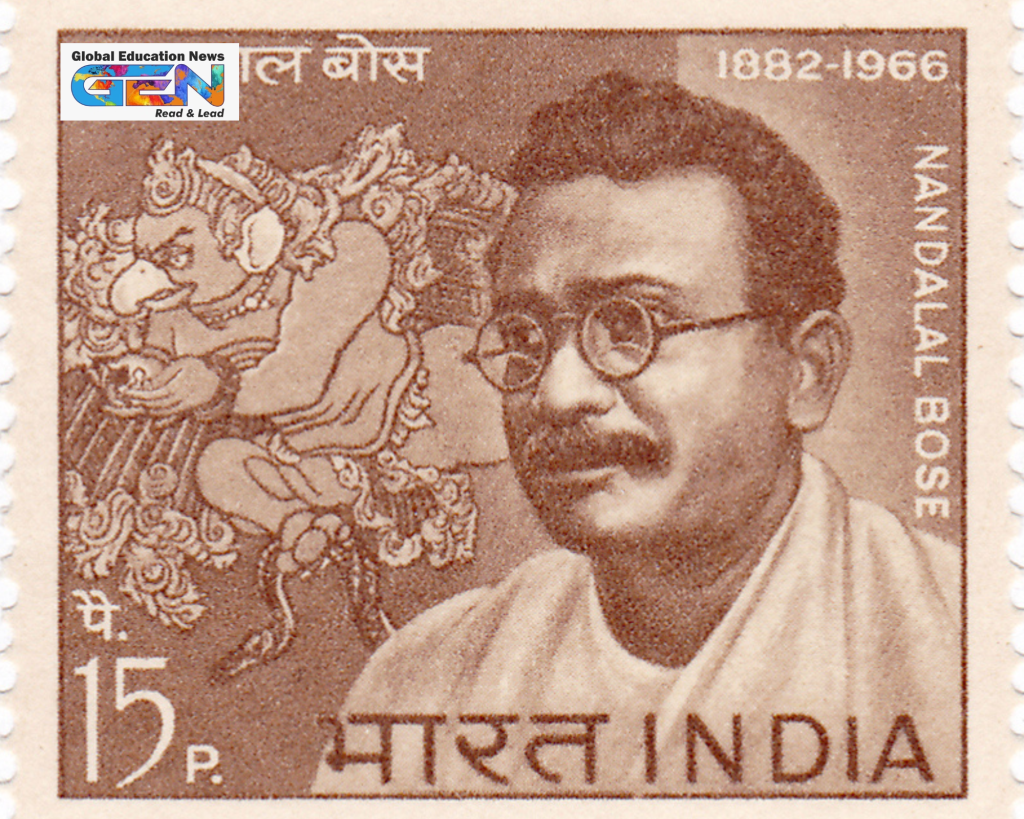
Nandalal Bose’s Artistic Legacy: Shaping India’s Constitution Through His Vision
Nandalal Bose, one of India’s most celebrated artists, made a significant contribution to the Indian Constitution through his artistic skills. In 1950, Bose was commissioned to create the calligraphy and illustrations for the original manuscript of the Indian Constitution. His work beautifully blended traditional Indian art forms with national symbols, enhancing the visual representation of the Constitution.
Key Contributions:
- Calligraphy: Bose’s elegant calligraphy, using traditional techniques, gave the Constitution a distinct cultural identity. He carefully inscribed the Preamble and various sections in a flowing script, making the document visually appealing and culturally significant.
- Illustrations and Borders: Bose designed intricate borders and illustrations that reflected India’s rich cultural heritage. These included motifs drawn from Indian history, mythology, and nature, symbolizing the unity and diversity of the country. The artwork was a fusion of traditional Indian art and contemporary aesthetics, making the Constitution not only a legal document but also an artistic expression of India’s freedom.
- Symbolism: Bose’s illustrations included national symbols, figures from Indian mythology, and depictions of unity, such as motifs from various Indian religions, cultures, and landscapes. These designs emphasized the country’s diverse heritage and its unity in diversity.
- Cultural Reflection: By blending Indian folk art, miniature painting, and other traditional techniques, Bose’s illustrations resonated deeply with India’s national identity. His work brought together India’s rich artistic traditions and the vision of a newly independent nation.
Legacy of His Work:
Nandalal Bose’s contribution to the Indian Constitution remains an enduring symbol of India’s journey towards becoming a republic. His artistic touch in the document stands as a reminder of the country’s cultural diversity, history, and democratic aspirations. The Constitution’s visual beauty, thanks to Bose’s contribution, continues to inspire pride and reverence among Indians today.
In addition to his role in the Constitution’s creation, Nandalal Bose remains a revered figure in Indian art history, known for his role in the Bengal School of Art and his efforts to revitalize traditional Indian art forms during the British colonial era. His work in the Constitution continues to be a symbol of the blend of art, culture, and nationhood that defines modern India.
Conclusion:
Nandalal Bose’s contribution to the Indian Constitution goes beyond the visual aspect of the document; it represents the spirit of India’s independence and the aspiration to create a unified, democratic republic. His artistry not only preserved India’s cultural heritage but also embodied the core values of the Constitution—unity, diversity, and justice.