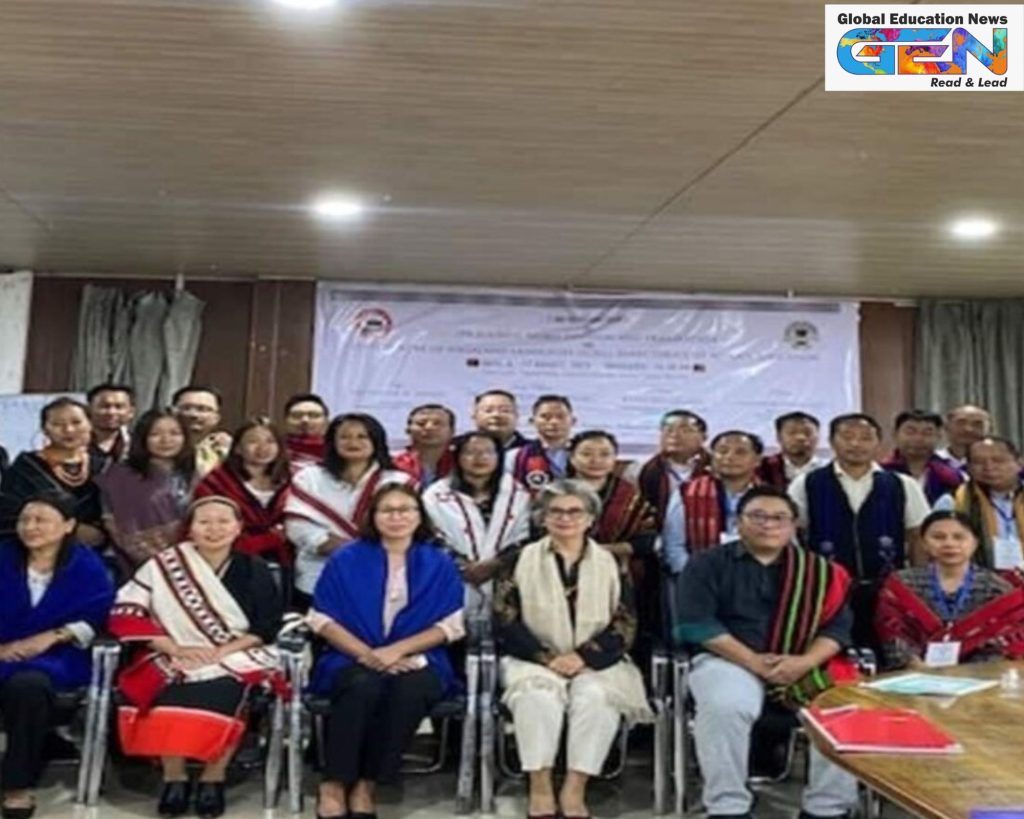
On September 1, 2025, Nagaland University, the state’s only Central University, embarked on a transformative journey to develop written grammars for all 18 recognized Naga languages. This pioneering initiative, in collaboration with the Directorate of School Education, Government of Nagaland, aims to integrate structured pedagogical grammars into school textbooks for Classes 5 to 12, aligning with the National Education Policy (NEP) 2020. Led by Dr. Mimi Kevichüsa Ezung, this project is not just an academic endeavor but a cultural mission to preserve the linguistic identity of the Naga people.
Key Points:
- The project addresses the absence of formal written grammars for Naga languages, despite decades of teaching in schools.
- It involves systematic documentation of grammar, vocabulary, and orthography for 18 languages.
- The initiative supports NEP 2020’s emphasis on mother-tongue education and multilingual learning.
Why Grammar Matters for Naga Languages
Naga languages, rich in oral tradition, have been taught in schools for years but lack standardized written grammars, leading to inconsistencies in teaching and learning. This project seeks to fill this gap by documenting essential linguistic elements such as parts of speech, tense, phrase structures, and tone, ensuring clarity and uniformity in education.
Key Points:
- The 18 languages include Ao, Chang, Chokri, Khiamniungan, Konyak, Kuki, Kuzhale (Khezha), Liangmai, Lotha, Nthenyi (Southern Rengma), Nzonkhwe (Northern Rengma), Phom, Pochury, Sangtam, Sümi, Tenyidie (Angami), Yimkhiung, and Zeme.
- Only a few, like Tenyidie, Ao, Lotha, and Sümi, are currently taught beyond Class 8, with Tenyidie offered up to MA and PhD levels.
- Standardized grammars will enhance language teaching and expand educational opportunities for all Naga languages.
A Cultural Mission to Preserve Identity
Led by Dr. Mimi Kevichüsa Ezung, Associate Professor and Head of the Department of Tenyidie, the project is a collaborative effort involving Language Literature Boards, the State Centre of Naga Languages (SCNL), SCERT, and the Nagaland Board of School Education (NBSE). Dr. Ezung emphasizes that a written grammar is a “formal representation of a language’s abstract properties,” fostering consistency in speech and writing while instilling pride in mother tongues.
Key Points:
- The project is described as a “cultural mission” by Vice Chancellor Prof. Jagadish K. Patnaik, aimed at preserving Naga identity and indigenous knowledge.
- It involves community stakeholders, including language experts and elders, to ensure authenticity and cultural relevance.
- Technical workshops at Nagaland University are training language officers to document grammars effectively.
Aligning with NEP 2020’s Vision
The initiative aligns with NEP 2020’s focus on promoting mother-tongue education and preventing language marginalization. By integrating these grammars into school curricula, alongside prose, poetry, and translations, the project ensures that Naga languages are valued equally with dominant languages, fostering inclusivity and cultural pride.
Key Points:
- The grammars will be incorporated into textbooks under SCERT and NBSE supervision.
- Teacher training programs, including refresher courses, will support seamless classroom integration.
- The project lays the foundation for expanding Naga language education to higher academic levels.
Community Support and Future Impact
Stakeholders have hailed the project as a vital step toward safeguarding Naga heritage. Kaitunchap Newmai of the Liangmai Literature Board called it “a vital step towards ensuring our languages thrive for future generations,” while Kevileno Angami, Commissioner and Secretary of School Education, emphasized its role in building a strong foundation for language education.
Key Points:
- The project fosters pride in Naga linguistic identity and counters the risk of language marginalization.
- It will enhance educational quality by providing structured resources for teachers and students.
- The initiative sets a precedent for other regions to preserve indigenous languages through education.