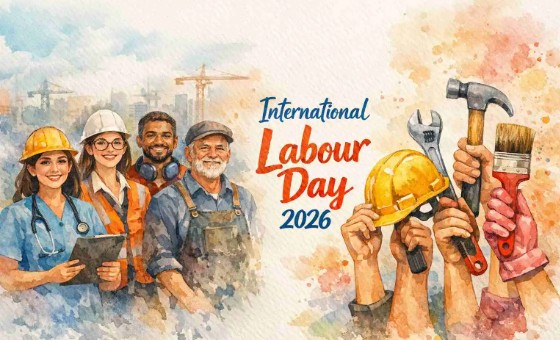
International Labour Day 2026, also known as International Workers’ Day or May Day, is being observed globally on May 1 to recognise the contributions of workers and the enduring struggle for labour rights. The day serves as both a celebration of progress and a reminder of the challenges that workers continue to face in an evolving economic landscape.
Why is Labour Day Celebrated on May 1?
The choice of May 1 dates back to the historic labour movement of the late 19th century, particularly the Haymarket Affair of 1886 in Chicago, where workers protested for an eight-hour workday. Haymarket Affair
This event became a symbol of workers’ resistance and led to the global recognition of May 1 as a day of solidarity for labour rights.
Historical Background
- Labour Day has its roots in industrial-era struggles for fair working conditions
- In 1889, an international workers’ movement declared May 1 as a day for global demonstrations
- The first official celebration in India took place in 1923 in Chennai, led by labour leaders advocating workers’ rights
Over time, the day evolved into a global observance across more than 90 countries, reflecting the universal importance of labour.
Significance of International Labour Day
Labour Day is more than a public holiday—it is a symbol of workers’ dignity, rights, and contributions to society.
Key Significance:
- ✔ Recognises the role of workers in economic development
- ✔ Promotes fair wages, safe working conditions, and social security
- ✔ Highlights the importance of equality and labour rights
- ✔ Encourages awareness about modern workplace challenges, including gig work and job security
Even today, the day remains relevant as economies evolve and new forms of employment emerge.
Theme of Labour Day 2026
The theme for International Labour Day 2026 focuses on:
“Ensuring a Healthy Psychosocial Working Environment”
This theme emphasizes:
- Mental health and well-being at the workplace
- Work-life balance in a digital economy
- Safe, inclusive, and supportive work environments
- Addressing stress and burnout among workers
It reflects a shift from purely physical labour concerns to holistic employee well-being in modern workplaces.
Why Labour Day Still Matters Today
In today’s fast-changing world, Labour Day continues to hold immense relevance:
- Rise of gig economy and contract jobs
- Growing concerns about mental health and job insecurity
- Need for inclusive workplaces and equal opportunities
- Ongoing struggles for fair pay and workers’ rights globally
The day serves as a platform to raise awareness, demand reforms, and celebrate the workforce that drives economies forward.
Labour Day in India
In India, Labour Day—also known as Antarrashtriya Shramik Diwas—is widely observed on May 1. The day also coincides with:
- Maharashtra Day
- Gujarat Day
marking the formation of these states in 1960.
Across the country, the day is marked by:
- Awareness campaigns
- Trade union activities
- Events promoting workers’ welfare
How Labour Day is Celebrated
Globally, Labour Day is observed through:
- Rallies and parades organised by trade unions
- Workplace events and awareness drives
- Public discussions on labour laws and reforms
In many countries, it is also a public holiday, allowing workers to rest and reflect on their contributions.