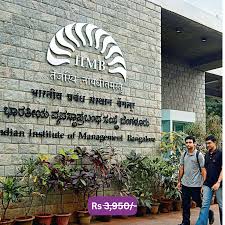
The QS Executive MBA Rankings 2026 have once again placed Indian Institute of Management Bangalore at the forefront of Indian management education. Despite a slight dip in global ranking, the institute continues to hold its position as India’s top-ranked business school and remains the only Indian institution in the global top 100.
The latest rankings also reflect a broader trend—India’s expanding presence in global executive education, even as competition intensifies among top international business schools.
IIM Bengaluru: India’s No. 1, Still in Global Top 100
According to the 2026 rankings:
- IIM Bengaluru is ranked 64th globally, down from 50th last year
- It remains the only Indian B-school in the global top 100
While the drop in rank may raise concerns, experts note that the institute continues to perform strongly in key parameters:
- Employer Reputation: 42nd globally
- Career Outcomes: 47th globally
These indicators highlight the strong industry credibility and career progression opportunities offered by its executive MBA programme.
Global Rankings: Who’s Leading?
At the global level, top positions are dominated by leading international institutions:
- University of Oxford Saïd Business School ranks No. 1 globally
- Followed by HEC Paris and MIT Sloan School of Management
These institutions continue to excel due to strong global networks, executive profiles, and research output, setting benchmarks for business education worldwide.
India’s Growing Presence in EMBA Rankings
A key highlight of the 2026 rankings is the increased representation of Indian business schools:
- Seven Indian institutions feature in the rankings overall
- India emerges as one of the most represented countries in the Asia-Pacific region
This reflects a gradual but clear shift—Indian management education is gaining global recognition, particularly in executive and professional programmes.
What Drives QS EMBA Rankings?
The QS Executive MBA Rankings evaluate programmes based on several critical indicators:
- Employer Reputation
- Career Outcomes
- Executive Profile
- Diversity
- Thought Leadership
These factors collectively measure not just academic quality, but also real-world impact and career advancement potential.
What the Rankings Mean for Students and Professionals
For working professionals considering an Executive MBA, these rankings provide valuable insights:
- Global exposure and networking opportunities
- Return on investment and career growth
- Industry recognition of the programme
IIM Bengaluru’s continued presence in the top 100 signals that Indian institutions are competitive globally, though still facing challenges in matching top-tier Western schools.
A Mixed Yet Positive Outlook for Indian B-Schools
While IIM Bengaluru’s drop in rank highlights the intense global competition, the broader picture remains encouraging:
- More Indian institutes are entering global rankings
- Programmes are improving in career outcomes and employer perception
- India is steadily strengthening its position in global management education
However, experts point out that Indian B-schools still need to focus on:
- International diversity
- Research output
- Global industry integration