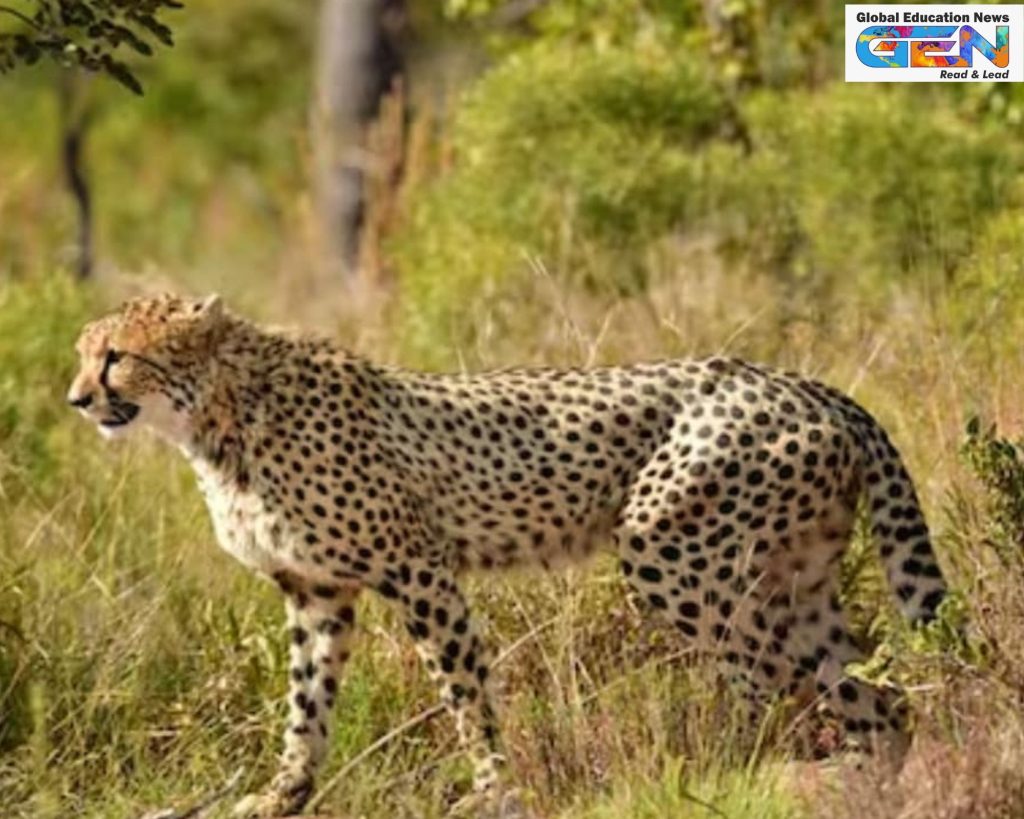
In a groundbreaking moment for India’s wildlife conservation, Mukhi—a resilient female cheetah born on Indian soil—will reach adulthood on September 30, 2025, marking her as the nation’s first homegrown adult cheetah. Born on March 29, 2023, to Namibian import Jwala at Kuno National Park in Madhya Pradesh, Mukhi’s journey from vulnerable cub to thriving adult symbolizes the maturing success of Project Cheetah. Despite losing her three siblings to extreme heat, Mukhi’s survival has boosted hopes for establishing a self-sustaining cheetah population in India, over seven decades after the species’ extinction here.
Key Points:
- Mukhi turns 915 days (30 months) old on September 30, 2025, officially entering adulthood.
- As the sole survivor of her litter, she was briefly abandoned by Jwala but has since thrived under careful monitoring.
- Her milestone proves cheetahs can adapt and reproduce successfully in Indian habitats.
Project Cheetah: Reviving a Lost Legacy
Launched on September 17, 2022, by Prime Minister Narendra Modi, Project Cheetah represents the world’s first intercontinental translocation of a large carnivore. Eight cheetahs from Namibia were released into Kuno’s enclosures, followed by 12 from South Africa in February 2023. The initiative aims to restore ecological balance in India’s grasslands and savannas, drawing lessons from successful tiger conservation models.
Key Points:
- Initial batch: 8 Namibian cheetahs (5 females, 3 males) in 2022.
- Second batch: 12 South African cheetahs in 2023, bringing the imported total to 20.
- Focus: Genetic diversity, habitat management, and conflict mitigation with local predators like leopards.
- By 2025, the project has expanded to sites like Gandhi Sagar Wildlife Sanctuary.
Mukhi’s Inspiring Survival Story
Mukhi’s path to adulthood is a tale of resilience against formidable odds. One of four cubs born to Jwala and the now-deceased Shaurya, she faced immediate threats from India’s scorching summers. While her siblings succumbed, Mukhi adapted remarkably, growing under the watchful eyes of conservationists. Project Director Uttam Kumar Sharma hailed her progress as “encouraging,” noting it validates the team’s efforts in habitat adaptation and health monitoring.
Key Points:
- Born March 29, 2023; father: Shaurya (deceased Namibian import).
- Survived abandonment by Jwala; raised with minimal human intervention to foster wild behaviors.
- Radio-collared for tracking, Mukhi now roams freely in Kuno’s enclosures, ready to breed.
- Her story counters early skepticism, showing cheetahs’ viability in India’s northern hemisphere seasons.
Current Stats: Progress Amid Challenges
As of September 2025, Project Cheetah has shown steady growth despite hurdles like mortality from heat, infections, and injuries. India’s cheetah numbers have net increased, with Kuno’s cub survival rate of over 61% surpassing the global average of 40%. This success stems from enhanced prey availability, predator relocation, and veterinary interventions.
| Category | Details |
|---|---|
| Total Cheetahs in India | 27 (11 imported adults + 16 India-born) |
| At Kuno National Park | 24 |
| At Gandhi Sagar Sanctuary | 3 (including a recent release on September 17, 2025) |
| Total Born in India | 26 cubs (16 surviving) |
| Deaths | 19 (9 imported adults + 10 cubs) |
| Survival Rate | 61% at Kuno (above global 40%) |
Key Points:
- Recent births: Litters from Aasha (January 2024), Jwala (January 2024), and Gamini (March 2024).
- All surviving cheetahs (12 adults + 12 cubs) are in protective enclosures as of late 2024, transitioning to free-ranging.
- High survival reflects adaptations like boosting ungulate populations for prey.
Future Horizons: Expanding the Cheetah Footprint
Mukhi’s adulthood paves the way for bolstering India’s cheetah gene pool. Negotiations with African nations like Botswana, Namibia, and Kenya aim to import 8–10 more cheetahs by December 2025. Gujarat is set to join as a new release site in late 2025, while lessons from tiger projects inform anti-poaching and community engagement strategies.
Key Points:
- Next imports: 8–10 from Botswana/Namibia by end-2025 to enhance genetic diversity.
- Expansion: Gujarat’s grasslands targeted; Gandhi Sagar’s first release (Dheera) in September 2025.
- Long-term goal: Self-sustaining population through natural breeding and habitat restoration.
- Global impact: Positions India as a leader in megafauna rewilding.
Why Mukhi’s Milestone Echoes Far Beyond Kuno
Mukhi’s story isn’t just about one cheetah—it’s a beacon for biodiversity restoration. By debunking myths of failure and highlighting real progress, Project Cheetah inspires global conservation. As Uttam Kumar Sharma noted, “Our efforts have yielded encouraging results,” proving that with innovation and commitment, extinct species can roar back to life in India.
Key Points:
- Addresses misinformation: Cheetahs are transitioning to wild conditions, not perpetual captivity.
- Community benefits: Boosts eco-tourism and grassland revival.
- Broader legacy: Aligns with India’s tiger success, aiming for cheetah numbers to hit 50+ by 2030