In a landmark advancement for India’s burgeoning clean energy sector, researchers at MIT World Peace University (MIT-WPU) in Pune have pioneered a Liquid Organic Hydrogen Carrier (LOHC) system that achieves hydrogen storage in a mere two hours—dwarfing the global benchmark of 18 hours. Unveiled on December 11, 2025, this innovation transforms hydrogen from a volatile gas into a stable, non-flammable liquid, storable and transportable at ambient conditions, sidestepping the perils of high-pressure cylinders or cryogenic liquefaction at -253°C. Commissioned by Ohm Cleantech (OCPL) under the h2e Power Group, the project exemplifies academia-industry synergy, aligning with the National Green Hydrogen Mission’s goal of 5 million tonnes annual production by 2030. This analysis dissects the methodology, hurdles surmounted, and far-reaching ramifications, underscoring how such indigenized tech could propel India toward energy self-reliance and a $100 billion green hydrogen economy.
The Breakthrough Unveiled: From Concept to Milestone
After nearly ten months of relentless experimentation—encompassing close to 100 trials—the MIT-WPU team shattered conventional barriers in hydrogen storage, a linchpin for scalable clean fuel adoption.
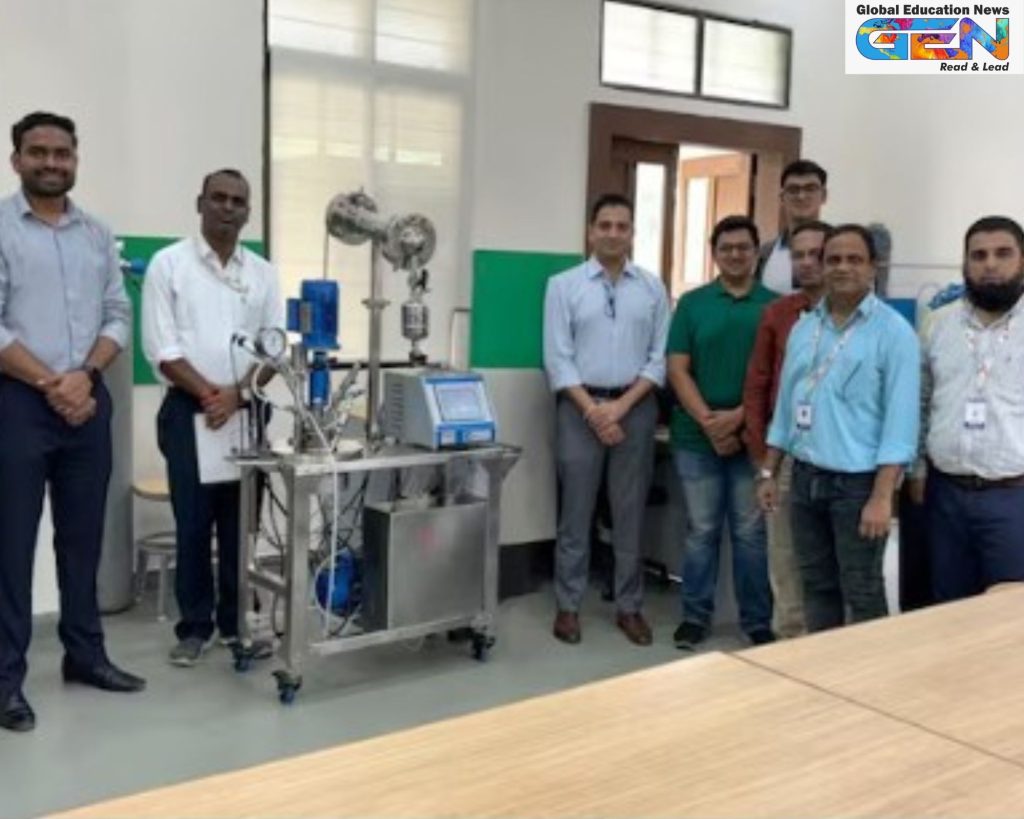
- Project Genesis and Leadership: Spearheaded by Principal Investigator Prof. (Dr.) Rajib Kumar Sinharay, with Research Advisor Prof. Datta Dandge and Project Fellow Nishant Patil, the effort unfolded in MIT-WPU’s state-of-the-art hydrogen lab, engineered for operations up to 350°C and 200 bar pressure.
- Core Innovation: The LOHC protocol binds hydrogen chemically to an organic carrier liquid via hydrogenation, enabling seamless storage and release through dehydrogenation at endpoints, with the carrier recyclable for multiple cycles.
- Efficiency Benchmarks: Achieves 11,000 liters of hydrogen storage within just 15.6 liters of carrier fluid, boasting an 86% recovery rate—metrics that outpace international standards and slash energy inputs by optimizing temperature (130°C vs. 170°C) and pressure (56 bar).
This feat not only validates Pune’s rising stature as a clean tech hub but also addresses a critical bottleneck: Hydrogen’s 70% energy loss in traditional storage methods, per global IRENA reports.
Technical Deep Dive: The LOHC Mechanism Demystified
At its heart, the LOHC system employs a two-stage chemical cascade, rendering hydrogen as innocuous as diesel for logistics—a radical departure from its reputation as an “explosive ghost.”
- Hydrogenation Phase: Hydrogen molecules integrate into the organic scaffold under controlled conditions, yielding a dense, liquid matrix impervious to leaks or ignition risks.
- Dehydrogenation and Reusability: At utilization sites, mild heating liberates the hydrogen for fuel cells or industrial use, regenerating 86% of the carrier for recirculation—minimizing waste and costs.
- Operational Edges: Lower thermal thresholds reduce infrastructure demands, allowing transport via repurposed petroleum tankers, ISO containers, or even pipelines, with zero need for specialized cryogenic setups.
Analytically, this efficiency—coupled with a 2-hour uptake cycle—could compress supply chain timelines by 90%, making hydrogen viable for remote electrification in India’s vast hinterlands.
Challenges Conquered: Navigating the ‘No-Reaction’ Abyss
Hydrogen storage has long been the Achilles’ heel of green transitions, with compression risking explosions and liquefaction demanding exorbitant cooling (up to 30% of stored energy). The MIT-WPU odyssey mirrors this tenacity.
- Initial Setbacks: The first 50 days yielded zero reactions, testing the team’s resolve amid iterative catalyst tweaks and parameter calibrations.
- Overcoming Barriers: By refining organic carriers and process kinetics, they mitigated energy inefficiencies and safety hazards, bypassing regulatory red tape for hazardous materials.
- Scalability Hurdles: Lab-to-pilot transitions addressed contamination risks, ensuring the system’s robustness for industrial volumes—pivotal for India’s 30% renewable energy target by 2030.
These triumphs highlight a broader narrative: Indigenous R&D, fueled by missions like Green Hydrogen, can eclipse imported tech, fostering a 20-25% cost reduction in deployment.
Strategic Implications: Fueling India’s Clean Energy Revolution
This LOHC innovation extends beyond storage, catalyzing decarbonization across mobility, industry, and power sectors, while fortifying national security through energy independence.
- Sectoral Applications: Enables hydrogen-powered heavy-duty vehicles, steel production via green H2, and grid-scale backups, potentially offsetting 10% of India’s fossil fuel imports ($150 billion annually).
- Economic and Environmental Gains: By leveraging existing logistics, it curtails capex by 40-50%, accelerates Mission targets, and cuts CO2 emissions by 1 gigaton by 2040—positioning India as a hydrogen exporter to Europe and Southeast Asia.
- Global Context: Amid COP30’s net-zero pledges, this positions Indian academia as a vanguard, rivaling efforts in Germany (e.g., BASF’s LOHC pilots) but tailored for tropical climates and cost sensitivities.
The ripple effects? A bolstered startup ecosystem, with OCPL eyeing commercialization, and enhanced STEM appeal for youth in Pune’s innovation corridor.
Voices of Innovation: Insights from the Trailblazers
The human element shines through the team’s reflections, blending grit with vision.
- Prof. Rajib Kumar Sinharay: “The first fifty days showed no reaction at all, but we refused to step back. Nearly ten months and close to a hundred trials later, we crossed a milestone that had never been achieved anywhere.”
- Siddharth Mayur, OCPL Founder: Emphasizes alignment with the National Green Hydrogen Mission, underscoring technological self-reliance for India’s clean energy sovereignty.
- Prof. Datta Dandge: “Being able to transport hydrogen like any other industrial liquid removes long-standing safety and regulatory barriers.”
- Nishant Patil: “Working on a breakthrough with national impact has been a defining experience,” fueling his commitment to sustainable futures.
These narratives humanize the science, inspiring a new cadre of researchers.