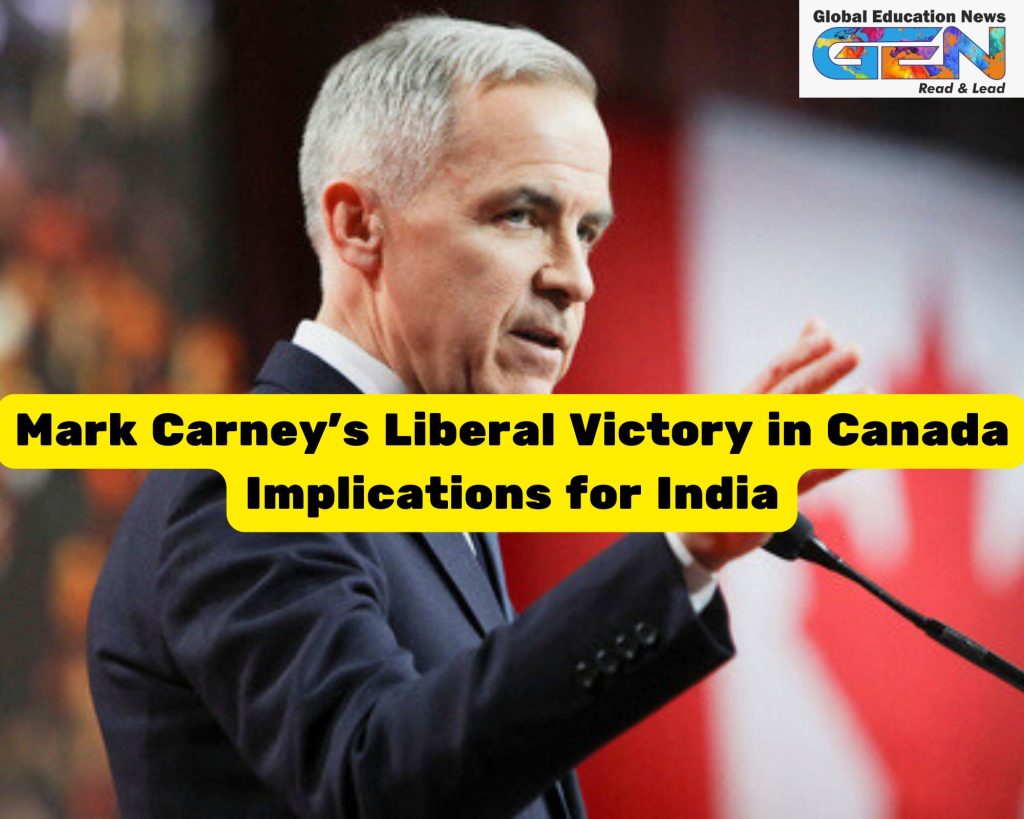
On April 29, 2025, Mark Carney, leading the Liberal Party, secured a fourth consecutive term as Canada’s Prime Minister, forming a minority government in a dramatic election shaped by U.S. President Donald Trump’s trade war and annexation threats. The Liberals won 167 seats in the 343-member Parliament, falling short of the 172 seats needed for a majority, but outperformed the Conservatives (145 seats) led by Pierre Poilievre. This victory, coupled with the electoral defeat of pro-Khalistan leader Jagmeet Singh and his New Democratic Party (NDP), signals a potential reset in India-Canada relations, strained since 2023 over the Khalistan issue and the killing of Hardeep Singh Nijjar.
This article explores the Canadian election results, Mark Carney’s vision for rebuilding ties with India, and the implications for the Khalistan movement and bilateral relations. Optimized for readers interested in India-Canada diplomacy, Khalistan politics, and global trade, this piece provides a clear and comprehensive overview of the election’s impact.
Canadian Election 2025: Key Outcomes
Key Points:
- Election Date: April 28, 2025; results announced April 29, 2025.
- Liberal Victory: Mark Carney’s Liberals won 167 seats, forming a minority government.
- Conservative Loss: Pierre Poilievre’s Conservatives secured 145 seats; Poilievre lost his own seat.
- NDP Collapse: Jagmeet Singh’s NDP plummeted to 7 seats, losing official party status; Singh resigned.
The 2025 Canadian federal election was a stunning comeback for the Liberal Party, which trailed the Conservatives by 20 points in January 2025. Mark Carney, a former Bank of Canada and Bank of England governor, took over as Liberal leader and Prime Minister in March 2025 after Justin Trudeau’s resignation amid declining popularity. The campaign was dominated by Trump’s threats, including 25% tariffs on Canadian goods and provocative calls for Canada to become the 51st U.S. state, which sparked a nationalist backlash favoring the Liberals. The NDP, led by Jagmeet Singh, suffered a historic defeat, dropping from 24 seats to 7, losing its national party status (requiring 12 seats). Singh, who lost his Burnaby Central seat, announced his resignation as NDP leader.
Mark Carney’s Vision for India-Canada Relations
Key Points:
- Priority on Rebuilding Ties: Carney called the Canada-India relationship “incredibly important” for personal, economic, and strategic reasons.
- Economic Focus: Emphasized trade diversification amid U.S. trade tensions, with India as a key partner.
- Silence on Nijjar Case: Avoided direct mention of Hardeep Singh Nijjar’s killing to signal a fresh start.
- PM Modi’s Response: Congratulated Carney, expressing hope for deeper bilateral ties based on shared values.
Mark Carney, a globally respected economist, has positioned himself as a bridge-builder, contrasting with Justin Trudeau’s confrontational approach toward India. In a pre-election interview, Carney stressed, “It’s an incredibly important relationship on many levels—personal, economic, and strategic,” highlighting opportunities to rebuild ties strained by the Nijjar controversy. He avoided referencing the 2023 killing of Hardeep Singh Nijjar, a Khalistani separatist, which Trudeau alleged involved Indian agents, indicating a desire to move past diplomatic tensions. Carney’s economic focus aligns with India’s growing global market, with bilateral trade at CAD 13.49 billion (₹83 crore) in 2023 despite stalled talks on the Comprehensive Economic Partnership Agreement (CEPA). Prime Minister Narendra Modi congratulated Carney on X, stating, “India and Canada are bound by shared democratic values… I look forward to working together,” signaling mutual interest in a reset.
The Khalistan Issue: A Shift in Dynamics
Key Points:
- Trudeau’s Legacy: Allegations of Indian involvement in Nijjar’s killing and support for Khalistani elements soured ties.
- Jagmeet Singh’s Defeat: NDP’s collapse and Singh’s resignation reduce pro-Khalistan influence in Canadian politics.
- Carney’s Approach: Likely to adopt a pragmatic stance, focusing on trade over divisive issues.
- Indian Concerns: New Delhi seeks action against anti-India activities by Khalistani groups in Canada.
Tensions between India and Canada escalated in September 2023 when Trudeau accused India of orchestrating the killing of Hardeep Singh Nijjar, a Canadian citizen and designated terrorist by India, in Surrey, British Columbia. The fallout led to diplomatic expulsions, visa suspensions, and frozen trade talks, with India denouncing the claims as “absurd” and “politically motivated.” Trudeau’s reliance on Jagmeet Singh’s NDP, which held a pro-Khalistan stance, further strained relations, as Singh’s support was critical to the Liberal government’s survival. The NDP’s electoral collapse and Singh’s resignation on April 29, 2025, mark a significant setback for Khalistani influence, with posts on X noting a “massive blow to the Khalistan lobby.” Carney’s leadership, free from NDP dependence, offers a chance to address India’s concerns about Khalistani extremism, including vandalism of Hindu temples and threats to Indian diplomats.
Implications for India-Canada Bilateral Ties
Key Points:
- Diplomatic Reset: India considers restoring its High Commissioner to Canada.
- Trade Opportunities: Potential revival of CEPA talks to boost trade by nearly 47%.
- Diaspora Impact: 1.8 million Indo-Canadians and 427,000 Indian students strengthen people-to-people ties.
- Challenges Remain: Ongoing Nijjar investigation and Canada’s stance on free speech vs. extremism.
The election outcome presents a window of opportunity for India-Canada relations. Carney’s economic pragmatism and lack of alignment with Khalistani sympathizers contrast with Trudeau’s policies, which India criticized for prioritizing “vote bank politics” over the rule of law. India’s External Affairs Minister S. Jaishankar had previously accused Canada of giving “political oxygen” to Khalistani separatists, a concern that may find less resistance under Carney. Reports suggest India is contemplating reinstating its High Commissioner to Canada, a step toward normalizing diplomacy. Economically, a trade agreement could significantly boost Canadian exports, with India offering a dynamic market amid Canada’s tensions with the U.S. and China. However, challenges persist, including Canada’s ongoing investigation into Nijjar’s killing and differing views on free speech versus extremism. The 2025 G7 Summit in Canada could serve as a platform for a formal thaw, potentially hosting a Modi-Carney meeting.
Carney’s Leadership and Economic Priorities
Key Points:
- Background: Former governor of Bank of Canada (2008–2013) and Bank of England (2013–2020).
- Economic Focus: Prioritizes rebuilding Canada’s economy over divisive foreign policy.
- Trump Challenge: Faces U.S. tariffs and trade war, pushing Canada to diversify partnerships.
- Global Role: Positioned as a champion of multilateralism against protectionist policies.
Mark Carney, aged 60, brings a wealth of financial expertise to Canada’s leadership. Unlike Trudeau, whose foreign policy was influenced by domestic Sikh extremist groups, Carney emphasizes economic stability and trade diversification. His campaign leveraged anti-Trump sentiment, warning of U.S. threats to Canada’s sovereignty and resources. In his victory speech, Carney declared, “President Trump is trying to break us so America can own us. That will never happen,” signaling a focus on Canadian independence. This stance aligns with his interest in strengthening ties with India, a key partner in countering U.S.-centric trade reliance. Carney’s global experience, including his role as UN Special Envoy for Climate Action and Finance (2019), positions him to navigate complex international relations.
Community and Global Reactions
Key Points:
- Indian Diaspora: Indo-Canadians hopeful for reduced Khalistani influence and stronger bilateral ties.
- Global Leaders: PM Modi, Emmanuel Macron, and NATO’s Mark Rutte congratulated Carney.
- X Sentiment: Posts highlight rejection of Khalistani politics and optimism for India-Canada relations.
- Conservative Response: Poilievre pledged cooperation to counter Trump’s threats.
The 1.8 million Indo-Canadians and 427,000 Indian students in Canada form a significant diaspora, hopeful for improved relations under Carney. Posts on X reflect this optimism, with users like @Sootradhar noting that Carney won Indian-dominated seats without pandering to Khalistani groups, suggesting a rejection of separatist politics by Hindus and Sikhs. World leaders, including French President Emmanuel Macron and Indian PM Narendra Modi, congratulated Carney, with Modi emphasizing “shared democratic values.” Conservative leader Pierre Poilievre, despite losing his seat, conceded defeat and vowed to work with Carney to “stare down tariffs” from the U.S., indicating bipartisan unity against external pressures.
Challenges and Future Outlook
Key Points:
- Nijjar Investigation: Ongoing probe could complicate diplomatic efforts.
- Domestic Pressures: Carney must balance Sikh community dynamics without alienating moderates.
- Trade Negotiations: CEPA revival requires mutual trust and resolution of security concerns.
- Global Context: Canada’s G7 presidency in 2025 offers a platform for India engagement.
While Carney’s leadership offers a fresh start, challenges remain. The Nijjar investigation could yield new findings, potentially reigniting tensions. Canada’s Sikh community, though only 2% of the population, wields political influence, and Carney must navigate this without endorsing extremist elements. India’s concerns about Khalistani activities, including online radicalization and temple vandalism, demand concrete action from Ottawa. On the economic front, reviving CEPA talks hinges on rebuilding trust, with India seeking assurances against anti-India activities. The 2025 G7 Summit in Canada presents a strategic opportunity for a Modi-Carney dialogue, potentially advancing trade and security cooperation. Carney’s pragmatic approach, coupled with the NDP’s diminished influence, sets a positive trajectory, but mutual respect and shared values will be key to success.
Conclusion
Mark Carney’s victory in the 2025 Canadian election, securing a minority government for the Liberal Party, marks a turning point for India-Canada relations. His commitment to rebuilding ties, bolstered by the electoral defeat of pro-Khalistan leader Jagmeet Singh, offers hope for resolving tensions rooted in the Khalistan issue and the Nijjar controversy. With economic incentives driving both nations—evidenced by CAD 13.49 billion in bilateral trade—and PM Modi’s optimistic response, the stage is set for a diplomatic reset. However, challenges like the Nijjar investigation and Khalistani activities require careful navigation. As Canada hosts the G7 Summit in 2025, Carney’s leadership could pave the way for a stronger, more cooperative India-Canada partnership, benefiting the 1.8 million Indo-Canadians and beyond.