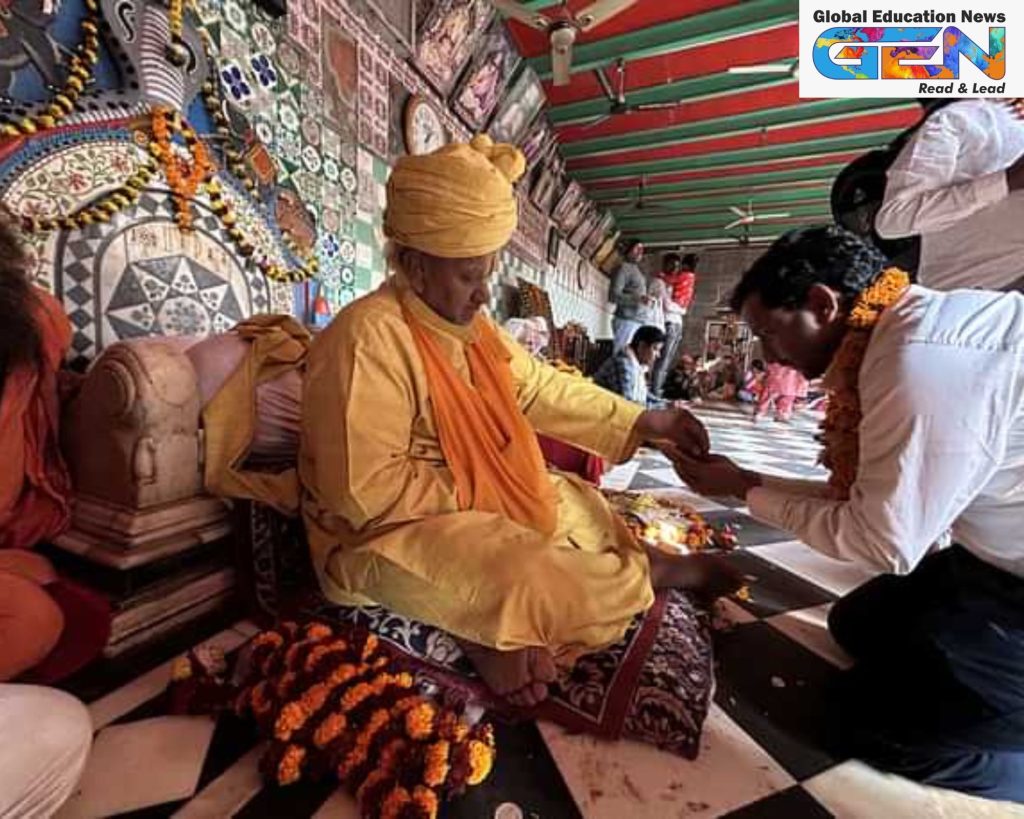
On April 30, 2025, Mahant Prem Das, the revered chief priest of Hanuman Garhi Temple in Ayodhya, will make history by breaking a 300-year-old tradition to visit Ram Lalla at the newly consecrated Ram Mandir. This unprecedented 1.6-kilometer journey, set to take place on Akshaya Tritiya, marks the first time a Gaddi Nasheen (chief priest) of Hanuman Garhi will step beyond the temple’s 52-bigha premises, a rule strictly followed since the temple’s establishment in the 18th century. The grand procession, featuring elephants, camels, horses, and Naga sadhus, symbolizes a significant moment for Ayodhya’s spiritual landscape.
This article explores the historic significance of Mahant Prem Das’s visit, the reasons behind breaking this centuries-old tradition, and its cultural and spiritual implications for Ayodhya and beyond. Optimized for readers interested in Indian spirituality, Ayodhya news, and Hindu traditions, this piece provides a detailed and engaging overview of this momentous event.
Who is Mahant Prem Das?
Key Points:
- Title: Gaddi Nasheen (chief priest) of Hanuman Garhi Temple, Ayodhya.
- Age: 70 years old, serving as head priest for decades.
- Role: Represents Lord Hanuman, considered the guardian of Ayodhya.
- Tradition: Bound by a 300-year rule to remain within the temple’s 52-bigha premises.
Mahant Prem Das is the esteemed chief priest of Hanuman Garhi Temple, one of Ayodhya’s most sacred sites, believed to have been established in the 10th century and fortified in the 18th century by the Nawab of Awadh. As the Gaddi Nasheen, he holds a revered position as the spiritual representative of Lord Hanuman, who is considered Ayodhya’s protector. The temple, located at the city’s highest point, is a fort-like structure housing shops, residences, and educational institutions like the Hanumat Sanskrit Maha Vidhyalaya. Traditionally, the Gaddi Nasheen is forbidden from leaving the temple premises, a rule so strict that past priests were barred from appearing in local courts, with courts occasionally visiting the temple to record statements.
Why is the Tradition Being Broken?
Key Points:
- Spiritual Inspiration: Mahant Prem Das claims Lord Hanuman appeared in his dreams, urging him to visit Ram Mandir.
- Permission Granted: Unanimous approval from the 400-member Panch of Nirvani Akhara.
- Historic Context: Follows the consecration of Ram Mandir on January 22, 2024.
- Personal Desire: Expressed wish to see Ram Lalla after a 500-year wait for the temple’s construction.
The decision to break the 300-year tradition stems from a deeply spiritual and historic context. For months, Mahant Prem Das reported dreams in which Lord Hanuman commanded him to visit the Ram Mandir, a divine directive he shared with the Panch (members) of the Nirvani Akhara, the apex body governing Hanuman Garhi. On April 21, 2025, the 400-member panchayat unanimously approved the visit, citing the divine call and the significance of the Ram Mandir’s consecration on January 22, 2024. The construction of the Ram Mandir, after a 500-year struggle, was seen as a momentous occasion, prompting Mahant Prem Das to express his desire to have darshan of Ram Lalla. Local resident Prajjwal Singh noted, “The tradition was so strict that the Gaddi Nasheen was barred from appearing even before local courts,” underscoring the rarity of this event.
Details of the Historic Procession
Key Points:
- Date and Occasion: April 30, 2025, on Akshaya Tritiya.
- Route: From Hanuman Garhi to Ram Mandir, covering 1.6 kilometers.
- Features: Includes elephants, camels, horses, Naga sadhus, devotees, and the Akhara’s Nishaan (insignia).
- Rituals: Begins with a ceremonial bath in the Saryu River at 7 AM, followed by darshan with 56 types of bhog offerings.
The visit is planned as a grand procession befitting Ayodhya’s spiritual heritage. On Akshaya Tritiya, a day considered auspicious for new beginnings, Mahant Prem Das will depart from Hanuman Garhi’s VIP gate at 7 AM. The procession will include elephants, camels, horses, Naga sadhus, devotees, and local traders, carrying the Hanuman Chinnah, a sacred flag with Hanuman’s image traditionally sent in place of the Gaddi Nasheen for major rituals. The group will first reach the Saryu River for a ritual bath, then proceed to the Ram Mandir, with flower showers at 40 designated points and helicopters dropping petals from above. Due to security protocols, Mahant Prem Das will enter the Ram Mandir via Gate 3 in a four-wheeler, where he will offer 56 types of bhog (sacred offerings) to Ram Lalla.
Significance of the Event
Key Points:
- Spiritual Milestone: Marks the first Gaddi Nasheen visit outside Hanuman Garhi in centuries.
- Cultural Impact: Strengthens the bond between Hanuman Garhi and Ram Mandir.
- Political Attention: Watched closely due to Hanuman Garhi’s neutral stance during the Ram Temple Movement.
- New Tradition: Sets a precedent for future Gaddi Nasheens to visit Ram Lalla.
The event is a spiritual milestone for Ayodhya, reinforcing the deep connection between Lord Hanuman and Lord Ram. Hanuman Garhi is revered as the custodian of Ayodhya, with local beliefs holding that a visit to Ram Janmabhoomi is incomplete without first praying at Hanuman Garhi. Acharya Mithilesh Nandini Sharan of Hanumat Niwas stated, “This will mark the beginning of a new tradition in Ayodhya,” reflecting the enthusiasm among saints and devotees. The visit also carries political significance, as Hanuman Garhi maintained distance from the Ram Temple Movement, with leaders like Rahul Gandhi and Priyanka Gandhi visiting Hanuman Garhi but avoiding the disputed Ram Janmabhoomi site during political tours. The procession is expected to draw widespread attention, highlighting Ayodhya’s evolving role as a global spiritual hub.
Historical Context of Hanuman Garhi
Key Points:
- Establishment: Believed to date back to the 10th century, fortified in the 18th century.
- Structure: A fort-like complex with temples, shops, residences, and a hospital.
- Tradition’s Origin: Gaddi Nasheen’s confinement reflects Hanuman’s role as Ayodhya’s guardian.
- Cultural Belief: Hanuman was entrusted with Ayodhya’s protection after Lord Ram’s departure.
Hanuman Garhi is one of Ayodhya’s most iconic temples, built at the city’s highest point and shaped like a fort. Local lore holds that after Lord Ram departed the earth, he entrusted Ayodhya to Hanuman, who guards the city from Hanuman Garhi. The Gaddi Nasheen is seen as Hanuman’s living representative, bound to remain within the 52-bigha premises to serve the deity. The temple’s land was reportedly gifted by the Nawab of Awadh in the 18th century after a priest cured his son. The strict tradition of confinement, dating back to the temple’s establishment, underscores the Gaddi Nasheen’s role as a devoted servant of Hanuman, making Mahant Prem Das’s visit a historic departure.
Community and Political Reactions
Key Points:
- Saint Community: Enthusiastic support from saints, with many joining the procession.
- Local Devotees: View the event as a divine and historic moment.
- Political Circles: Observers note the visit’s implications given Hanuman Garhi’s apolitical stance.
- Media Coverage: Extensive reporting by outlets like NDTV, Indian Express, and India TV.
The saint community in Ayodhya is elated, with figures like Saint Sanjay Das noting that Lord Hanuman has been “spiritually inspiring” Mahant Prem Das for three months. Devotees see the visit as a divine mandate, especially after the Ram Mandir’s consecration, which fulfilled a centuries-long aspiration. Politically, the event is under scrutiny due to Hanuman Garhi’s historically neutral stance during the Ram Temple Movement, unlike other religious bodies actively involved. Media outlets, including NDTV, The Indian Express, and India TV, have highlighted the event’s significance, with posts on X reflecting widespread public interest. For instance, @eOrganiser called it a “Historic Blessing,” emphasizing its 300-year significance.
Broader Context: Ayodhya’s Spiritual Renaissance
Key Points:
- Ram Mandir’s Impact: Consecration on January 22, 2024, boosted Ayodhya’s global profile.
- Tourism Surge: Over 2 lakh devotees camped in Ayodhya on New Year’s Eve 2025.
- Infrastructure Growth: Solar-powered initiatives and new facilities for pilgrims.
- Cultural Events: Festivals like Ayodhya Parv in Delhi showcase Ramayana heritage.
The visit aligns with Ayodhya’s transformation into a global spiritual and cultural hub following the Ram Mandir’s consecration. The city has seen a surge in religious tourism, with three lakh devotees visiting on New Year’s Day 2025, partly due to the proximity of the Maha Kumbh in Prayagraj. Initiatives like the Surya Tilak ritual, using solar technology to anoint Ram Lalla, and the Sword of Honour award for the Ram Mandir’s safety standards reflect Ayodhya’s blend of tradition and modernity. Cultural events, such as the Ayodhya Parv festival in Delhi (April 11–13, 2025), further highlight the city’s growing prominence. Mahant Prem Das’s visit reinforces this renaissance, symbolizing unity and devotion.