Published on October 25 , 2025
Delhi, India
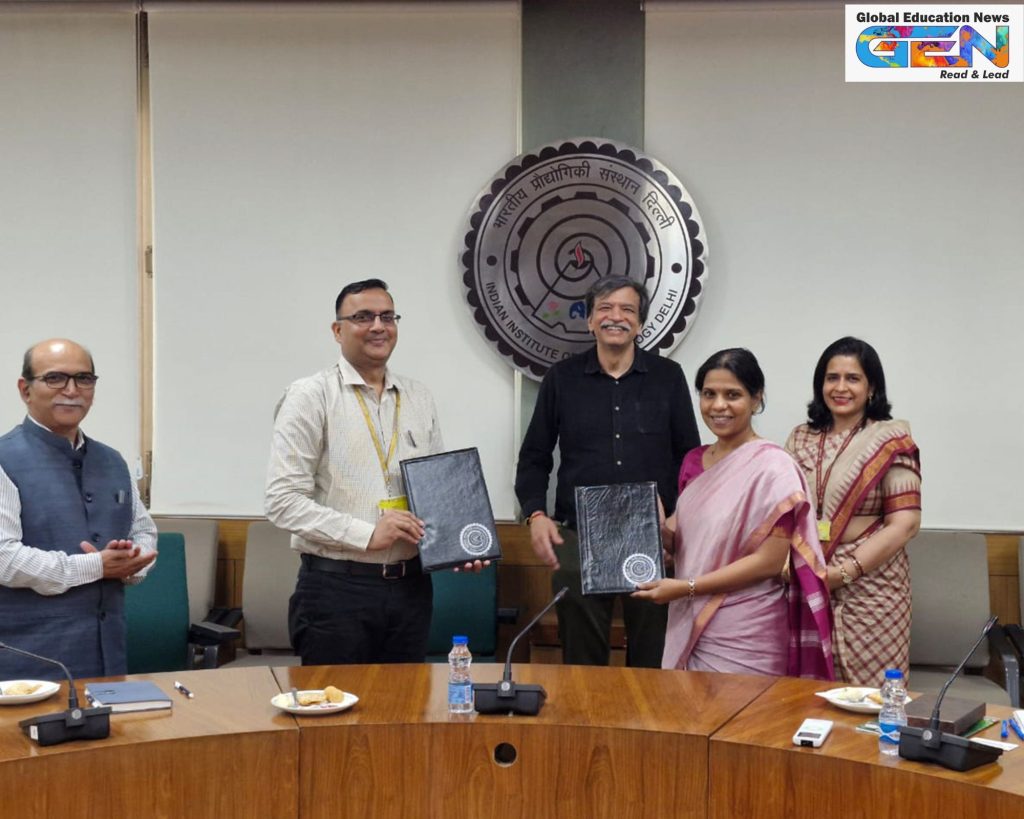
On October 24, 2025, the Kendriya Vidyalaya Sangathan (KVS) and the Indian Institute of Technology Delhi (IIT Delhi) inked a groundbreaking Memorandum of Understanding (MoU), marking the first such collaboration between KVS and any IIT for STEM outreach. This partnership aims to supercharge STEM (Science, Technology, Engineering, and Mathematics) education for over 1.2 million KVS students nationwide, while equipping teachers with cutting-edge skills. By integrating IIT Delhi’s expertise into KVS classrooms, the initiative aligns with the National Education Policy (NEP) 2020’s emphasis on experiential learning and prepares students for competitive exams like JEE Main 2026 and Advanced. Below is a detailed breakdown of this transformative alliance.
MoU Overview and Objectives
The MoU formalizes ongoing informal ties, focusing on bridging the gap between school-level STEM and higher education. It targets Delhi-NCR KVS schools initially, with potential for national scaling.
- Primary Goals: Foster curiosity in STEM from an early age, enhance teacher competencies, and inspire career paths in engineering and sciences.
- Strategic Alignment: Supports NEP 2020 by promoting innovative pedagogies, technology integration, and equity in public education.
- Milestone Achievement: First IIT-KVS tie-up, building on IIT Delhi’s Office of Academic Outreach and New Initiatives (OANI), which has engaged 3,000+ KVS students in 2025 alone.
- Broader Vision: Positions KVS as a leader in government school STEM, addressing India’s need for 10 million skilled STEM professionals by 2030.
This collaboration comes at a pivotal time, as JEE Main 2026 registrations open in November 2025, offering timely support for aspirants.
Key Initiatives for STEM Education and Teacher Training
The MoU outlines reciprocal programs, leveraging IIT Delhi’s resources to invigorate KVS curricula. Initiatives emphasize hands-on learning over rote methods.
| Initiative | Description | Target Beneficiaries | Timeline/Resources |
|---|---|---|---|
| Sci Tech Spins (STS) Lecture Series | Interactive sessions on cutting-edge STEM topics like AI, quantum computing, and sustainable tech, delivered by IIT faculty and students. | Classes 9-12 students from Delhi-NCR KVS schools. | 8 sessions completed in 2025; 3,000 participants; annual expansion via OANI. |
| STEM Outreach Sessions | IIT Delhi experts visit KVS schools for workshops on real-world applications, including robotics and data science. | KVS students and teachers. | Ongoing from 2026; virtual/in-person hybrid. |
| Teacher Professional Development | Training on emerging tools (e.g., VR simulations, coding platforms), innovative methodologies, and JEE-aligned problem-solving. | KVS educators in science/math streams. | Quarterly workshops starting Q1 2026; includes certification. |
| Manasvi STEM Mentorship | Girls-only program with mentorship from IIT women leaders; covers project-based learning and exam prep. | High school girls (Classes 9-11) from KVS. | Third batch inaugurated in 2025; weekends in March-April 2026. |
| Feedback and Impact Assessment | Structured surveys and data analytics to refine programs based on outcomes like student engagement and performance metrics. | All participants. | Annual reviews; integrated with KVS dashboards. |
These programs draw from successful pilots, such as IIT Jodhpur’s 5-day STEM teacher training for Navodaya schools, emphasizing experiential and holistic development.
Focus on JEE Main 2026 and Advanced Preparation
While the MoU broadly enhances STEM foundations, it indirectly bolsters JEE readiness by aligning school curricula with entrance exam syllabi. JEE Main 2026 (Session 1: January 2026) demands strong conceptual grasp in Physics, Chemistry, and Math—areas targeted here.
- Tailored Support: Workshops on advanced problem-solving, mock tests, and doubt-clearing sessions modeled on IIT coaching.
- Eligibility Boost: KVS students (eligible if 10+2 appearing/passed) gain edge through IIT exposure, potentially increasing qualifiers from 1.5 lakh KVS aspirants annually.
- Integration with NEP: Promotes foundational literacy in STEM by Grade 5, easing transition to JEE-level rigor.
- Projected Impact: Similar IIT-school ties have lifted JEE success rates by 20-25% in participating government schools.
For context, JEE Advanced follows in May/June 2026, with top 2.5 lakh Main rankers qualifying—making early IIT guidance invaluable.
Benefits for Students, Teachers, and the Ecosystem
This MoU democratizes elite education, leveling the playing field for government school talent.
- For Students: Hands-on exposure sparks innovation; 3,000+ already engaged in STS report 30% higher interest in STEM careers; prepares for scholarships like KVPY.
- For Teachers: Upskilling via free certifications; aligns with KVS Recruitment 2025’s focus on qualified educators (e.g., B.Ed. + STEM expertise).
- Systemic Gains: Reduces urban-rural divide; fosters IIT-KVS alumni networks; supports India’s Atmanirbhar Bharat in tech R&D.
- Equity Angle: Prioritizes underserved groups, including girls via Manasvi, echoing global trends where diverse STEM pipelines drive 15% GDP growth.
Experts view this as a “game-changer” for public education, similar to IIT Madras’s free STEM faculty training under Malaviya Mission.
Implementation Timeline and Action Steps
Rollout is phased for sustainability, with monitoring via joint committees.
- Short-Term (2025-26): STS expansion; initial teacher workshops; JEE prep modules by December 2025.
- Medium-Term (2026-27): National pilot to 100 KVS clusters; integrate with Balvatika foundational STEM.
- Long-Term: Annual impact audits; scale to other IITs.
Stakeholder Checklist:
- For KVS Principals/Teachers: Register for OANI sessions via KVS portal; nominate students by November 2025.
- For Parents/Students: Monitor JEE 2026 updates on NTA site; join free STS via school coordinators.
- For Policymakers: Advocate similar MoUs with IITs in other states; track via DoE dashboards.
- Stay Engaged: Follow IIT Delhi’s press releases; apply for Manasvi by February 2026.
- Measure Success: Use feedback tools to suggest enhancements, ensuring adaptive growth.
This KVS-IIT Delhi MoU isn’t merely an agreement—it’s a blueprint for nurturing India’s next wave of engineers and scientists. As JEE 2026 approaches, it empowers KVS youth to dream big and achieve boldly. What’s your vision for STEM in schools? Share below!