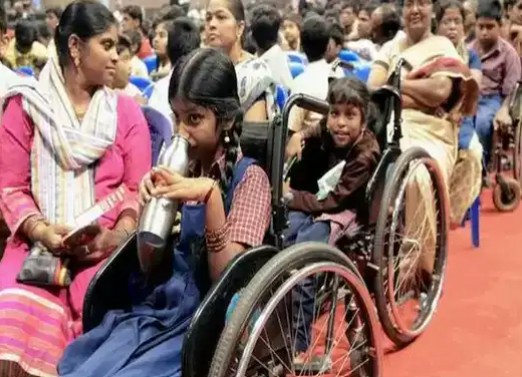
Thiruvananthapuram — In a key statement before the Kerala Legislative Assembly, Kerala’s General Education and Labour Minister V. Sivankutty reiterated that the state government is firmly committed to ensuring quota and reservation for persons with disabilities (PwDs) in appointments and education, stressing continuity with existing laws, court rulings, and systematic policy implementation.
🧩 Historical & Legal Framework of Disability Reservation in Kerala
Kerala’s journey on disability quota dates back decades:
- The state introduced disability reservation in school appointments as early as 1996.
- Reservation norms were enhanced in line with the Rights of Persons with Disabilities Act, 2016, which mandates affirmative action for persons with benchmark disabilities in education and employment.
- In 2018, the government issued a specific order extending quota principles to aided school appointments, which was upheld by the High Court and subsequently accepted by the Supreme Court after petitions were withdrawn.
This legal foundation forms the basis of Kerala’s claim that disability reservation is not new, but a structured and evolving policy commitment.
📌 What the Minister Announced in Assembly
During his statement:
- Mr. V. Sivankutty reiterated commitment to implementing reservation for PwDs in aided schools without undermining merit or general category rights.
- He highlighted that around 50 government orders and a published handbook now guide transparent and efficient disability appointments.
- State and district-level committees were formed through a 2025 government order to ensure timely completion of disability category appointments.
- In the first recommendations by the district committees, 431 qualified disabled candidates were recommended for appointment, while about 1,500 had already been appointed through employment exchanges and direct recruitment.
- The minister also noted ongoing litigation and the government’s appeal to the Supreme Court seeking broader application of High Court interpretative principles on disability appointments in aided institutions.
This reinforced the message that disability reservation is active, dynamic, and receiving deliberate administrative focus.
📊 Implementation — Committees, Orders & Transparency
Kerala’s approach to reservation for persons with disabilities has tried to blend legal compliance with administrative action:
- A handbook was published to assist implementers on reservation norms and categories.
- Multiple orders and circulars govern prioritisation of different types of disabilities and appointment procedures, reducing ambiguity.
- State and district-level committees work as monitoring and recommendation bodies to make sure quota vacancies are filled systematically and time-bound.
According to recent government actions, several recruitment recommendations have already been made, and appointment processes are actively in progress.
📚 Broader Context — Kerala’s Inclusive Policies for Disabled
Kerala has pursued numerous programmes aimed at improving quality of life and inclusion for persons with disabilities beyond quota announcements:
🧩 Additional Initiatives
- Expanded caregiver support: The state’s Aswasakiranam scheme has been widened to include thousands more family and informal caregivers assisting individuals with severe disabilities.
- Infrastructure accessibility: Courts have mandated disability-friendly public infra in facilities and workplaces.
- Scholarship implementation rights: High Court directives ensure routine scholarships for students with disabilities are timely disbursed.
- Water charge concessions: Welfare measures extend to disabled citizens in vulnerable economic groups.
These initiatives reflect a holistic vision beyond quota — aiming to deliver social security, accessibility, educational continuity, and dignity to persons with disabilities in Kerala.