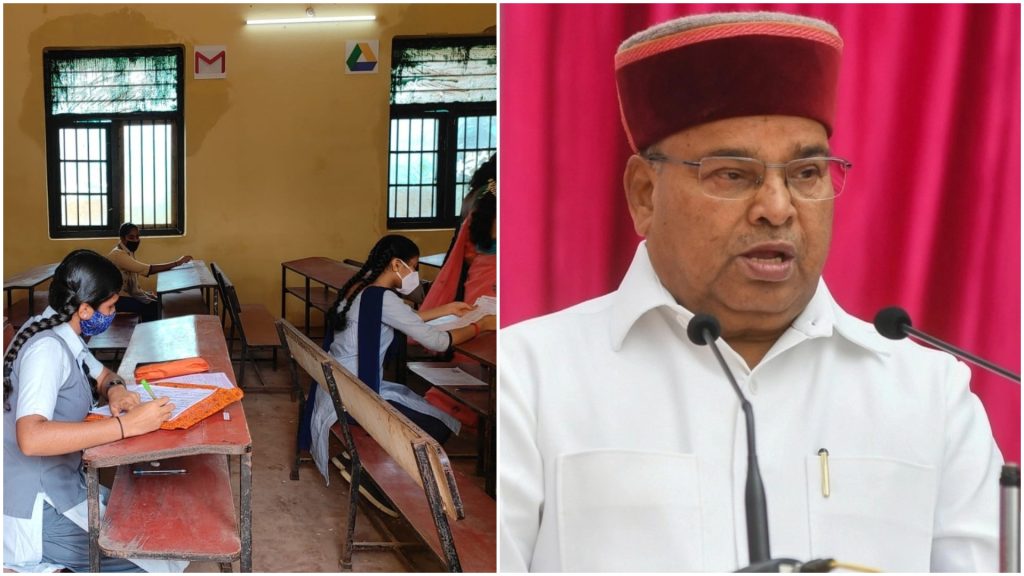
A recent decision by the Karnataka government to replace marks with grades for the third language in SSLC (Class 10) has sparked widespread debate. The move, introduced during the 2026 examination cycle, aims to reduce student pressure—but has raised serious academic, linguistic, and policy concerns.
The intervention by Thawarchand Gehlot has further intensified the discussion, with a call for a comprehensive review of the grading system.
What Is the New SSLC Grading Policy?
Key Policy Changes
- Third language subject (100 marks) replaced with grading system (A–D)
- No marks added to total score
- Overall SSLC marks reduced from 625 to 525
- Subject no longer determines pass/fail status
Government’s Rationale
- A significant number of students were failing due to the third language
- Reform intended to reduce exam stress and improve pass percentages
Key Insight
The policy reflects a shift toward leniency and stress reduction, but raises questions about academic dilution.
Governor’s Intervention: Why a Review Was Requested
Key Concerns Raised
- Potential decline in academic importance of third language
- Risk of reduced student motivation and seriousness
- Impact on linguistic diversity and intellectual development
The Governor’s office has asked the state to examine the issue holistically, considering both:
- Academic implications
- Administrative feasibility
Trigger for Action
A representation by language advocacy groups highlighted concerns that:
- Grading may undermine language learning
- Long-term impact could affect quality of education
Key Takeaway
The intervention signals that education reforms require deeper consultation and impact assessment.
Academic Impact: Marks vs Grades Debate
Advantages of Grading System
- Reduces performance pressure on students
- Prevents failure due to a single subject
- Encourages broader academic progression
Concerns Raised by Experts
- Grades may lead to lack of accountability
- Students may not take the subject seriously
- Difficulty in measuring actual proficiency
Analytical Perspective
This reflects a classic policy dilemma:
- Equity vs Excellence
- Stress reduction vs academic rigor
Key Insight
While grading simplifies evaluation, it risks weakening learning outcomes if not supported by strong pedagogy.
Language Politics and Policy Sensitivity
Underlying Issues
- Third language often includes Hindi, which has been controversial in non-Hindi states
- Policy seen by some as a move toward a two-language system
- Concerns over regional language preservation vs national integration
Recent Developments
- Kannada groups welcomed reduced emphasis on third language
- Others criticized the move as politically influenced and academically flawed
Key Takeaway
Language policy in India is not just educational—it is deeply cultural and political.
Timing of Implementation: A Major Concern
Issues Highlighted
- Policy introduced during ongoing examinations
- Students and teachers were unprepared for sudden change
- Lack of prior consultation with stakeholders
Expert Criticism
- Called “hasty and unscientific” by education experts
- Concerns about fairness and consistency
Key Insight
Even well-intended reforms can fail if implementation lacks planning and stakeholder engagement.
Broader Implications for India’s Education System
Positive Outlook
- Signals shift toward flexible and student-friendly policies
- Aligns with broader trends of reducing exam stress
Risks Involved
- Potential decline in subject importance
- Creation of policy confusion across states
- Long-term impact on language proficiency
Strategic Perspective
India’s education reforms must balance:
- Academic standards
- Student well-being
- Cultural and linguistic diversity